Ingredients
Method
- Preheat the oven to 175°F, then switch it off once it reaches temperature. This creates a cozy, warm spot for the dough to rise.
- In a large measuring cup, stir together the warmed milk, water, melted butter, granulated sugar, and yeast until the sugar and yeast are mostly dissolved.
- You can make this dough in a stand mixer or by hand, whichever you prefer. Both methods work great.
- If using a stand mixer, add the flour and salt to the mixer bowl and attach an oiled dough hook. The oil on the hook prevents the dough from creeping up and making a mess.
- On the lowest speed, slowly pour in the milk-yeast mixture. When the dough just comes together, increase the speed to medium and let the hook knead it for 6 to 7 minutes until shiny and smooth. The dough should be slightly sticky, but if it is too tacky to form a ball, add 2 tablespoons more flour. It should barely cling to your hands. Turn the dough onto a lightly floured counter and shape it into a smooth ball with a quick knead.
- For hand mixing, mix the flour and salt in a large bowl and scoop out a well in the middle. Add the milk mixture into the well and stir with a wooden spoon until the dough is too stiff to mix and gathers into a shaggy ball. Turn it out onto a floured surface and knead for about 10 minutes, folding in any loose pieces, until smooth and satiny. Form into a ball.
- Place the dough ball in a lightly oiled bowl, cover it with plastic wrap or a kitchen towel, and put it in the warmed oven. Let it rise until doubled, about 45 to 60 minutes.
- While the dough rests, grease a 12-cup Bundt pan thoroughly, including the center tube, and set it aside.
- Once the dough has doubled, punch it down and turn it out onto a lightly floured work surface. Roll it into an 8 by 8 inch square.
- Use a bench scraper or knife to score the square into 8 rows and 8 columns, creating 64 small squares.
- Cut the dough completely along the scored lines into 64 squares and gently separate them so they don't fuse back together.
- Pour the melted 1/2 cup butter into a small bowl.
- In another larger bowl, whisk together the packed brown sugar and ground cinnamon.
- Roll each dough square into a ball, dip it in the butter, then coat it generously in the cinnamon-sugar mixture. Place the coated ball into the prepared Bundt pan.
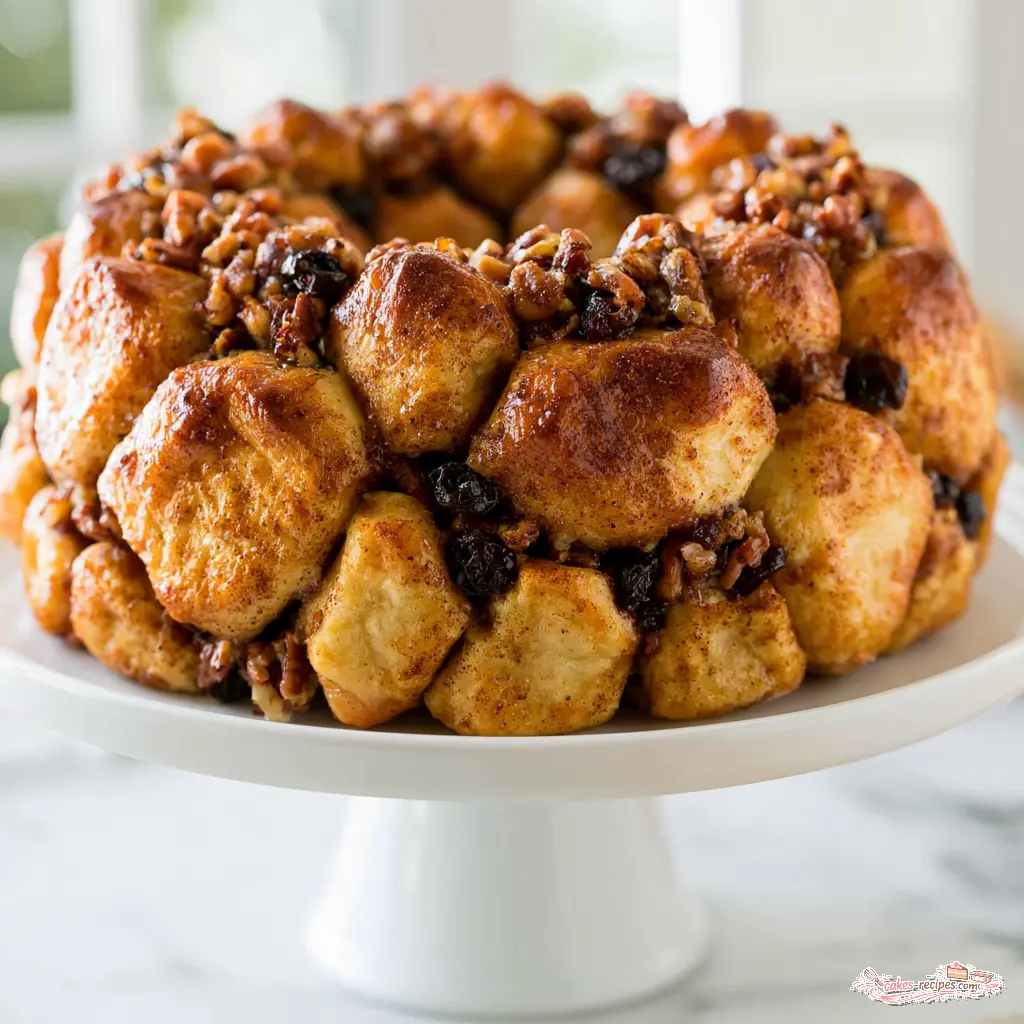
- Arrange the dough balls in the pan in staggered, overlapping layers like bricks in a wall so the seams are offset. Tuck some plumped raisins and toasted pecans between the layers as you build.
- Cover the pan loosely and set it back in the warm oven or a warm corner of the kitchen. Let the dough rise for 45 to 50 minutes, until it nearly reaches the top of the pan.
- Take the risen pan out of the oven and preheat the oven to 350°F.
- Bake the bread for 22 to 25 minutes, until the top is deep golden brown and the exterior is crisp.
- Watch it closely so it doesn't overbake; it should look a little dark and caramelized on the outside. Rest the pan on a wire rack for 10 minutes, then invert onto a plate and serve warm.
Nutrition
Notes
Use a well-greased 12-cup Bundt pan so the monkey bread releases cleanly; don't skip greasing the center tube too.
To plump raisins quickly, cover them with boiling water and let sit for 10 minutes, then drain and pat dry before using.
You can swap the pecans for chopped walnuts or leave them out; the bread will still be delicious.
Make ahead: assemble the dough balls in the pan, cover, and refrigerate overnight. Let it come to room temperature and rise for about 45 minutes before baking.
Store leftover monkey bread in an airtight container at room temperature for up to 2 days. Reheat pieces in the microwave for 15 to 20 seconds.
Serve warm by pulling apart the bread with your fingers; a dusting of powdered sugar is a nice optional touch.