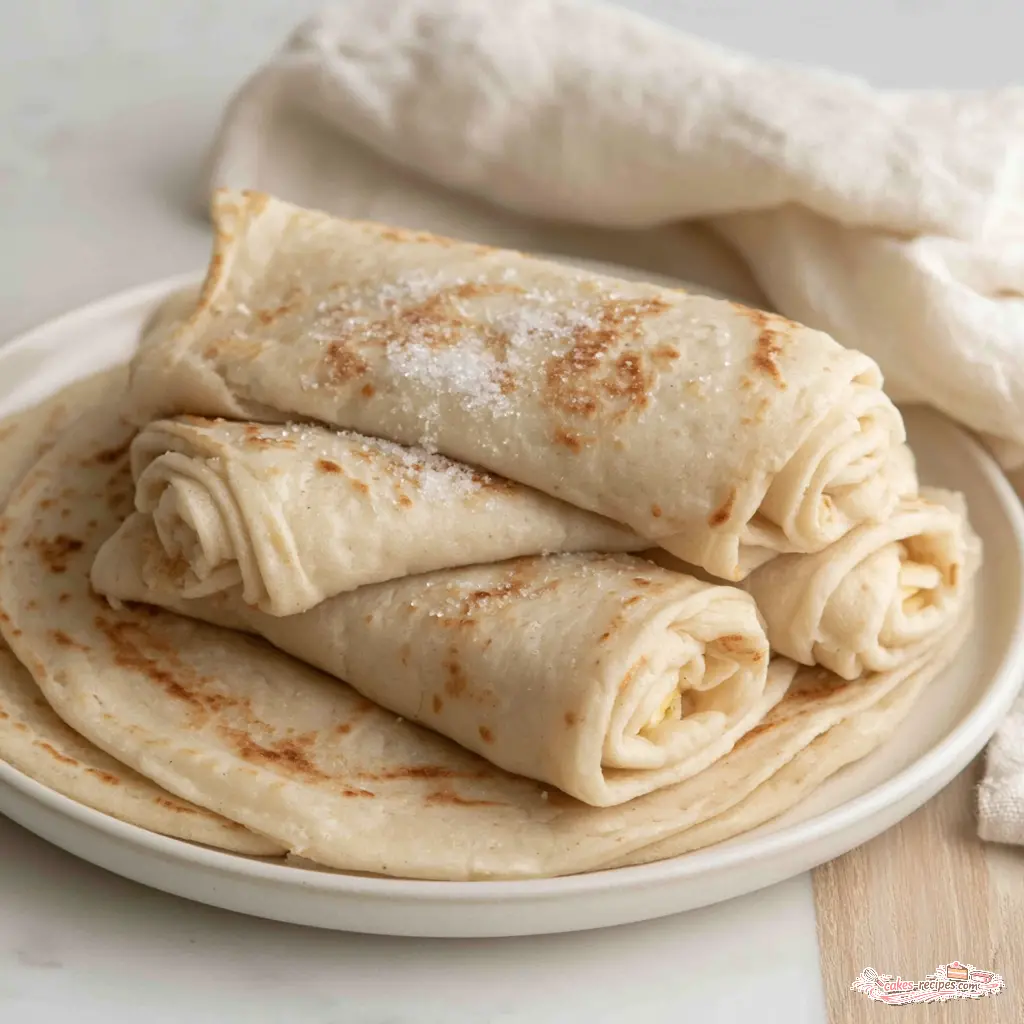
What Is Lefse?
Lefse is a Norwegian potato flatbread. Soft, thin, and pliable, cooked on a hot griddle until little golden speckles bloom across the surface. It is not a tortilla and it is not a pancake, though it borrows a little from both. If you have never eaten one, imagine the softest flour tortilla you have ever held, crossed with the tender crumb of a buttery potato roll. Now roll it paper-thin. That is close. The word itself covers a whole family of Scandinavian flatbreads. The one we are making is **potato lefse**, or potetlefse, which took over once potatoes reached Norway in the 18th century. Hardangerlefse, a dried version that keeps for months, belongs to a different branch of the tree. Here in the States, lefse lives mostly in the Upper Midwest (Minnesota lefse is practically its own institution) and in pockets of the Pacific Northwest where Scandinavian families settled. I live in Ballard, a Seattle neighborhood that was a Norwegian fishing town a century ago. You can still feel it in the bakeries.Why You’ll Love This Recipe
Two things I want you to know before we start. First, **lefse is easier than it looks.** The scary part is the rolling, and the fix is simple. Keep the dough cold, flour generously, and stop worrying about perfect circles. Imperfect shapes taste exactly the same. Second, the overnight chill does the heavy lifting for you. The active work here is maybe 40 minutes. The rest is waiting, and waiting is where the texture comes from. – **Real potatoes, not flakes.** Two and a half pounds of Russet, peeled and weighed after peeling. This is a potato recipe first. – **Butter and cream, not shortening.** A full stick of salted butter and half a cup of heavy cream make these tender instead of leathery. – **Sweet or savory.** Butter and sugar is classic, but these fold just as happily around jam or something savory. – **Freezer friendly.** Make a double batch now and you are set through the holidays. And I will say this plainly: homemade lefse beats anything from a plastic sleeve at the grocery store. It is not close.Ingredients and Equipment
You need five ingredients. That is the whole list. Russet potatoes, salted butter, heavy cream, fine salt, and all-purpose flour, plus more flour for dusting. **Why Russet?** Russets are high-starch and low-moisture, which means they rice up light and fluffy and give you more control over the dough. Yukon Gold works too. What you want to avoid are waxy potatoes like red bliss, which stay gluey and dense.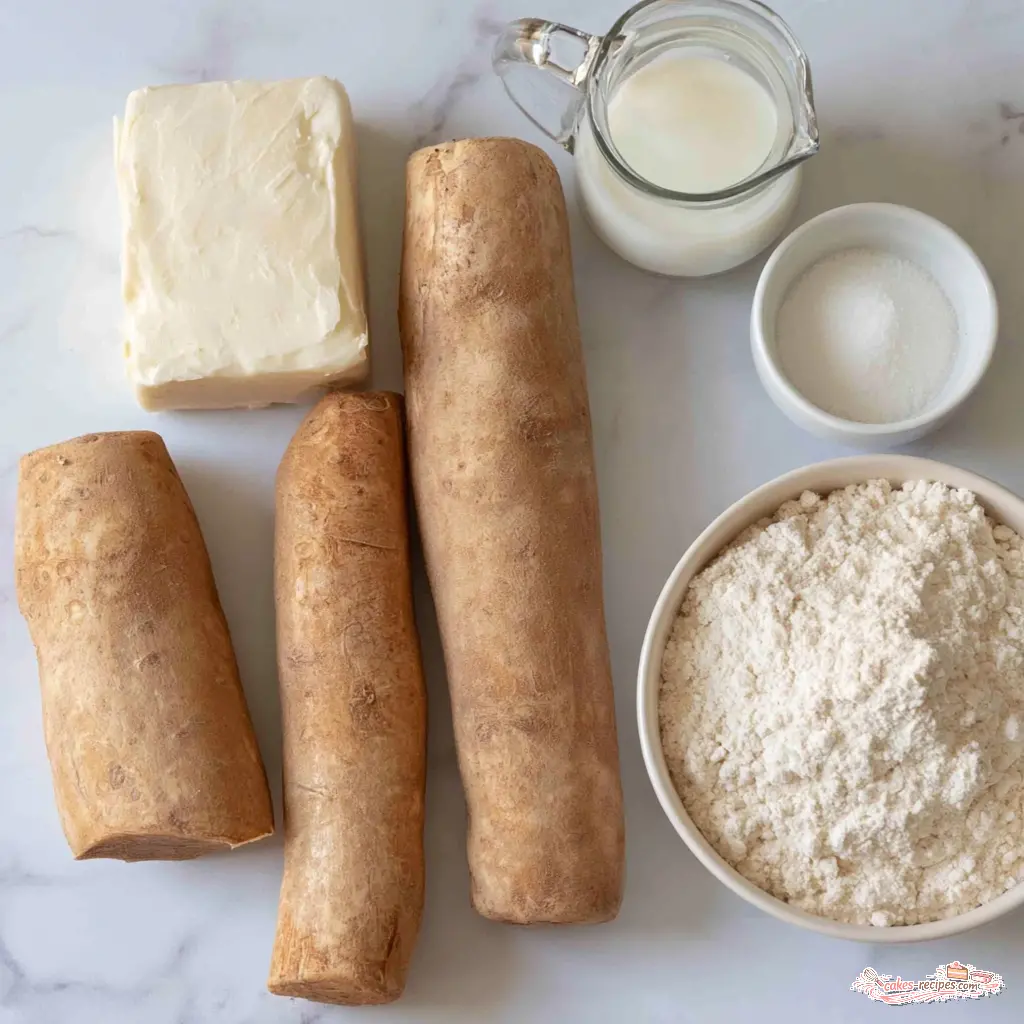 Now, equipment. A **potato ricer** is the one tool I would genuinely push you to buy. A ricer breaks the cooked potato into fine, even strands without developing the sticky starch that a masher creates. Rice them twice and you get something close to silk.
A **lefse griddle** (or a large electric griddle that hits 500°F) gives you the surface area to cook a big round evenly. A well-seasoned cast-iron skillet works, you just cook smaller rounds.
No Special Equipment? Here’s What Works
Instead of a ricer: a food mill, or a plain box grater on the large holes of cold cooked potatoes.
Instead of a lefse griddle: a 12-inch cast-iron skillet or a flat nonstick griddle, heated dry and hot.
Instead of a turning stick: two wide spatulas, or a rimless baking sheet to slide under the dough.
Instead of a pastry cloth: a clean, smooth cotton dish towel, floured the same way.
How to Make Lefse Step by Step
There are four real stages here. I will walk you through each one and tell you what to watch for, because the visual and tactile cues matter far more than the clock. **Stage 1: Boil and rice the potatoes.** Boil the peeled potatoes until a fork slides all the way through with no resistance, roughly 45 minutes. Drain them well. Put your chopped butter in the bottom of a ceramic or glass bowl, then rice the hot potatoes directly over it, twice. The heat melts the butter as you go. Stir gently until everything is combined and the mixture stays light. Do not beat it. Beating develops starch and you will feel the difference later when the dough fights you.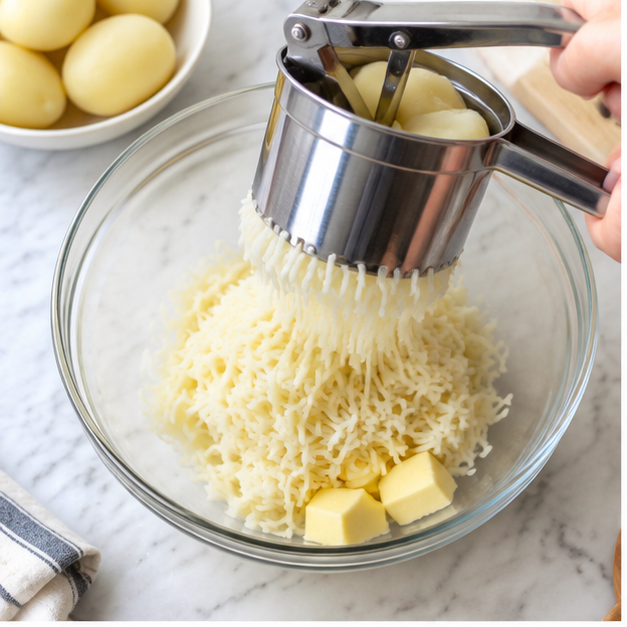 **Stage 2: Chill overnight, then mix the dough.**
Let the potato mixture cool on the counter for an hour, then cover and refrigerate it overnight. This is the step people skip, and it is the step that decides whether your dough is workable or a sticky mess.
The next day, combine the cold potatoes with the cream, flour, and salt. Mix with your hands until it holds together like a slightly crumbly bread dough. Divide it into eight portions, roll them into balls, and put them back in the fridge.
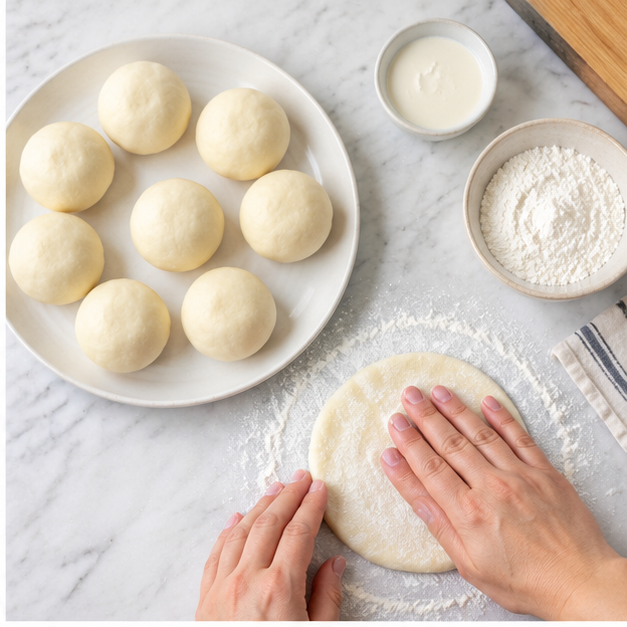 **Stage 3: Roll it thin.**
Heat your griddle to 500°F. Flour your cloth and your rolling pin generously, and rub the flour into the fabric with your hand so it actually sticks.
Take out one ball at a time. Pat it into a disk, then roll it as thin as you possibly can. Thinner than feels reasonable. If it sticks, sprinkle more flour. If it tears, press it back together and keep going.
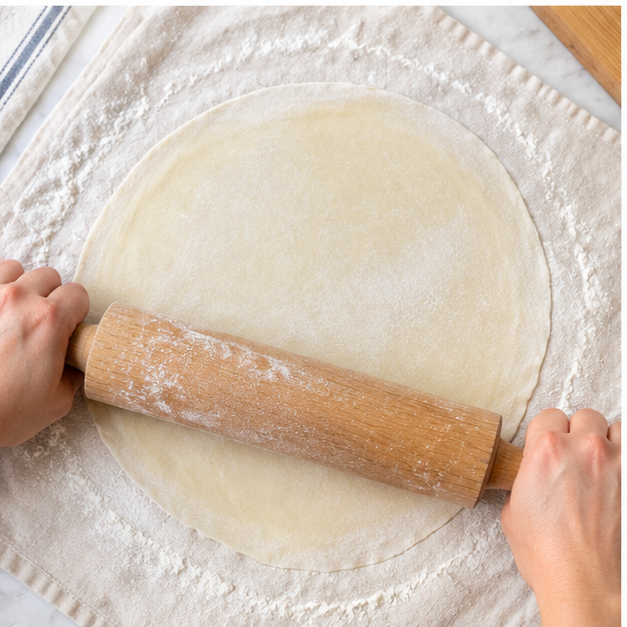 **Stage 4: Cook it hot and fast.**
Slide your turning stick under the center of the round, work it all the way under without tearing, and drape the lefse onto the hot griddle. Start a timer.
After about a minute, when bubbles puff up and brown spots appear, flip it. Another minute and it is done. Lift it onto a plate and cover the plate with a clean towel. Let the stack rest for an hour so the rounds soften into each other.
**Texture targets while you cook:** listen for a soft sizzle the second the dough touches the griddle. Look for small bubbles rising and toasted speckles forming. Smell warm potato and butter. If you get none of those, your griddle is too cold.
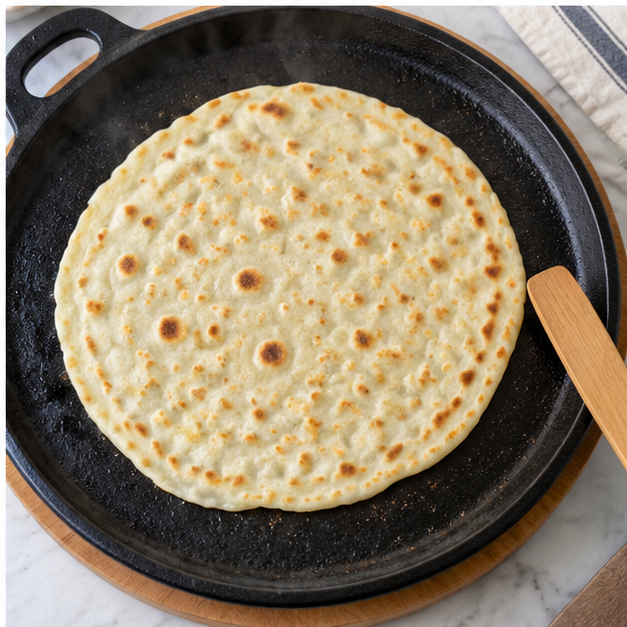
Tips for Making Lefse
These are the details that separate soft lefse from tough lefse. Most of them cost you nothing but attention. – **Chill the dough, always.** Warm dough sticks to everything. Work one ball at a time and keep the rest cold. – **Rice twice.** Once gets you smooth. Twice gets you light. – **Adjust for your potatoes.** Different varieties hold different moisture. If the dough feels wet, add flour a tablespoon at a time. – **Flour the pin between rounds.** Every single time. Sticky bits build up fast and transfer straight onto your dough. – **Keep a bench knife nearby.** Scrape the sticky flour paste off your cloth and pin as you work. – **Use a nonstick or seasoned surface.** Bare stainless will grab and scorch. – **Let them cool before stacking.** Warm lefse steams itself and turns gummy. – **Weigh, do not scoop.** Riced potatoes take up more volume than mashed, so cups are unreliable here.Common Mistakes to Avoid
❌ **Mashing potatoes instead of ricing them** → ✅ Rice them, or run them through a food mill. Mashed potatoes give you a dense, heavy round. ❌ **Skipping the overnight chill** → ✅ Chill the potato mixture overnight. That cold rest is what makes the dough rollable. ❌ **Rolling on a bare counter** → ✅ Roll on a floured cloth. The cloth grips the dough lightly, which makes lifting it possible. ❌ **Over-flouring to fix stickiness** → ✅ Add flour a spoonful at a time, and only until the dough stops clinging. Too much flour is the number one cause of tough lefse. ❌ **Cooking on a cool griddle** → ✅ Preheat fully to 500°F. Pale, spotless lefse means the surface was not hot enough. ❌ **Folding warm rounds** → ✅ Let them cool completely first, or you will trap steam and they will go limp.Lefse Variations
The base recipe is a canvas, so here is where you can wander. – **Cinnamon sugar** instead of plain sugar, rolled up warm so it melts. – **Jam**, raspberry or lingonberry, spread thin so it does not soak through. – **Brunost or gjetost**, that caramel-sweet brown Norwegian cheese, shaved thin over a warm round. – **Savory**: smoked salmon and a little cream cheese, or scrambled eggs for a breakfast version. – **Bread flour** in place of all-purpose for an even more tender result, if you have it. All of these are optional additions. The dough itself stays exactly the same.How to Eat Lefse
Warm is best. Room temperature is fine. Cold from the fridge is not. The classic move: spread a round with softened butter, sprinkle on a few teaspoons of sugar, then roll it up like a wrap. Fold the rolled piece in half and eat it with your hands. That is the version served at every Norwegian-American church basement and family gathering I have ever been to. For a holiday table, lefse often shows up next to **lutefisk**, which is a whole tradition of its own. It is also completely welcome beside a plain roast, and this is the version I break out at Thanksgiving. Here is my honest take: serve them however your family eats them. Tradition is just a habit that survived.Storage and Freezing
Once the rounds are fully cooled, they keep beautifully. – **Refrigerator:** layer them in a zip-top bag with a piece of parchment between stacks, and they hold for up to 1 week. – **Freezer:** fold rounds in half or quarters, tuck them into a freezer bag, and they keep up to 3 months. – **Thawing:** leave a stack on the counter, still bagged, for an hour. They come back soft on their own. – **Reheating:** a few seconds on a warm griddle or a quick pass in a dry skillet. Do not microwave a stack, they steam and toughen.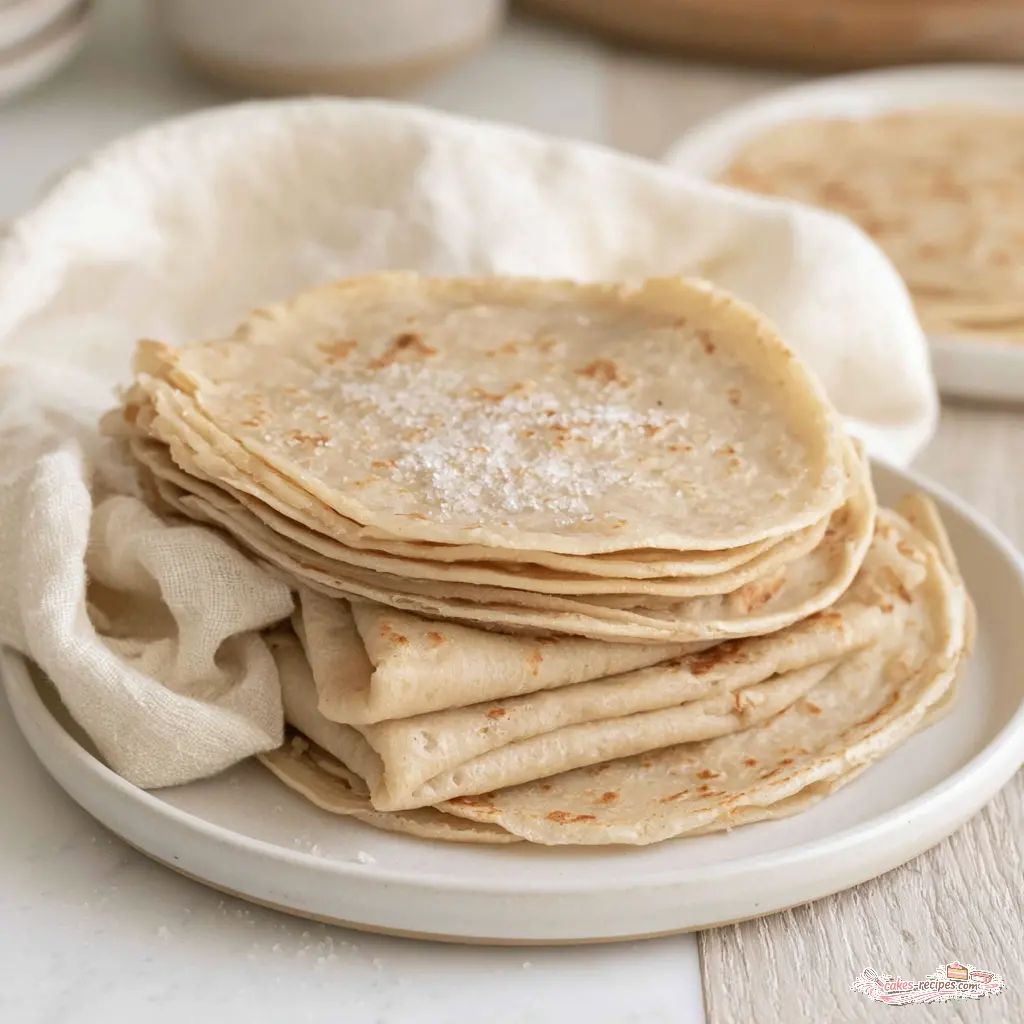
Your New Holiday Tradition
Thanksgiving is coming, and this is the year you bring homemade lefse to the table. It is a humble thing, a potato flatbread with butter and sugar, and it will quietly outshine half the spread. If you want more soft, technique-driven baking inspiration between now and then, I keep a running board of my favorites over on my Pinterest, where I pin everything worth rolling out. Come find me there. Take your time with the dough. Be patient with the first few rounds, because the ones that come out lopsided taste just as good as the pretty ones.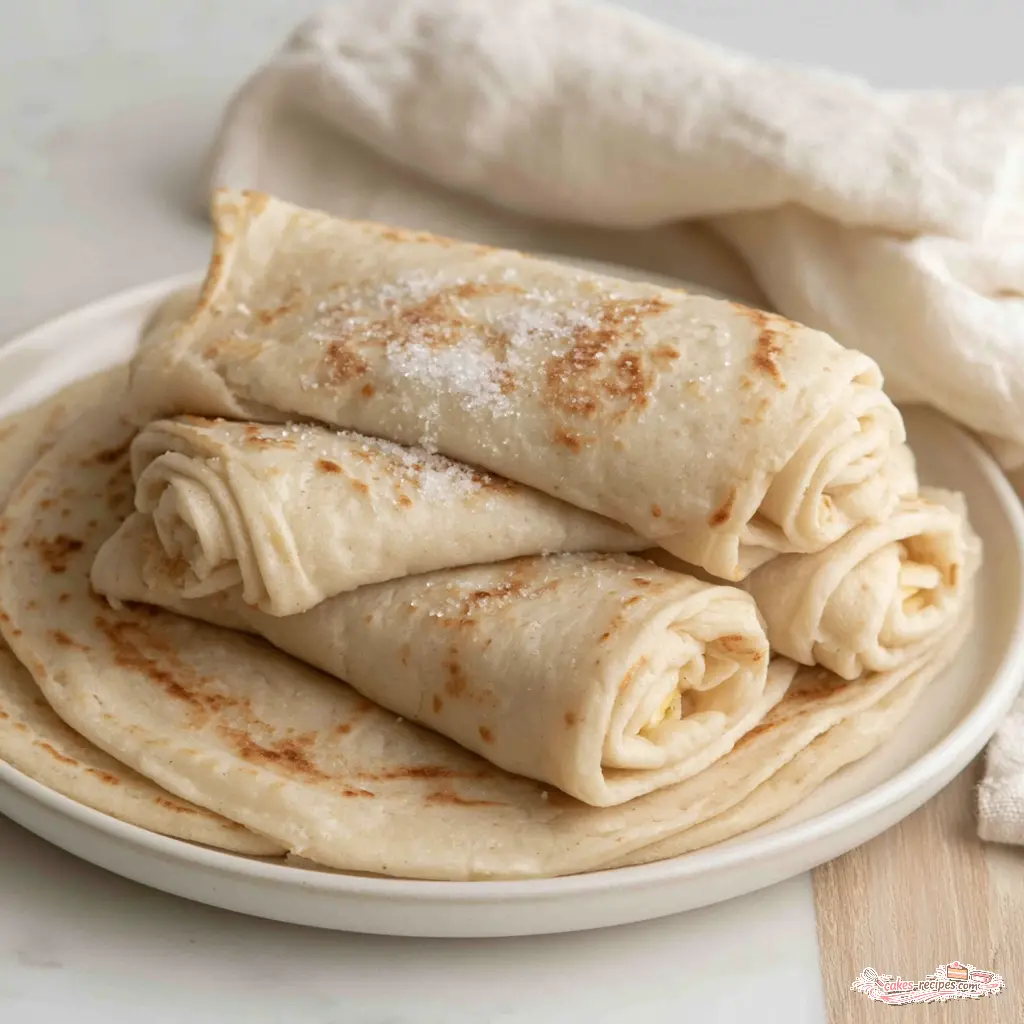
Traditional Norwegian Lefse with Real Potatoes
Make authentic Norwegian lefse with real Russet potatoes, butter, and cream. A tender flatbread perfect for butter and sugar.
Ingredients
Method
- Place the peeled potatoes in a large pot and cover with water. Boil for 45 minutes, or until a fork slides in easily all the way through.
- Drain the potatoes and press them through a potato ricer.
- Place the butter at the bottom of a ceramic or glass bowl. Rice the potatoes a second time into the bowl over the butter.
- Stir the hot riced potatoes and butter together until the butter melts and is fully incorporated, keeping the mixture light and fluffy.
- Let the potato mixture cool on the counter for 1 hour, then cover and refrigerate overnight.
- The next day, take the potatoes out of the fridge. In a large bowl, combine the potato-butter mixture, cream, flour, and salt. Mix with your hands until the dough holds together like a slightly crumbly bread dough.
- Divide the dough into 8 equal portions. Roll each portion into a ball, place them on a plate, and refrigerate.
- Preheat a lefse grill or electric griddle to 500°F.
- Generously flour both the rolling mat cloth and the rolling pin cloth. Rub the flour into the fabric so it sticks.
- Remove one dough ball from the refrigerator and gently pat it into a disk with your hands. Place it on the floured mat and roll it as thin as possible. If it starts to stick, sprinkle on a little more flour.
- When the disk is rolled very thin, slide the turning stick under the center. Work it all the way under without tearing the dough.
- Lift the lefse with the stick and drape it onto the edge of the hot grill. Gently lay the first half down, then roll the stick to fold the other half onto the grill. Start a timer.
- After about 1 minute, or when bubbles and brown spots appear, flip the lefse with the turning stick and keep the timer going.
- When the second side has golden spots and the lefse is cooked through, remove it from the grill and place it on a large plate.
- Repeat steps 9 through 14 with the remaining dough balls until all the lefse are cooked.
- Cover the plate of lefse with a clean towel and let them rest for 1 hour to soften.
- Top each lefse with your favorite fillings, such as softened butter and a few teaspoons of sugar, then roll it up.
- Fold the rolled lefse in half and serve.
Nutrition
Notes
Use Russet or Yukon Gold potatoes for the best texture; avoid waxy potatoes.
Chill the dough overnight so it firms up and is easier to roll.
Flour your rolling cloth and pin generously, but brush off excess before cooking.
If the dough tears, press it back together and roll again; keep the dough cold.
Cook lefse on a hot 500°F griddle or lefse grill until brown spots appear, about 1 to 2 minutes per side.
Store cooled lefse in a zip-top bag in the refrigerator for up to 1 week, or freeze for up to 3 months.
Serve with butter and sugar, or try cinnamon sugar, jam, or a savory filling.
Tried this recipe?
Let us know how it was!Lefse FAQ
Source: Learn More About This Dish
What do Norwegians eat lefse with?
Most commonly butter and sugar, rolled up and eaten by hand. Cinnamon sugar, jam, and brunost (brown cheese) are all traditional. Savory versions get served alongside lutefisk, smoked salmon, or simple roast meats during the holidays.