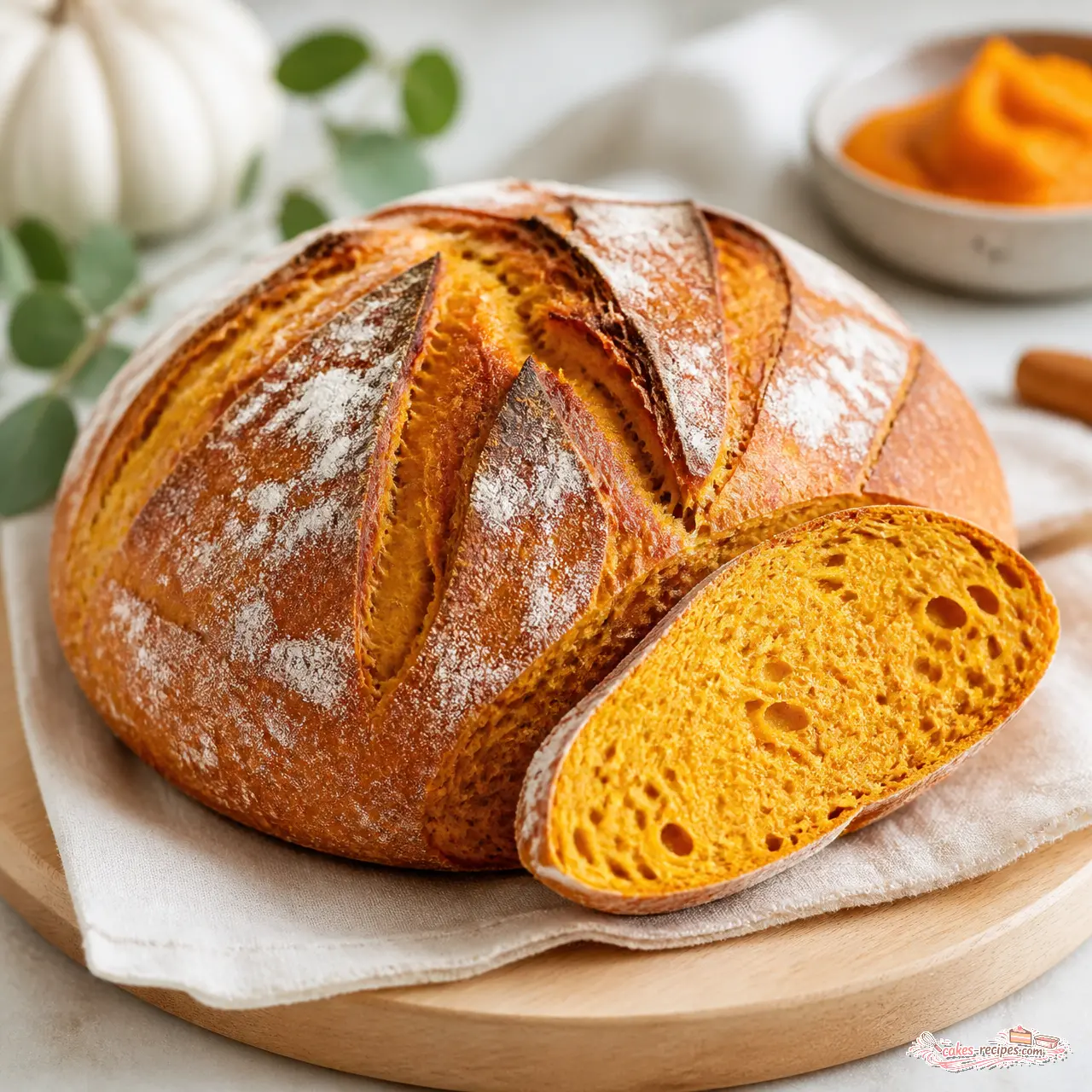
Ingredients
Method
- Autolyse: In a large glass or ceramic bowl, combine the sourdough starter, water, and honey, stirring until the honey dissolves. Add the bread flour, pumpkin puree, and salt. Mix with the handle of a wooden spoon until a ragged, shaggy dough forms. Cover the bowl with plastic wrap or a damp lint-free towel and let rest for 1 hour.
- Form the dough: Work around the bowl, grabbing the dough from the outside, stretching it up and over itself until a smooth ball forms. This should take about 20 to 25 folds. Re-cover and let rest for 30 minutes.
- Stretch and fold: Perform 4 sets of stretch and folds with 15 to 30 minutes between sets. To stretch, lift one side of the dough, pull it high, and fold it over to the opposite side. Rotate the bowl a quarter turn and repeat until you have gone around the whole dough. This builds structure and gluten.
- Bulk ferment: Replace the cover and let the dough ferment at room temperature until it has just doubled in size. It will look wobbly, jiggly, and you'll see large air bubbles just under the surface. The time depends on your kitchen temperature; in a warm room it may be only a few hours, in a cooler room it could take overnight.
- Shape the loaf: Turn the dough out onto a lightly floured surface and preshape it into a rough batard or round. Let it rest for about 15 minutes if the dough is very elastic. Give it a final tight shaping by dragging the dough toward you to build surface tension. Flour your banneton generously, all the way up the sides, and place the dough in it seam side up. If you are coating the loaf with seeds or oats, sprinkle those into the banneton before placing the dough.
- Cold ferment: Cover the banneton loosely with a reusable plastic bag or a damp towel, then refrigerate the dough for a minimum of 5 hours and up to 36 hours. The longer it chills, the deeper the sourdough flavor and the more blistered the crust. At least 12 hours is ideal.
- Preheat oven and pot: About 60 minutes before you want to bake, put your Dutch oven with its lid on the center rack and heat the oven to 450°F (230°C). Leave the shaped dough in the fridge until the exact moment you are ready to score and bake; the contrast with the hot pot gives excellent oven spring.
- Bake: Take the hot Dutch oven out carefully. Turn the chilled dough onto a sheet of parchment paper, score the top with a lame or sharp knife. Use the parchment as a sling to lower the dough into the pot. If desired, spritz the dough with water before covering. Bake covered at 450°F (230°C) for 30 minutes. Remove the lid, lower the oven to 410°F (210°C), and continue baking for 10 to 15 minutes, until the crust is deeply browned. To protect the bottom from burning, place a rimmed baking sheet on the rack below the Dutch oven.
- Cool: Remove the finished loaf from the Dutch oven immediately and transfer it to a wire rack. Let it cool completely, at least 4 to 6 hours (overnight is even better), before slicing. Cutting too early will give you a gummy, dense crumb.
Nutrition
Notes
If your kitchen is very warm, consider using just 25 g of starter for a slower overnight bulk ferment and less risk of over-proofing.
For bench-top stretch and folds, mist the work surface with water instead of using flour, since the pumpkin makes the dough sticky and soft.
A long cold ferment of up to 36 hours produces a more tangy flavor and an attractive blistered crust; 12 hours is a good minimum target.
Use pure pumpkin puree, not pumpkin pie filling, which contains added sugar and spices.
If the bottom of the loaf gets too dark, slide a baking sheet onto the rack underneath the Dutch oven to deflect the heat.
To check doneness, the internal temperature of the bread should read about 205°F to 210°F (96°C to 99°C).
Store leftover slices in a bread bag at room temperature for 2 to 3 days, or freeze in an airtight container for up to 3 months.