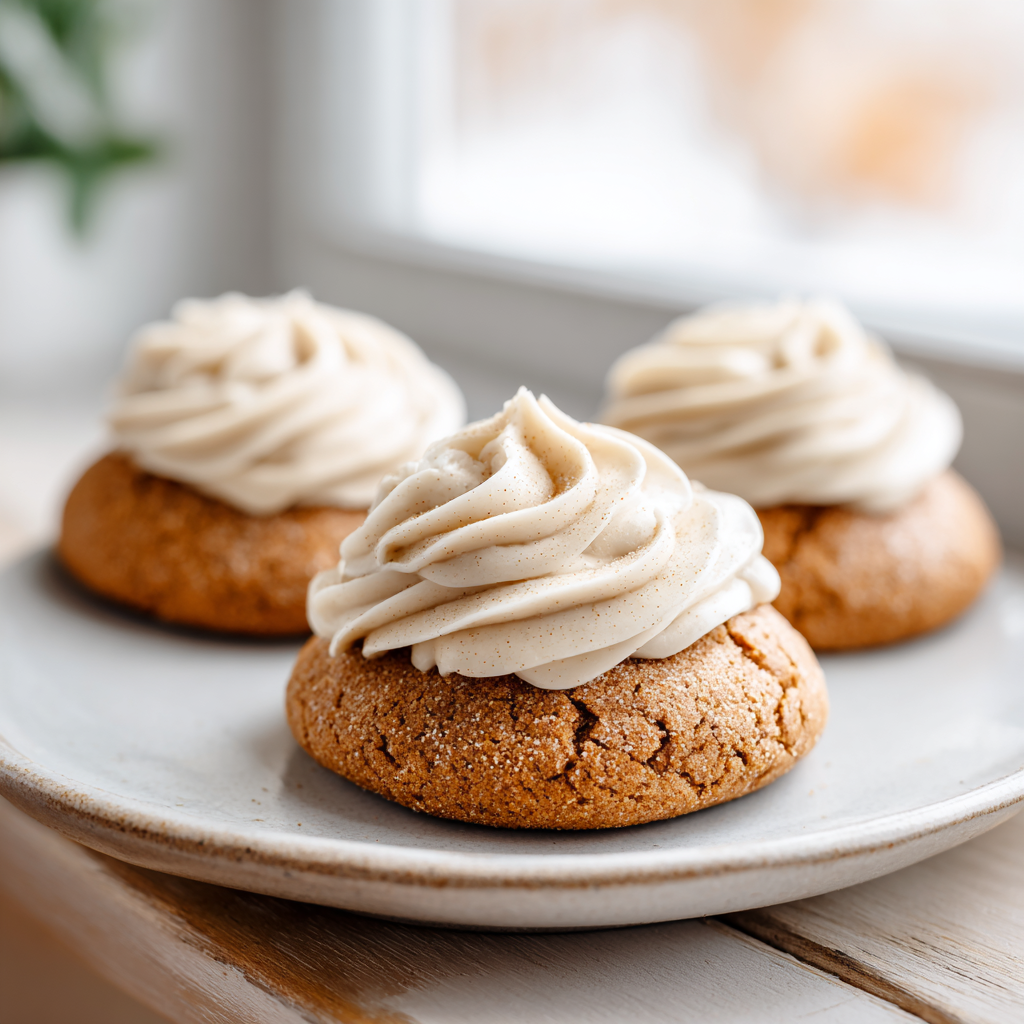

Easy Lemon Poppy Seed Scones with Glaze
Ingredients
Method
- Line a baking sheet with parchment paper and set aside.
- In a large measuring cup, whisk together 2/3 cup heavy cream and poppy seeds. Let sit for 10 minutes.
- In a large bowl, whisk together flour, sugar, lemon zest, baking powder, and salt.
- Using a box grater, shred the frozen butter into small pieces directly into the flour mixture. Alternatively, cut the butter into 1/4-inch cubes. Cut the butter into the flour using a pastry cutter or your fingers until the mixture resembles coarse crumbs.
- To the measuring cup with cream and poppy seeds, add the egg, lemon juice, and almond extract. Whisk until well combined.
- Pour the wet ingredients into the flour mixture. Use a wooden spoon or silicone spatula to stir until large dough crumbles form; do not overmix.
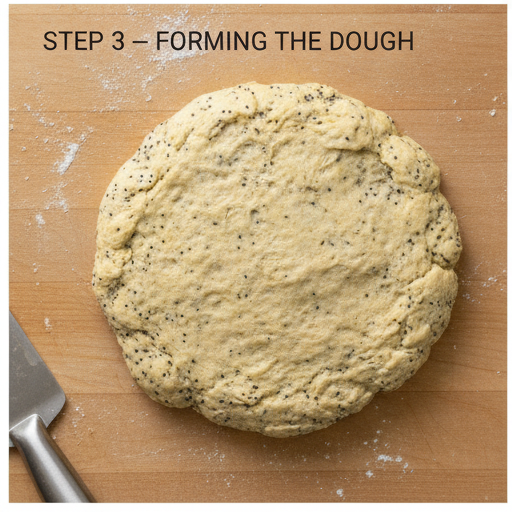
- Use your hands to gently gather the dough into a loose ball. If it seems too dry and won't come together, add another tablespoon of cream. If it's too sticky (like cookie dough), add another tablespoon of flour. Transfer the dough to a lightly floured surface and press into an 8-inch round disc. Use a bench scraper or sharp knife to cut the disc into 8 triangles.
- Place the scones on the prepared baking sheet. Brush the tops with a little extra cream and sprinkle with additional sugar if desired. Refrigerate the baking sheet while the oven preheats, about 15 minutes.
- Preheat the oven to 400°F. After the oven reaches temperature, wait 5 more minutes to ensure it is fully hot.
- Remove the scones from the refrigerator and bake for 20 to 22 minutes, until the edges are golden brown. Let the scones cool on the pan for a few minutes, then transfer to a wire rack.
- For the glaze, whisk together confectioners' sugar and lemon juice until smooth. Drizzle over the cooled scones and serve.
Nutrition
Notes
Tried this recipe?
Let us know how it was!Why You’ll Love These Lemon Poppy Seed Scones
I used to think scones were a lost cause. My first batch came out of the oven looking like hockey pucks dense, dry, and completely flavorless. I remember my wife taking one bite, giving me this look, and saying “They’re… fine.” That’s code for “never make these again.”
Then I spent a couple years figuring out what I was doing wrong. Turns out, the secret to tender lemon poppy seed scones isn’t some fancy technique. It’s about respecting a few simple rules: cold butter, gentle hands, and not overthinking it. These scones have that perfect texture you get from a bakery a slightly crisp golden brown crust on the outside, but soft and moist on the inside. The lemon flavor is bright and natural, not artificial or overpowering. And those poppy seeds? They add this subtle nutty crunch that just works.
Here’s the deal: this recipe is straightforward. No complicated steps, no weird ingredients. Just fresh lemon zest, cold heavy cream, and a little patience. I’ve made these for Sunday brunch, for my wife’s book club, and even just for myself on a quiet Saturday morning with a cup of coffee. They never disappoint.
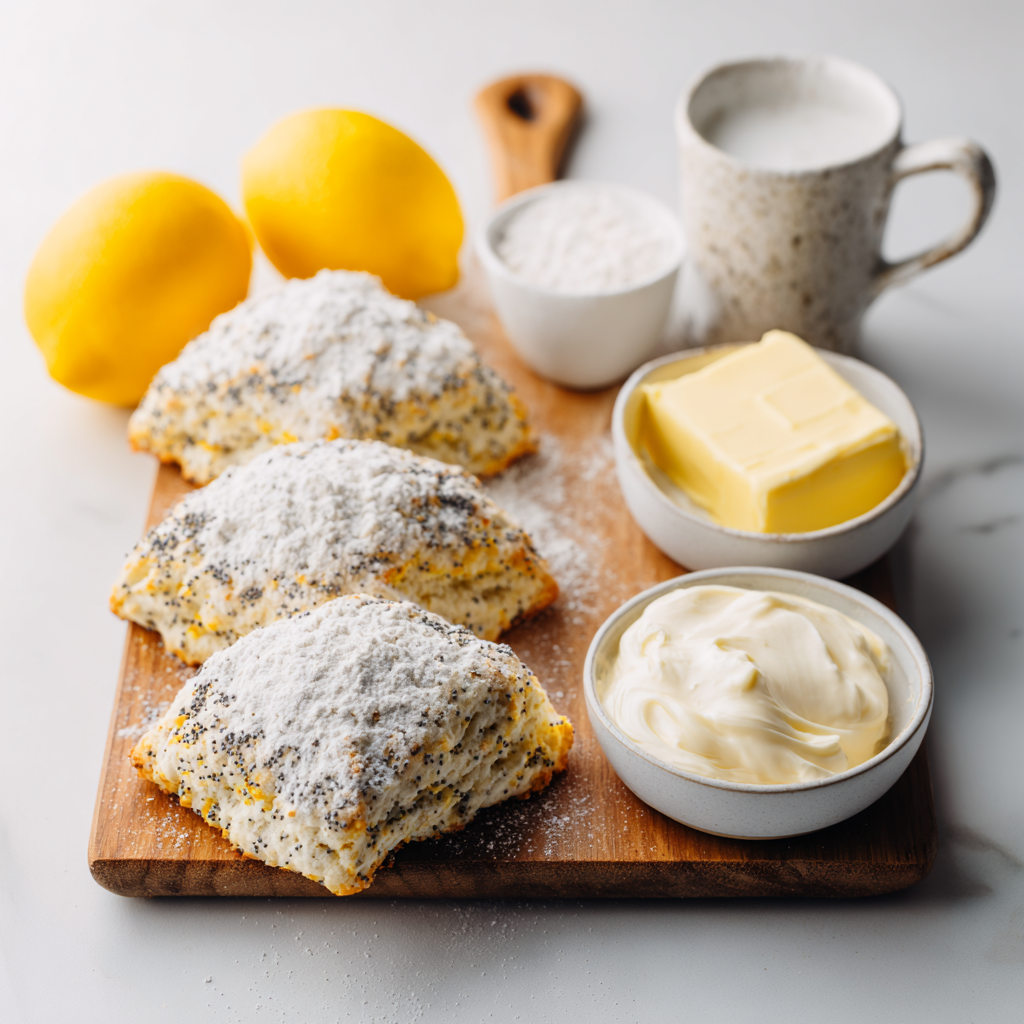
Ingredients for Lemon Poppy Seed Scones
Let’s talk about what goes into these. The ingredient list is short, but each one pulls its weight. No question.
- Cold heavy cream: This is your fat and your liquid in one. The higher fat content gives you that tender crumb. Don’t substitute with milk unless you’re in a real pinch the texture won’t be the same.
- Poppy seeds: One tablespoon is all you need. They add that classic speckled look and a subtle crunch. Make sure yours are fresh old poppy seeds can taste a bit off.
- All-purpose flour: Standard stuff. No need for bread flour or cake flour here. AP flour gives the right structure.
- Granulated sugar: Just three tablespoons. These scones aren’t overly sweet, which is perfect because the glaze adds sweetness later.
- Fresh lemon zest: This is where the magic happens. You need a full tablespoon of zest. That’s about two good-sized lemons. The oils in the zest carry all that bright lemon flavor. Don’t skip it.
- Frozen unsalted butter: This is the big trick. Four tablespoons of frozen butter, grated directly into the flour. That’s what creates those flaky layers.
- Egg and fresh lemon juice: The egg adds richness, and the lemon juice gives a little tang that balances the sweetness.
- Almond extract: Half a teaspoon. It’s subtle, but it rounds out the lemon flavor in a way that’s hard to describe. Just trust me on this one.
For the glaze, you just need confectioners’ sugar and more fresh lemon juice. Simple stuff.
Step-by-Step Instructions
Alright, let’s walk through this. I’ll break it down into four stages so you can see the progress. Take your time, and remember gentle hands.
Stage 1: Prep the Wet Ingredients
Start by lining a baking sheet with parchment paper. Then grab a large measuring cup and whisk together 2/3 cup of cold heavy cream and the poppy seeds. Let that sit for ten minutes. This gives the poppy seeds time to soften a little and release their flavor into the cream. While that’s happening, you can get everything else ready.
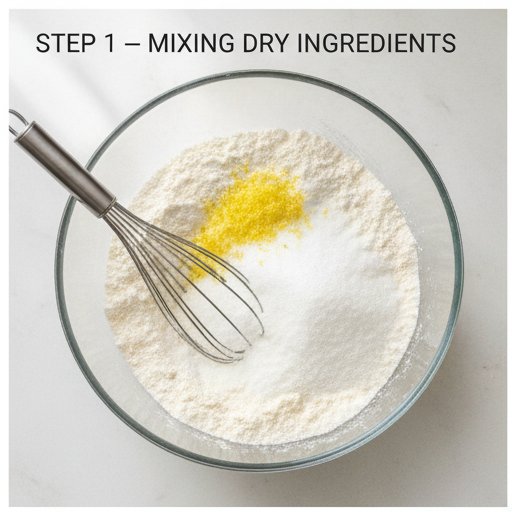
Stage 2: Mix the Dry Ingredients and Cut in the Butter
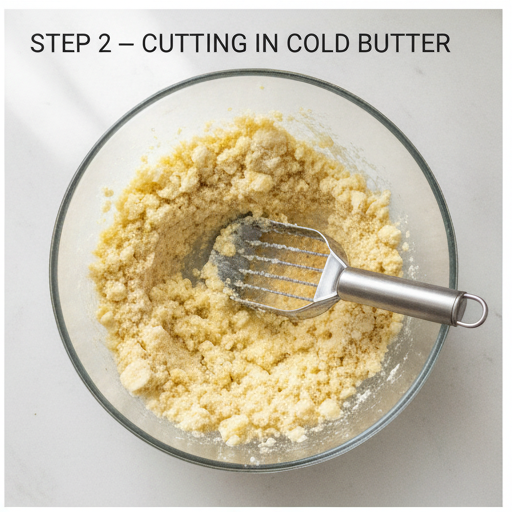
In a large bowl, whisk together the flour, sugar, lemon zest, baking powder, and salt. The lemon zest should get all mixed in so every bite has that flavor. Now for the key part: take your frozen butter and grate it directly into the flour mixture using a box grater. If you don’t have a box grater, you can cut the butter into small cubes instead. Then use a pastry cutter or your fingers to work the butter into the flour until it looks like coarse crumbs with some pea-sized bits remaining. That’s exactly what you want.
Stage 3: Combine and Shape the Dough
Now add the egg, lemon juice, and almond extract to the measuring cup with the cream and poppy seeds. Whisk it all together. Pour this into the flour mixture and stir with a wooden spoon or silicone spatula until large dough crumbles form. Stop as soon as it comes together. Overmixing is the enemy here it develops gluten and makes your scones tough.
Use your hands to gently gather the dough into a loose ball. If it seems too dry, add another tablespoon of cream. If it’s too sticky, add a little more flour. Transfer the dough to a lightly floured surface and press it into an 8-inch round disc. Use a bench scraper or sharp knife to cut it into 8 triangles.
Stage 4: Chill, Bake, and Glaze
Place the scones on your prepared baking sheet. Brush the tops with a little extra cream and sprinkle with additional sugar if you want that crunchy top. Here’s a step a lot of people skip: refrigerate the baking sheet while the oven preheats, about 15 minutes. This keeps the butter cold, which gives you taller, flakier scones.
Preheat the oven to 400°F. After the oven reaches temperature, wait five more minutes to make sure it’s fully hot. Then bake the scones for 20 to 22 minutes, until the edges are golden brown. Let them cool on the pan for a few minutes, then transfer to a wire rack. For the glaze, whisk together confectioners’ sugar and lemon juice until smooth, then drizzle over the cooled scones.

Tips for Perfect Scones
I’ve made enough mistakes with scones to fill a cookbook. Here are the things that actually matter.
- Cold butter is non-negotiable: This is the single most important tip. If your butter warms up, your scones will spread out flat and be dense. Keep it in the freezer until the last second. That’s the move.
- Don’t overwork the dough: Mix until it just comes together. A few dry spots are fine. You’re not making bread dough here. Overworking activates gluten and gives you tough, rubbery scones.
- Chill the shaped scones: That 15-minute rest in the fridge while the oven preheats makes a real difference. It firms up the butter again, which means the scones will rise tall instead of spreading out.
- Use fresh lemon zest: Bottled lemon juice works in a pinch for the glaze, but fresh zest is irreplaceable. The oils in the zest give you that bright, clean lemon flavor that makes these scones special.
- Let them cool before glazing: If you glaze hot scones, the glaze will just melt and soak in. Wait until they’re completely cool for that beautiful white drizzle.
Variations to Try
This recipe is a solid base, and you can play around with it once you’ve made it once or twice. Here are a few ideas.
- Blueberry lemon poppy seed scones: Fold in 1/2 cup of fresh or frozen blueberries (don’t thaw them) right before you shape the dough. The berries burst a little in the oven and create these amazing pockets of jammy flavor.
- Gluten-free version: Substitute the all-purpose flour with a good 1-to-1 gluten-free baking flour blend. Add an extra tablespoon of cream since gluten-free flours tend to absorb more liquid.
- Vegan scones: Use a plant-based heavy cream alternative (look for one with a higher fat content) and replace the egg with a flax egg (1 tablespoon ground flaxseed mixed with 3 tablespoons water, let sit for 5 minutes). Use vegan butter that’s frozen solid.
- Extra lemony: Add another teaspoon of lemon zest to the dough and use 2 tablespoons of lemon juice in the glaze instead of 1. It’ll be punchy.
Storage & Freezing
These scones are best the day you bake them that’s just the truth. But you can still enjoy them for a few days after. Store them in an airtight container at room temperature for up to three days. To refresh them, pop one in a 300°F oven for about five minutes. It brings back some of that crispness.
For longer storage, you have two options. You can freeze baked scones: wrap them tightly in plastic wrap and put them in a freezer-safe bag for up to three months. Thaw at room temperature and reheat in the oven. Or you can freeze unbaked scones: shape them, place them on a baking sheet in the freezer until solid, then transfer to a freezer bag. Bake from frozen, adding an extra three to five minutes to the baking time. That way you can have fresh scones whenever you want.

Frequently Asked Questions
More Lemon Recipes to Try
If you’re on a lemon kick and honestly, who isn’t during summer there are plenty of other ways to use that citrus. Lemon bars are always a crowd-pleaser. A simple lemon pound cake is great for afternoon tea. Or you could try lemon curd, which is surprisingly easy to make and works on everything from toast to ice cream.
But these lemon poppy seed scones? They’re my go-to. They come together fast, they look impressive, and they taste like something you’d pay eight dollars for at a fancy bakery. Plus, the smell of lemon and butter baking in your kitchen is worth the effort alone.
I’d love to see how yours turn out. Tag me when you make them I love seeing your scone success! And if you’re looking for more inspiration, check out my Pinterest board for even more baking ideas.
Source: Nutritional Information