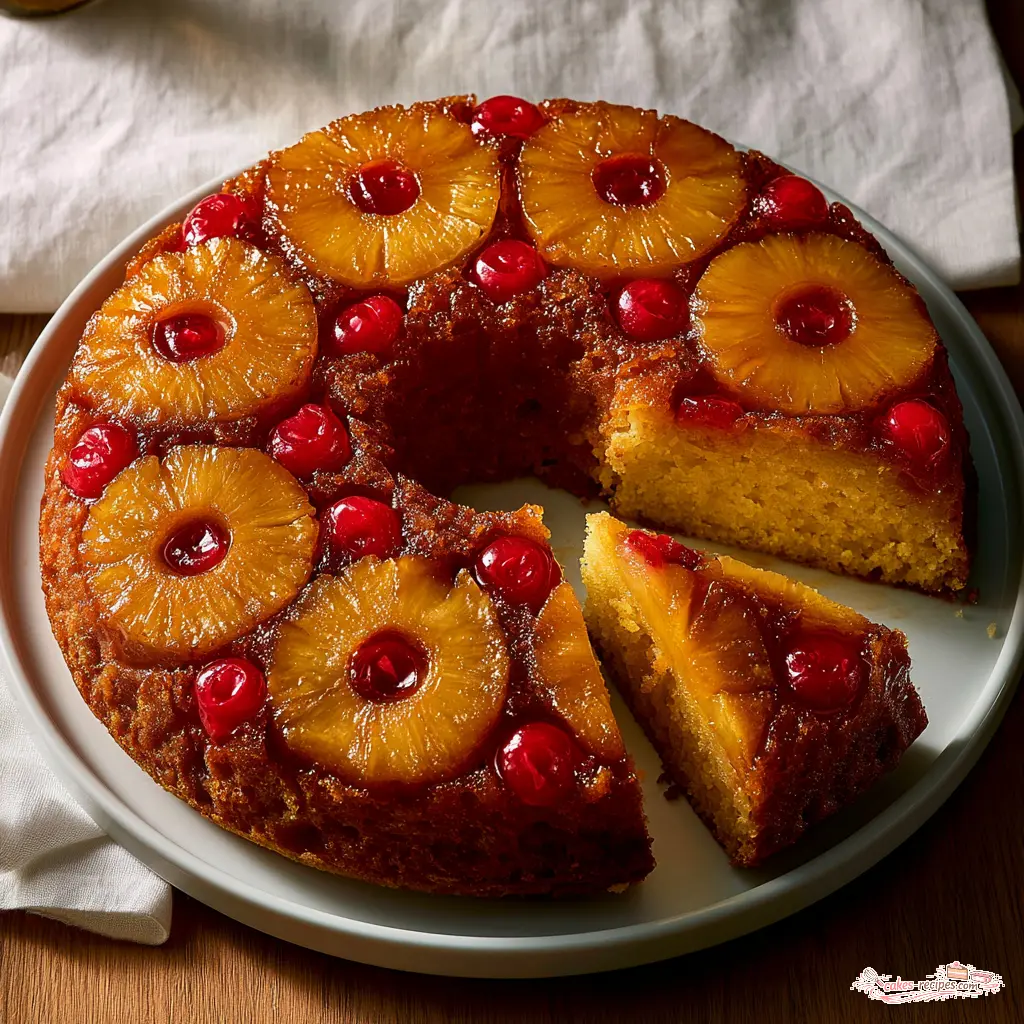
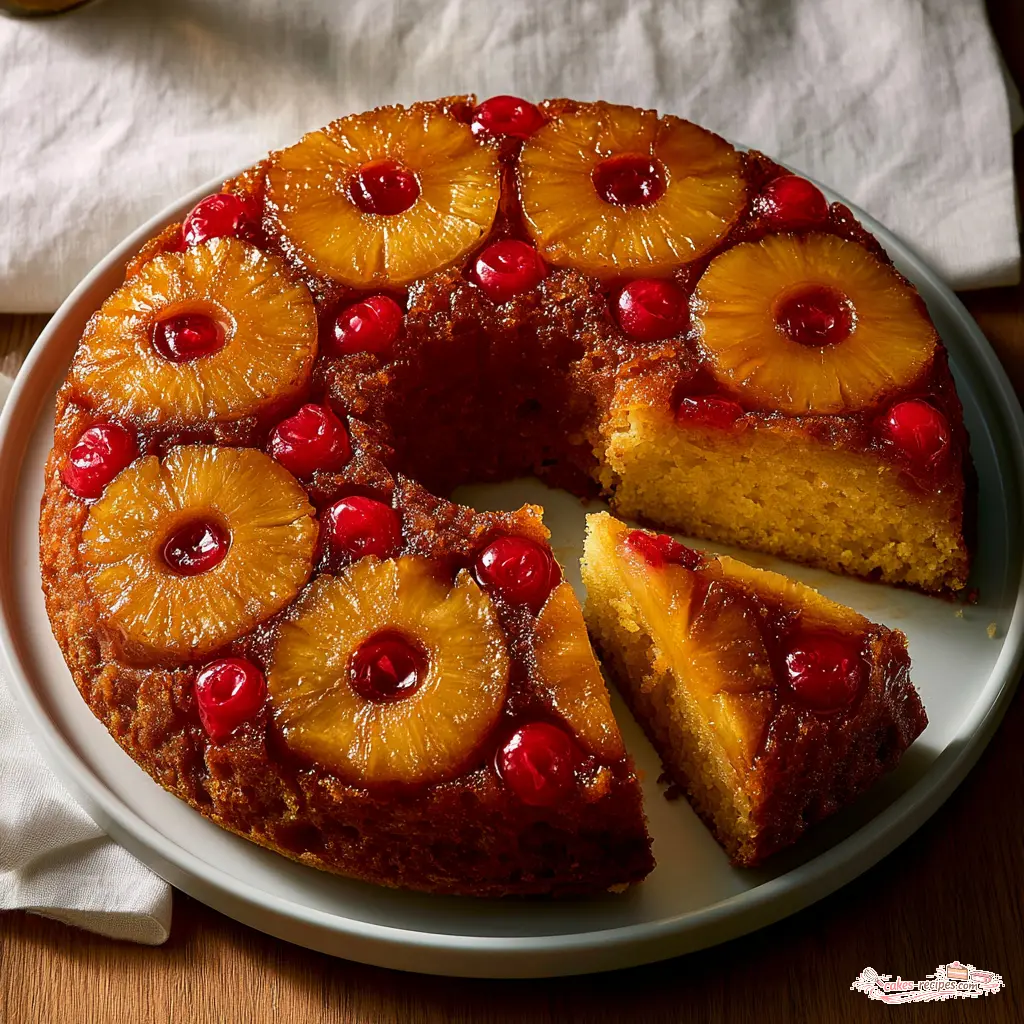
Caramelized Sourdough Pineapple Upside Down Cake
Ingredients
Method
- Preheat the oven to 350°F. Grease a 9-inch round cake pan well on the sides and bottom.
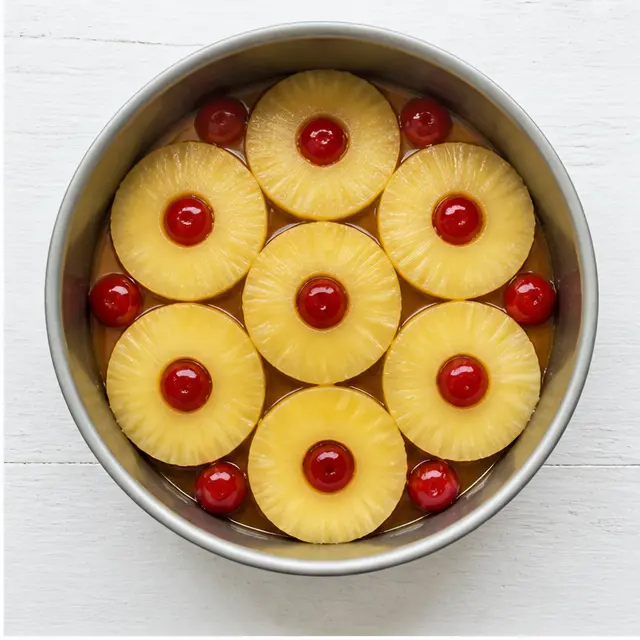
- In a small saucepan over medium-low heat, melt the 1/3 cup butter. Stir in the brown sugar and 2 teaspoons pineapple juice until smooth and fully melted. Do not let it boil. Remove from the heat right away and pour into the prepared cake pan. Arrange the 7 pineapple rings in a single layer over the caramel, then place a maraschino cherry in the center of each ring. Fill any gaps between the rings with extra cherries if you like.
- In a large bowl or the bowl of a stand mixer, beat the softened 1/2 cup butter and granulated sugar together until light and fluffy, about 2 to 3 minutes.
- Add the eggs one at a time, mixing well after each addition. Mix in the vanilla extract, 2 tablespoons pineapple juice, sourdough discard, and whole milk until fully combined.
- In a separate bowl, whisk together the all-purpose flour, baking powder, baking soda, and salt.
- Add the dry ingredients to the wet ingredients and stir just until no dry streaks remain. Do not overmix.
- Pour the batter evenly over the pineapple topping in the pan. Bake for 34 to 35 minutes, or until a toothpick inserted in the center comes out clean.
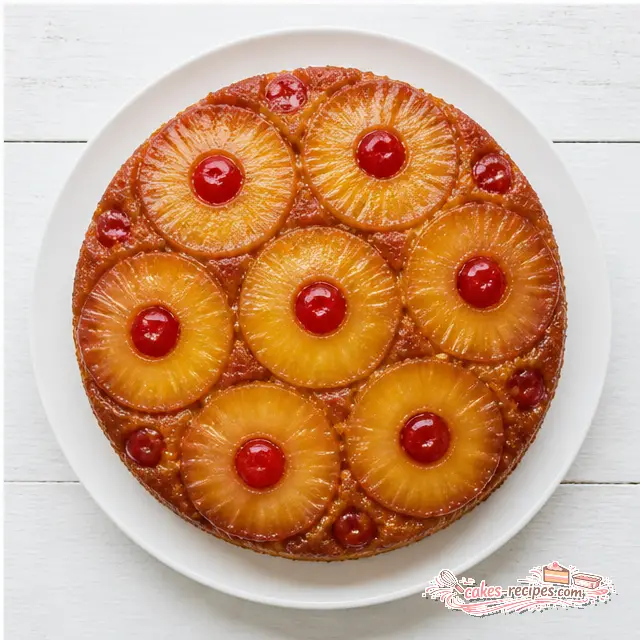
- Let the cake rest in the pan for 5 to 10 minutes. Run a knife around the edges, then carefully flip it onto a serving plate. Serve warm or at room temperature.
Nutrition
Notes
Tried this recipe?
Let us know how it was!Why This Pineapple Upside Down Cake Works
I’ve lost count of the evenings I’ve stood in front of the fridge, staring at a jar of sourdough discard and feeling quietly guilty about the weekly toss. You know the routine. Feed the starter, scrape out the excess, wonder if there’s a better ending for it than the trash can.
There is. And it’s a pineapple upside down cake that honestly rivals anything I’ve baked with a brand-new starter.
The sourdough discard does something special here. It adds a gentle tang that cuts through the sweet caramelized pineapple topping, and the natural acidity reacts with the baking soda to keep the crumb light. That’s the chemistry part. The fun part is the flip.
The first upside down cake I ever made came out in sad, sticky pieces. Cherries everywhere, pineapple clinging to the pan like it had made a home there. I learned the hard way that timing matters more than courage. This recipe builds that timing in.
Here’s why this sourdough pineapple upside down cake is worth your Sunday afternoon:
- Tangy sourdough cake crumb that balances the brown sugar glaze
- Caramelized pineapple topping with glossy, buttery edges
- A forgiving technique that works on the first try, even for beginners
- A genuinely smart discard use, which makes the whole thing feel resourceful instead of wasteful
Key Ingredients & Substitutions
Let’s talk about the players before we get to the mixing bowl. This pineapple upside down cake leans on pantry staples, which is part of its charm. You probably have most of this already.
Canned pineapple rings are my default here. They’re consistent in sweetness and moisture, which matters when you’re building a caramelized topping. Fresh pineapple can work, but it’s less predictable in baking. If you go fresh, pat the rings dry and simmer them briefly in pineapple juice to concentrate the flavor. That little step pays off.
Maraschino cherries are the classic dot in the center of each ring. Bright, juicy, and just the right hit of retro nostalgia. For a more old-school bake sale look, glacé cherries work beautifully too. Or skip them entirely and pack the gaps with extra pineapple.
A few more notes, since substitutions always come up:
- Butter: unsalted keeps the sweetness in check. Dairy-free butter works in a pinch, just watch the salt content.
- Eggs: bring them to room temperature first. They emulsify better and give you a more consistent rise.
- Flour: all-purpose is the base. A 1:1 gluten-free blend can work if that’s your world, but expect a slightly different crumb.
- Milk: whole milk gives the richest texture. Lower-fat milk makes the cake a touch less tender.
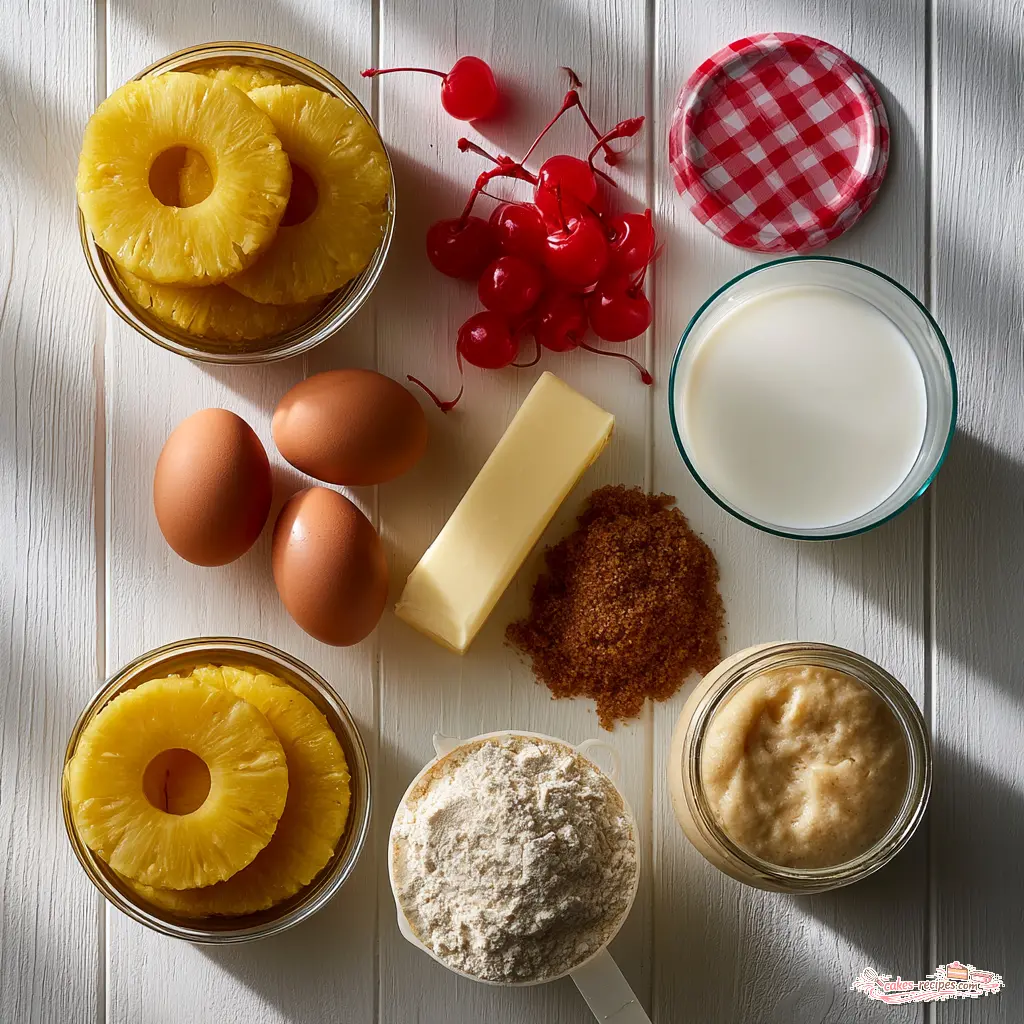
When in doubt, weigh your ingredients. Measuring flour by weight is more accurate than scooping, and this moist butter cake from scratch deserves that level of attention.
Baking with Sourdough Discard
Here’s the thing that surprises people: you don’t need an active starter for this cake. Cold, unfed discard straight from the fridge works perfectly. I’ve done it a dozen times.
Why? As sourdough discard sits in the fridge, it keeps developing lactic acid. That acid does two jobs. It reacts with the baking soda to create lift, which gives you a lighter crumb. And it leaves behind a subtle tang that makes the sweet brown sugar topping taste even brighter. Same principle as buttermilk in a cake, just with more personality.
One tip: don’t use discard that’s been sitting for months with a grey liquid layer on top. Keep it to about two weeks old and you’ll get a pleasant tang without aggressive sourness. That’s the sweet spot.
Yes, you can use active starter if that’s what you have. The result will be slightly less tangy but still excellent. This has become one of my favorite sourdough discard uses baking, right up there with a classic pineapple upside down cake.
How to Make Pineapple Upside Down Cake
Grab a solid 9-inch round cake pan and let’s get to work. You’ll move through four stages: the caramel, the arrangement, the batter, and the flip. Every great pineapple upside down cake starts with that order, and it doesn’t take long.
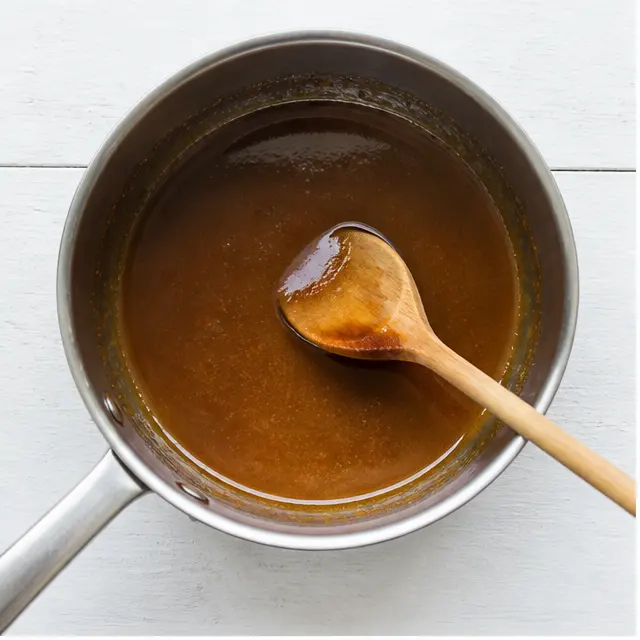
Stage 1: Make the caramel topping. Melt the butter in a small saucepan over medium-low heat, then stir in the brown sugar and a couple teaspoons of pineapple juice until smooth. Here’s the critical part: do not let it boil. Boiling can make the caramel seize and turn gritty, and you want a silky brown sugar glaze instead. Pour it straight into your greased pan.
Stage 2: Arrange the pineapple rings. Lay the canned pineapple rings in a single layer over the caramel, then drop a maraschino cherry in the center of each ring. Nestle them snugly. Gaps let the batter sneak underneath and shift your pattern during baking, and nobody wants a lopsided retro pineapple dessert.
Stage 3: Mix the batter. Cream the softened butter with granulated sugar until light and fluffy, about 2 to 3 minutes. Add room temperature eggs one at a time, then the vanilla, pineapple juice, sourdough discard, and milk. Whisk the dry ingredients separately, then fold them in gently. Stop the moment no dry streaks remain. Overmixing develops gluten, and gluten makes a tough, dense cake.
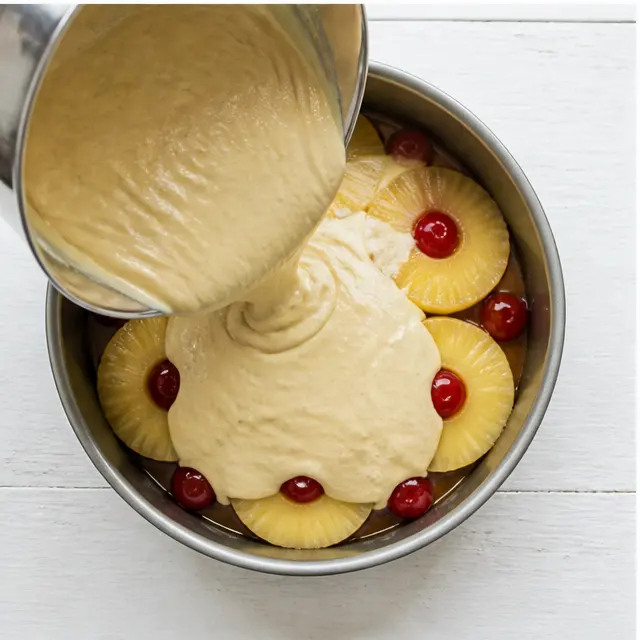
Stage 4: Bake and flip. Pour the batter evenly over the pineapple topping and bake at 350°F for 34 to 35 minutes. You’ll know the cake is ready when the edges pull away from the pan and a toothpick inserted in the center comes out clean. Let it rest for 5 to 10 minutes, no longer. Run a knife around the edges, place your serving plate over the pan, and flip with confidence.
The moment of truth: the heat on your wrist, the soft hiss of caramelized sugar releasing, and then the first peek of that amber top studded with cherries. It never gets old.
Tips for the Best Caramel Topping
A gorgeous caramelized pineapple topping is what separates a good pineapple upside down cake from a great one. You can nail it on the first try with these rules. I’ve ruined enough cakes to know exactly where things go sideways.
- Keep the heat low. Melt the butter and brown sugar over medium-low, and pull it off the stove as soon as it’s smooth.
- Press the fruit down gently into the caramel before adding batter, so the topping stays glossy and intact.
- Wait 5 to 10 minutes before flipping. That’s the upside down cake flip technique in a nutshell. Too soon and the caramel is too loose. Too long and it hardens, cementing the cake to the pan.
- Don’t use a springform pan. The caramel can leak through the seam and make a mess of your oven. A solid 9-inch round pan is the way to go.
Common mistakes, quick fixes:
❌ Overmixing the batter into a rubbery mess → ✅ Stir until just combined, then stop.
❌ Letting the cake cool completely in the pan → ✅ Flip within 10 minutes, while the caramel is still warm.
❌ Using a smaller pan and watching topping bubble over → ✅ Stick with a 9-inch round pan, or a well-seasoned cast iron skillet cake pan of the same size.
And if one pineapple ring shifts during the flip? Just nudge it back with a spatula. It’ll still taste incredible, I promise.
Pineapple Upside Down Cake Variations
Once you’ve mastered the classic, the template is endlessly forgiving. This potluck-friendly pineapple upside down cake adapts well to a few fun twists:
- Fresh pineapple: pat the rings dry and simmer them in pineapple juice first. Less predictable than canned, but the aroma is noticeably brighter.
- Glacé cherries: a more traditional, bake sale style center instead of maraschino cherries.
- Extra cherries in the gaps: because more cherries is seldom a bad decision.
- Cupcake version: the batter adapts well to a muffin tin. Just reduce the bake time and put a spoonful of caramel in each cup before the batter.
For the canned vs fresh pineapple for baking debate, the short answer is: canned wins for consistency, fresh wins for aroma. Pick based on what your week looks like. Both deliver that golden yellow crumb you’re after.
Storage & Serving Tips
I love this one best warm, with a scoop of vanilla ice cream melting into the caramel edges. The hot-cold contrast is pure nostalgia, the kind of pineapple upside down cake with ice cream moment that shows up at every good potluck.
Leftovers keep beautifully, which is one of the pleasant surprises of baking with sourdough. The natural acidity helps retain moisture, so this sourdough pineapple cake stays softer longer than a standard butter cake.
- Room temperature: cover and keep for up to 3 days.
- Fridge: up to a week in an airtight container.
- Reheating: individual slices for about 15 seconds in the microwave. You’ll get that fresh-from-the-oven aroma back.
- Freezer: wrap slices well and freeze for up to 2 months. Thaw overnight in the fridge.
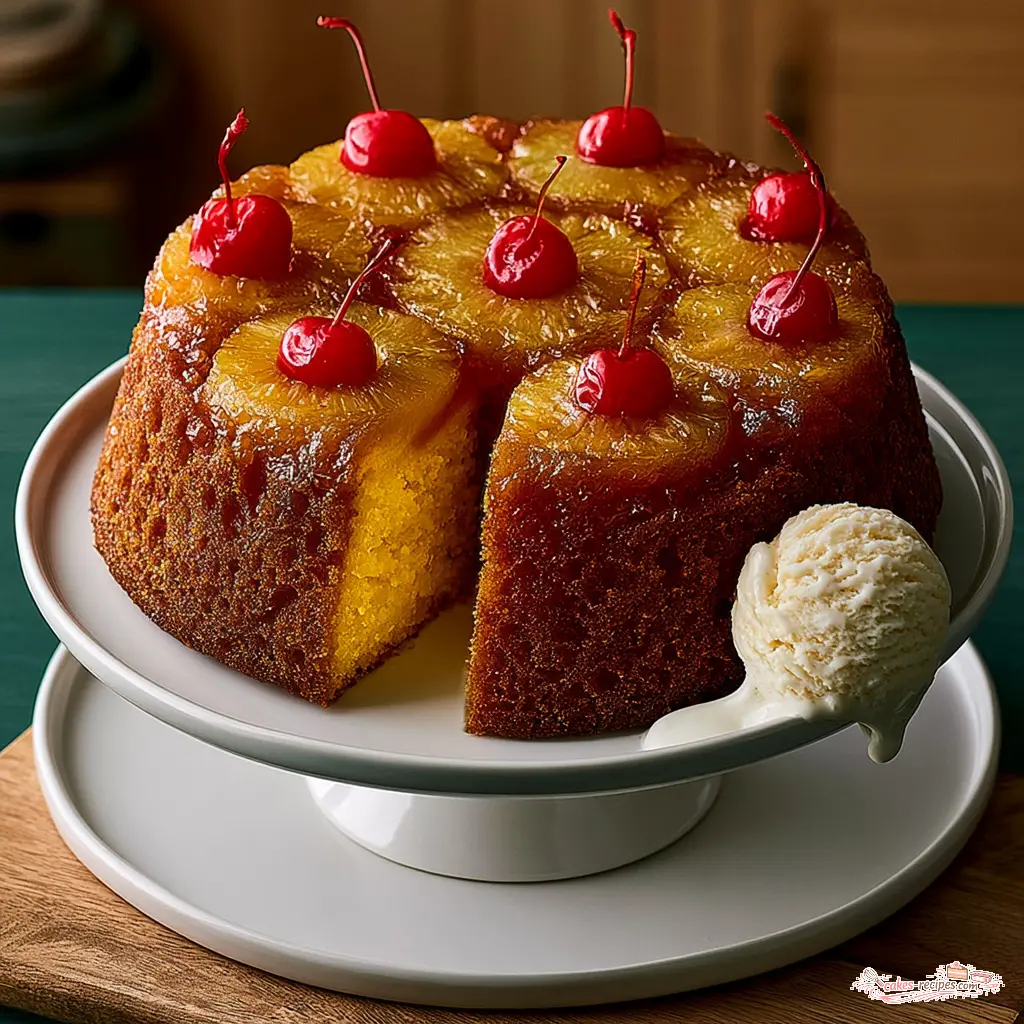
If you’re bringing this to a gathering, it’s the rare potluck dessert that actually gets easier as the day goes on. Slice it at room temperature, or warm it slightly, and watch it disappear.
Frequently Asked Questions
That jar of discard in your fridge isn’t a problem to solve. It’s an invitation. This pineapple upside down cake turns kitchen waste into the kind of dessert people ask about for weeks: the golden yellow crumb, the caramel edges, the little cherry centers that feel like a tiny celebration. Bake it once, and I suspect you’ll be making it all summer.
If you make this sourdough pineapple upside down cake, I’d love to hear how the flip went. Find me on Pinterest and share your bake with me. I’m always collecting the before and after stories, especially the ones where the caramel holds steady.
Source: Learn More About This Dish
Why is my pineapple upside down cake so dense?
Usually it’s overmixing. Stirring the batter too aggressively develops gluten, which makes the crumb rubbery and heavy. Mix just until no dry streaks remain. Also check that your baking powder and baking soda are fresh, since they do the lifting work here.
How long do you cool an upside down cake before inverting?
Let it rest in the pan for 5 to 10 minutes, then flip. Any shorter and the caramel hasn’t settled enough to release cleanly. Any longer and it hardens and cements the cake to the pan. Run a knife around the edges first, then invert with one confident motion.
Can I use parchment paper for an upside-down cake?
Yes, line the bottom with a parchment circle for extra insurance against sticking. Just peel it off carefully right after flipping while the caramel is still warm, or it can fuse to the paper. A well-greased pan alone works great too.
Can I use sourdough discard to make a pineapple upside down cake?
Absolutely. Cold, unfed discard straight from the fridge works perfectly here. The natural acidity reacts with the baking soda to keep the crumb light, and it adds a subtle tang that balances the sweet brown sugar glaze. That’s the whole magic of this recipe.
How do you make the caramel topping for a sourdough pineapple upside down cake?
Melt butter with packed brown sugar and a splash of pineapple juice over medium-low heat. Stir until smooth, then remove from the heat immediately. Don’t let it boil, or the caramel can seize and turn gritty. Pour it into the pan and arrange the pineapple rings right on top.
What can I substitute for maraschino cherries in this pineapple upside down cake?
Glacé cherries give a more traditional bake sale look and hold their color well. You can also skip them entirely and tuck extra pineapple pieces into the gaps. Dried cranberries work in a pinch, though they soften differently in the caramel.
How should I store leftover sourdough pineapple upside down cake?
Cover it and keep at room temperature for up to 3 days, or refrigerate for up to a week. Reheat individual slices in the microwave for about 15 seconds to bring back that just-baked feel. Freeze wrapped slices for up to 2 months if you need to save them longer.
Do I need to use pineapple juice in the batter for a sourdough pineapple cake?
Not strictly, but it does two things: it reinforces the pineapple flavor throughout the crumb, and the extra moisture keeps the cake tender. If you skip it, add an equal amount of milk to keep the batter consistency the same. Either way, the cake will bake up golden and soft.