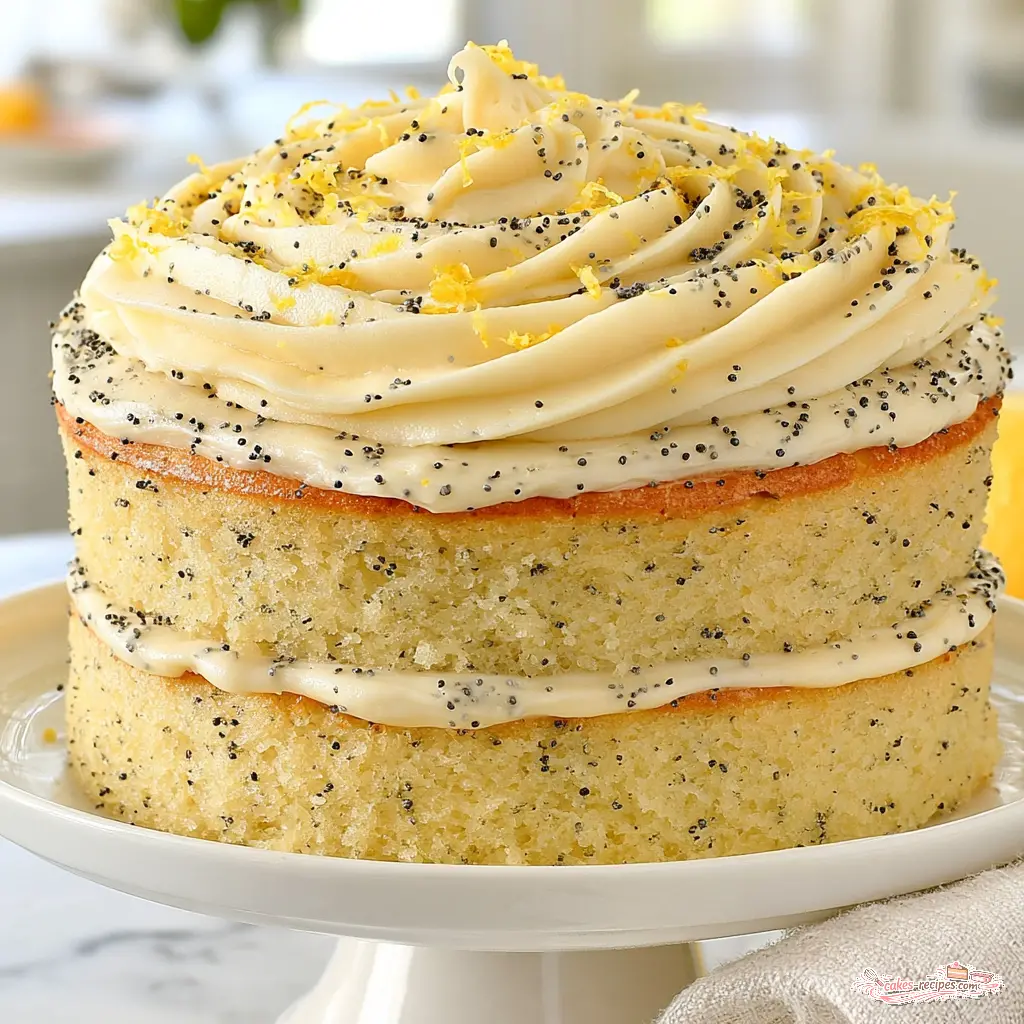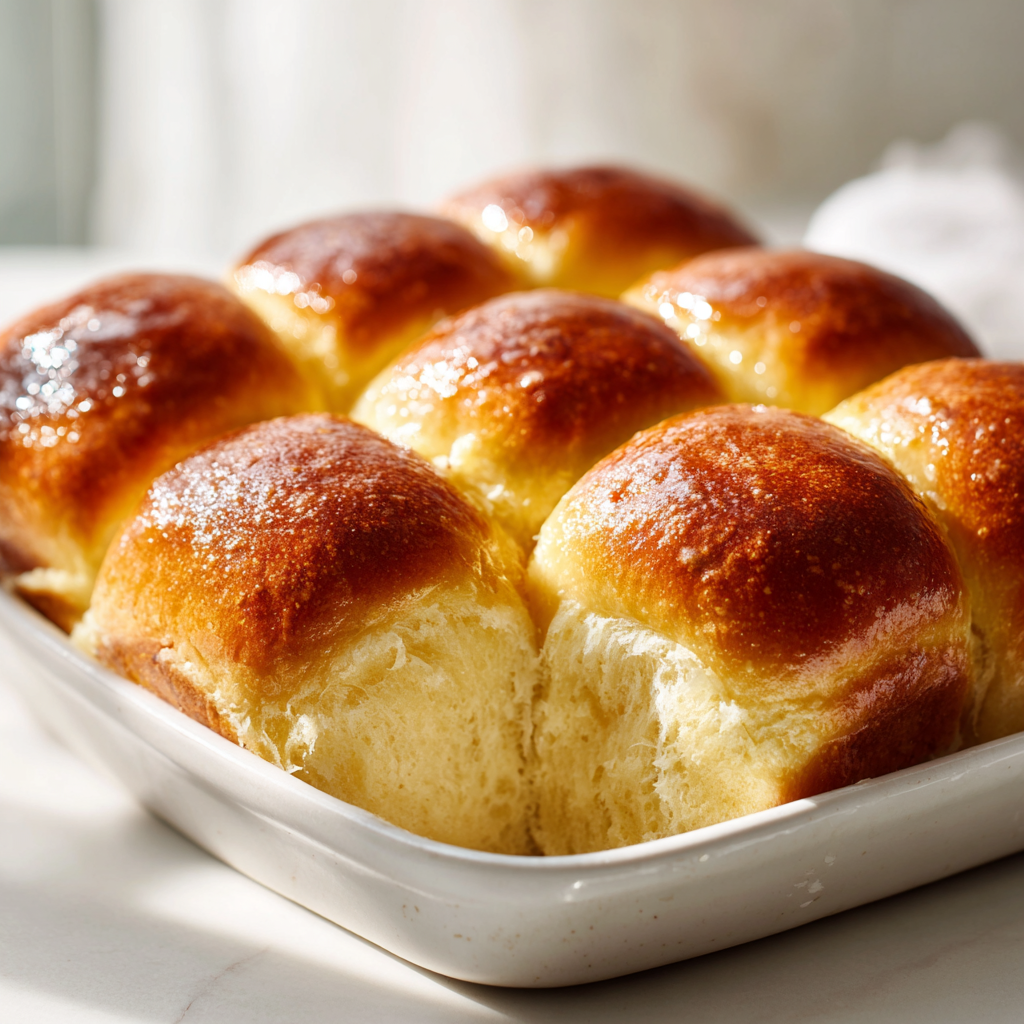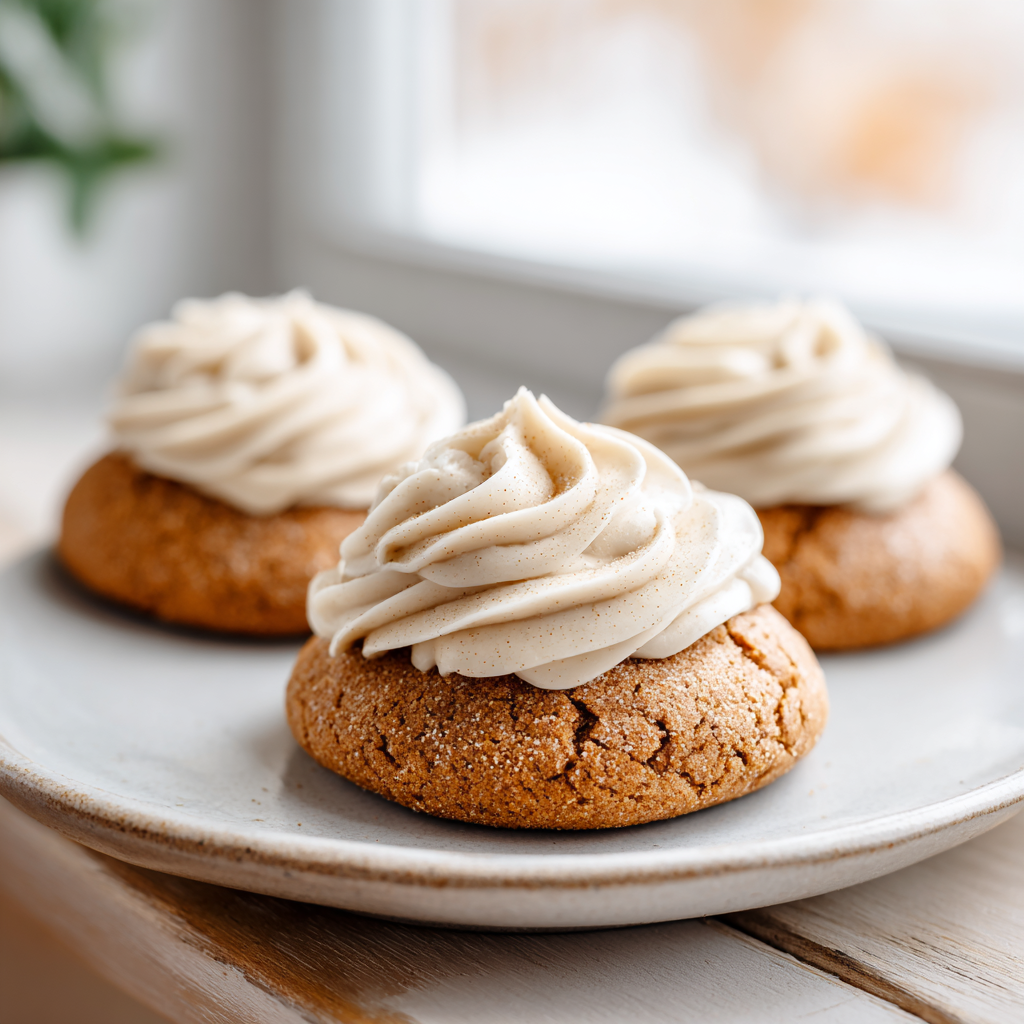
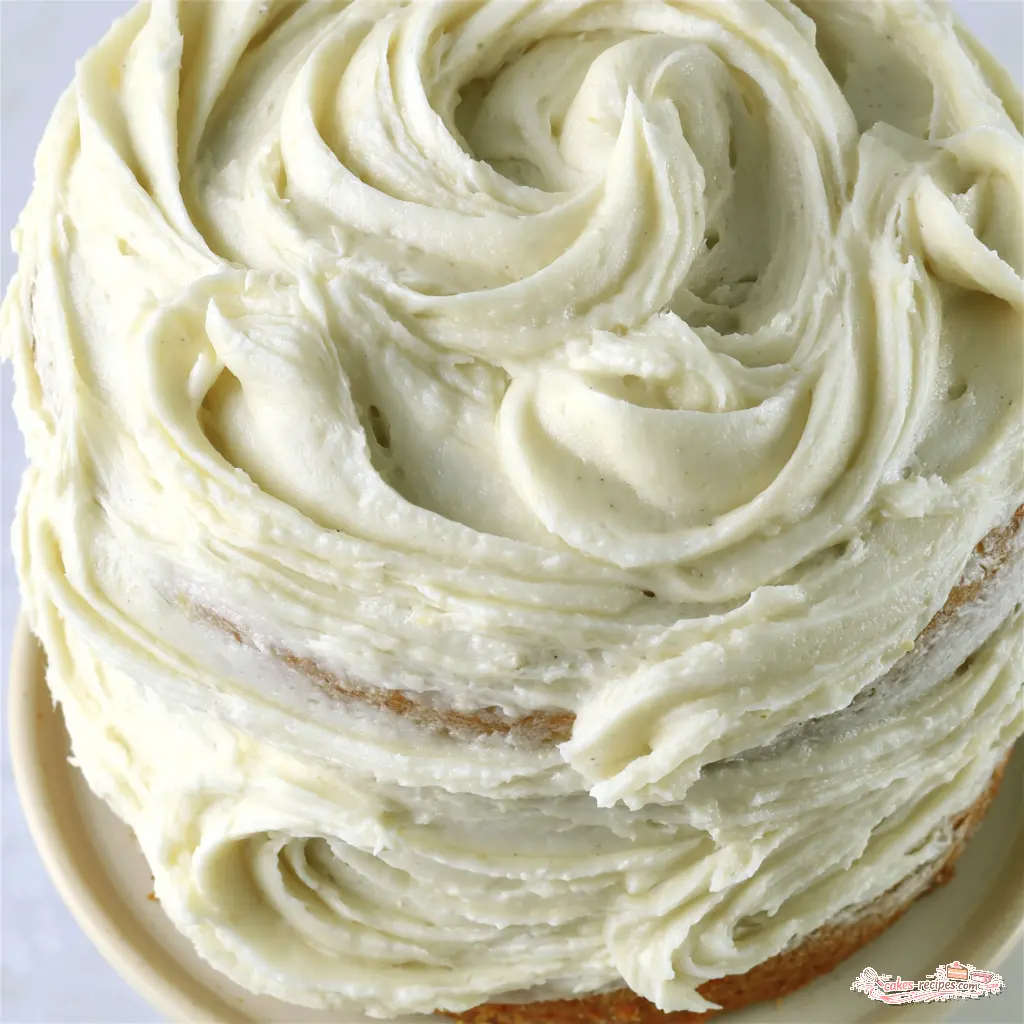
Why This Cream Cheese Frosting Works
If you’ve ever watched frosting slide off the side of a cake in slow motion, you’re not alone. I’ve done it. Twice in one weekend, both times about twenty minutes before guests walked in the door.
Cream cheese frosting has a reputation for being the flaky friend who cancels at the last minute. Gorgeous flavor, unreliable behavior.
This version is different, and honestly the reason is boring: the ratio. Eight ounces of cream cheese, one cup of unsalted butter, four cups of powdered sugar.
That’s enough butter and sugar to trap air and hold a soft peak, and enough cream cheese to keep the whole thing tangy instead of cloying. Five minutes. One bowl. No cooking.
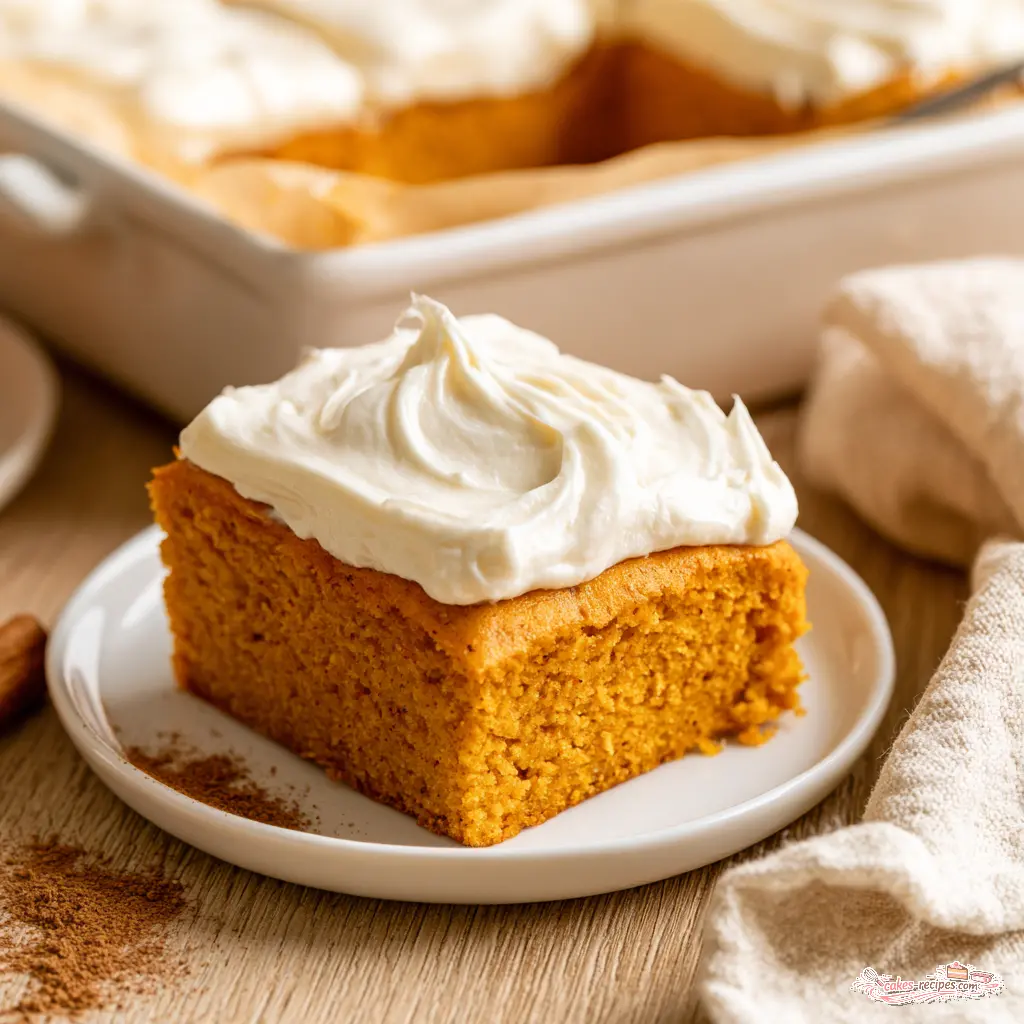
With Thanksgiving about two months out, this is the recipe I’ll be making for our holiday pumpkin cake and my aunt Caroline’s carrot cake. Both get the same treatment.
Silky, Tangy, and Perfect for Cakes
What you’re chasing is a frosting that tastes like cream cheese first and sugar second. Most tubs at the grocery store, and plenty of homemade batches, flip that order.
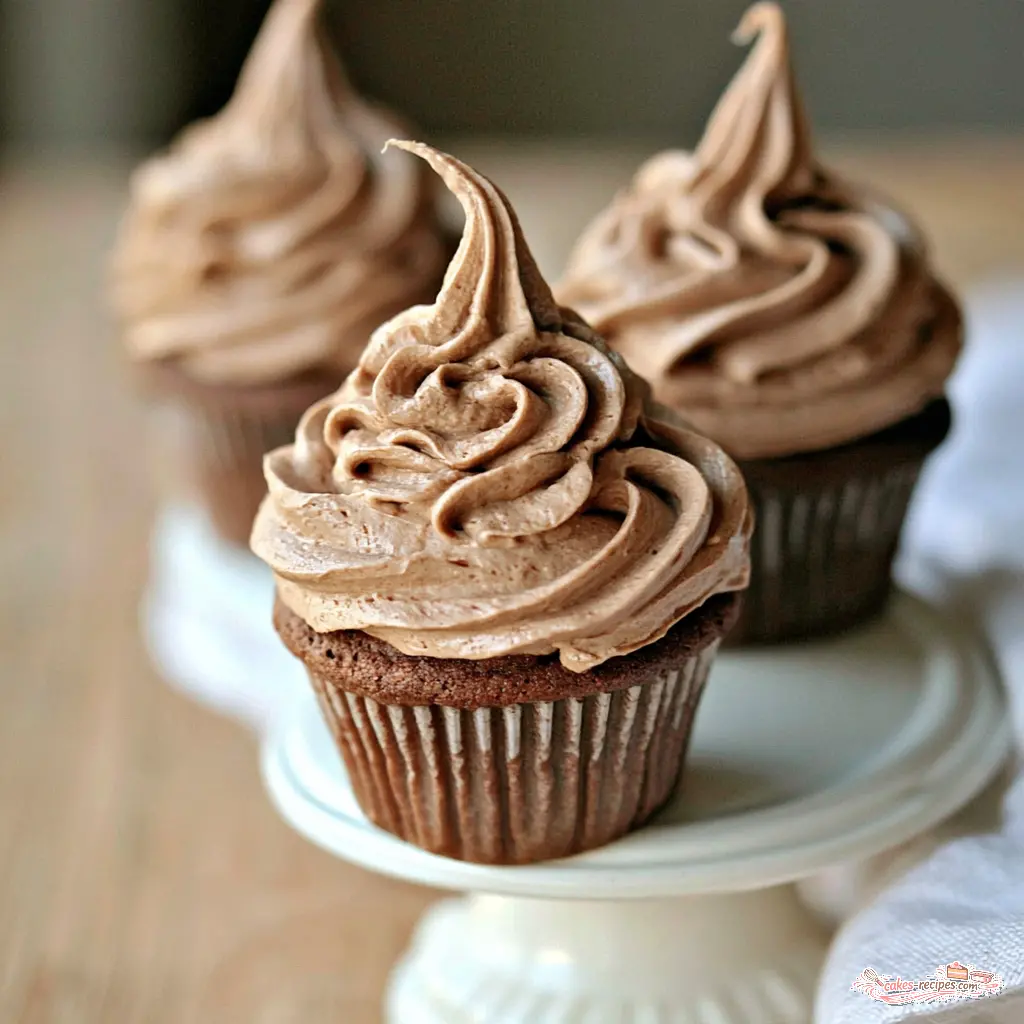
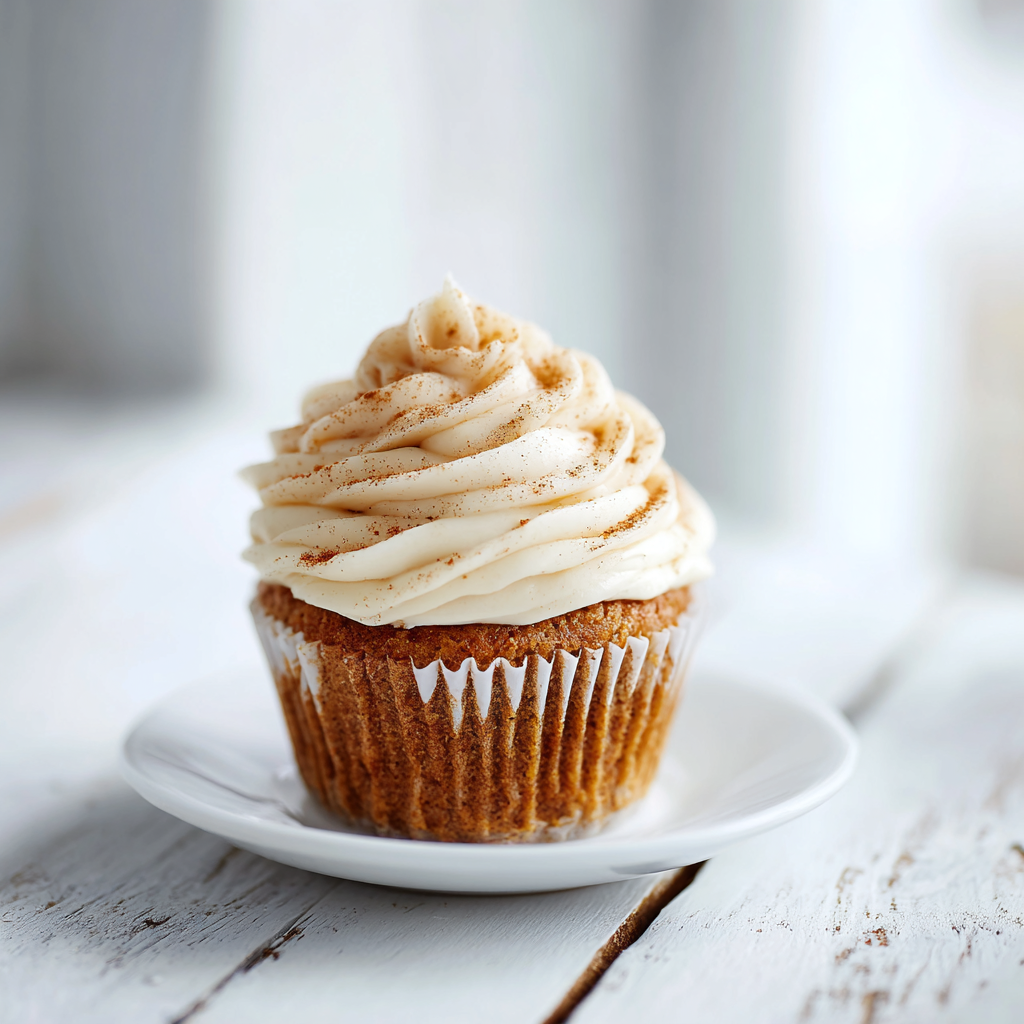
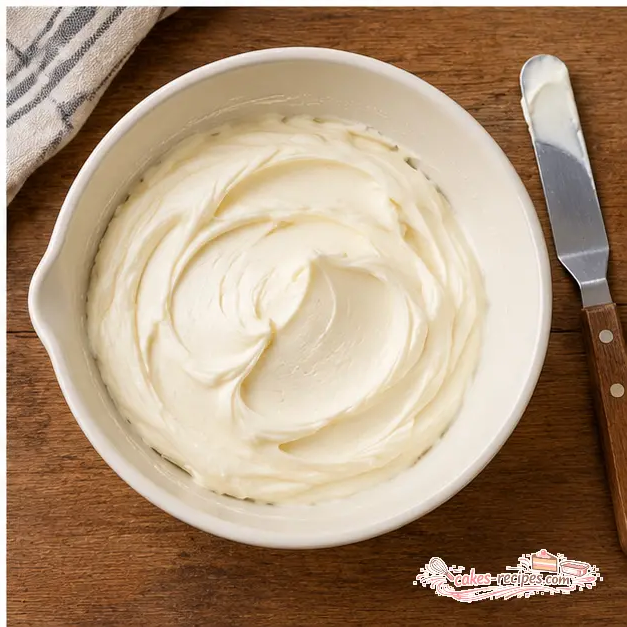
When it’s right, the texture is glossy and cloud-like. Thick enough to hold a swirl, soft enough to spread without dragging up crumbs.
- Tangy, from real cream cheese rather than sugar syrup
- Silky, because the fat is fully emulsified instead of grainy
- Sturdy enough for a layer cake, but never stiff or pasty
It also isn’t as sweet as American buttercream. If you’ve ever scraped frosting off a slice because it was too much, you’ll notice the difference immediately.
What You’ll Need (Three Simple Ingredients)
The temperature of two of them decides everything. Let me say that again, because it’s the whole game.
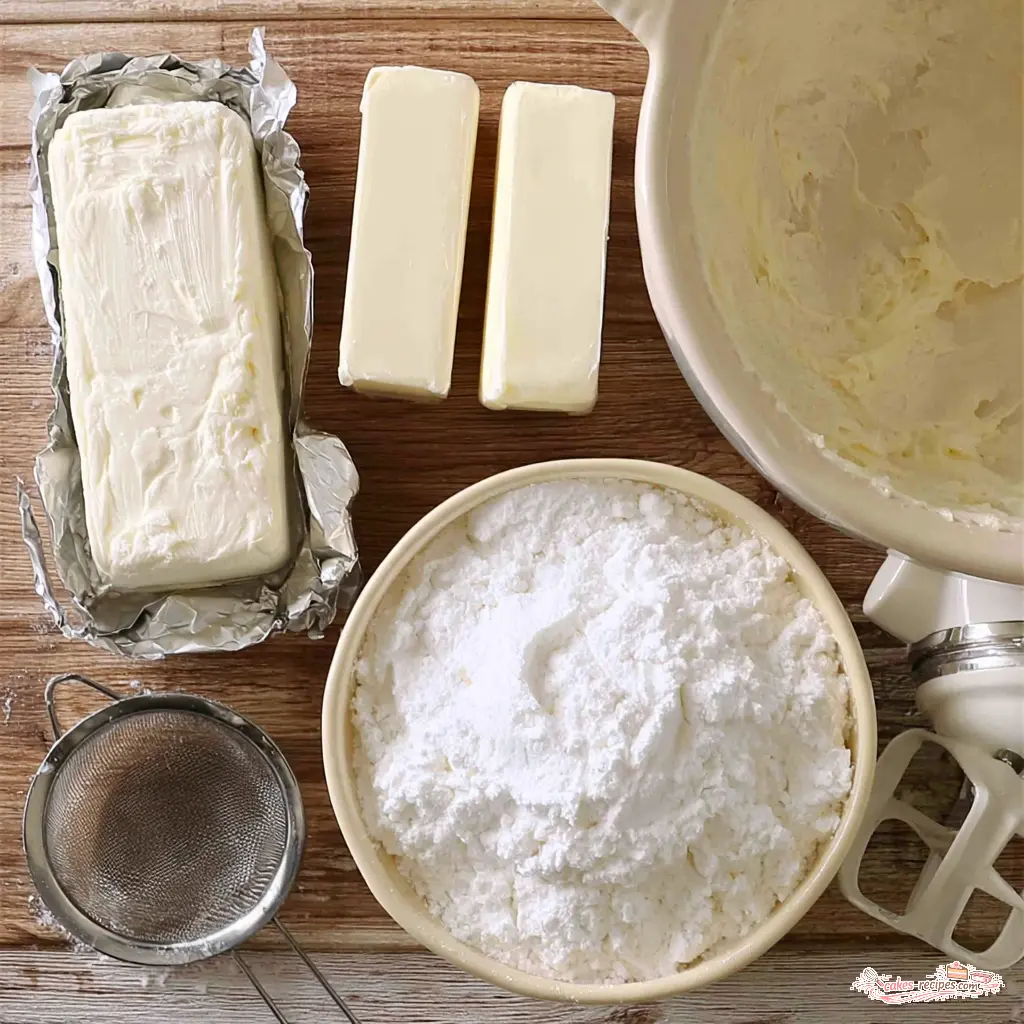
- 8 oz full-fat brick cream cheese, softened to room temperature, one package
- 1 cup unsalted butter, softened, that’s two sticks
- 4 cups powdered sugar, sifted if it looks lumpy
Buy the brick, not the tub. I’ll explain the chemistry behind that in a minute, but trust me on it for now.
And “softened” means soft, not warm. Your finger should leave a dent with almost no resistance, but the block should still hold its shape on the counter.
How to Make Cream Cheese Frosting in 5 Minutes
Four stages. None of them complicated. The trick is knowing when to stop.
Stage 1: Beat the Cream Cheese and Butter Until Fluffy
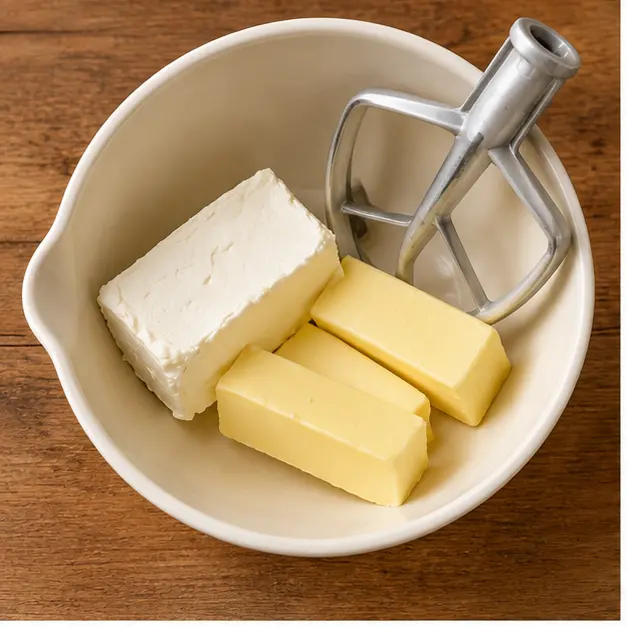
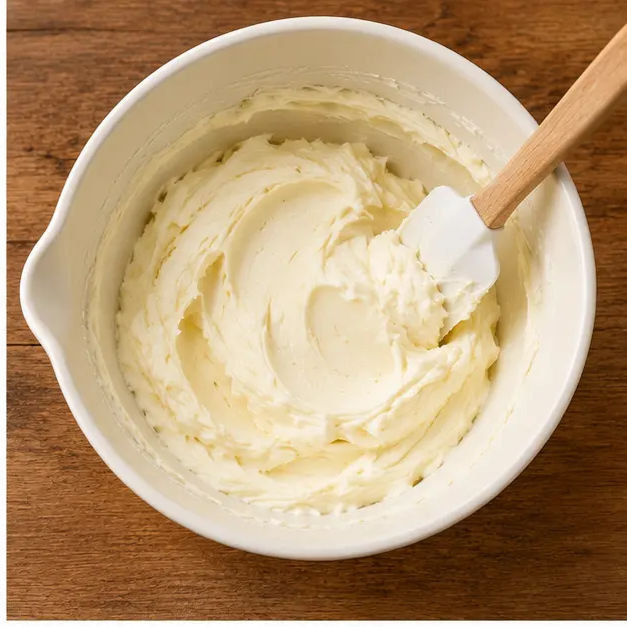
In a large mixing bowl, beat the softened cream cheese and butter on high speed until the mixture is light and fluffy. About two minutes with a stand mixer, closer to three with a hand mixer.
Scrape down the bowl once, halfway through. If you still see lumps at this point, keep beating, because lumps that survive this stage never beat out later.
Cold cream cheese stays as tiny solid bits suspended in the butter, no matter how long you run the mixer. That’s where grainy frosting comes from.
Stage 2: Sift the Powdered Sugar First
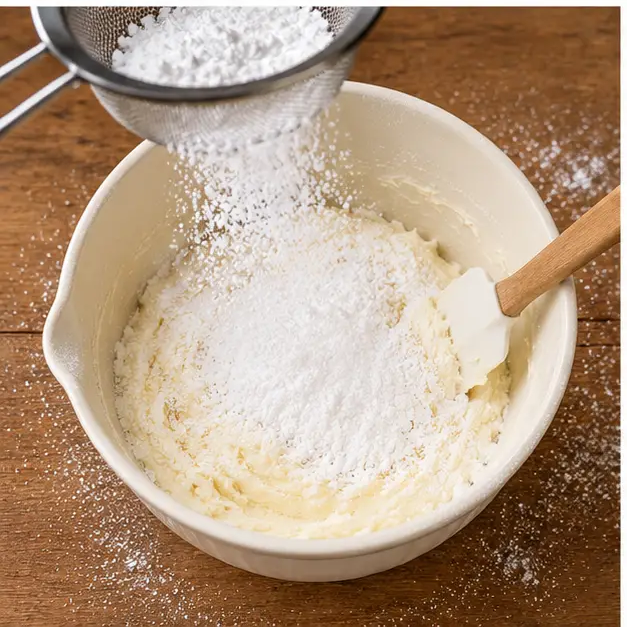
Set a fine-mesh strainer over a bowl and sift the powdered sugar into it. This takes thirty seconds and it’s the difference between silky frosting and frosting that clogs a piping tip.
Confectioners sugar clumps in the bag over time, especially in humid weather. Those clumps don’t dissolve. They just sit there, waiting to jam your star tip.
If your sugar is fresh and fluffy, you can skip it. If it looks at all lumpy, don’t.
Stage 3: Add the Sugar Gradually on Low Speed
Turn the mixer down to its lowest setting and add the sifted powdered sugar in three or four additions. Let each one disappear before the next goes in.
Low speed matters. Cranking it up throws sugar dust across your kitchen and whips extra air into the frosting, which is exactly what makes it go slack later.
Once the last addition is in, mix only until it’s smooth. That’s your cue to stop.
Stage 4: Stop Mixing and Check the Texture
This is the moment most people ruin a perfectly good batch. The frosting looks smooth, so they give it one more minute.
Don’t. It should look like thick, glossy whipped cream and hold a soft peak when you lift the beater. If it pouches off the beater in a slow ribbon, it’s ready.
Last thing: let your cake or cupcakes cool completely before you frost them. Warm cake melts frosting on contact. No technique fixes that.
Tips for Perfect Cream Cheese Frosting
Five minutes of work, and about four things that decide whether it works.
Soften Ingredients and Sift Sugar
Take the cream cheese and butter out of the fridge at least an hour ahead. Ninety minutes is better on a cool fall day.
- Both fats should be the same softness, not one cold and one warm
- If you forgot, unwrap the cream cheese and cut it into cubes on a plate for 15 minutes
- Never microwave cream cheese to speed it up. Warm spots turn greasy
- Sift the powdered sugar if it’s clumpy, especially before piping
- Weigh your sugar if you have a scale. Four cups scooped heavy makes a thick, overly sweet frosting
Avoid Overmixing the Frosting
Here’s the part nobody explains, and it’s the one that matters most.
Cream cheese is an emulsion, fat and water held together by stabilizers. Powdered sugar is mostly sugar with a little cornstarch. Once everything is combined, the frosting is a delicate balance of fat, sugar, and water.
Mix it hard, or long, and you force air into that structure. When the air bubbles collapse, so does the emulsion, and the water from the cream cheese separates out. A frosting that looked perfect two minutes ago turns soupy.
So: low speed, and only until smooth. That’s it.
Common Mistakes That Wreck the Texture
- ❌ Using spreadable tub cream cheese → ✅ Use an 8 oz brick of full-fat cream cheese
- ❌ Cold cream cheese straight from the fridge → ✅ Soften both fats to room temperature
- ❌ Beating for several minutes after the sugar is in → ✅ Mix just until smooth, then stop
- ❌ Frosting a cake that’s still warm → ✅ Cool completely, every time
- ❌ Scooping powdered sugar without fluffing it → ✅ Sift or weigh it
How to Prevent Runny Cream Cheese Frosting
Runny frosting almost always traces back to one of two things: the wrong cream cheese, or too much mixing.
Tub cream cheese is whipped with extra water and gums, and it has less fat per ounce. Fat is what builds structure here. Take the fat away and there’s nothing holding the sugar up.
Brick cream cheese is dense and consistent. Same weight, more actual cheese, better frosting. It’s the single biggest fix you can make.
Humidity and Altitude Note
High humidity: Powdered sugar pulls moisture from the air. On a rainy day, add an extra 2 tablespoons and expect a slightly softer frosting.
Higher altitude: Here in Asheville we sit around 2,100 feet, and I find my frosting needs about 10 extra minutes of chilling before it pipes cleanly. Nothing else changes.
Chill for 20 to 30 Minutes
If your frosting feels too soft to work with, don’t add anything yet. Just refrigerate it for 20 to 30 minutes.
Chilling firms the butter back up and gives the whole batch structure without changing the flavor at all. This is the fix I reach for first.
Stir it once before using. If it’s still slack after a half hour, then move on to sugar.
Adjust with Powdered Sugar
Add powdered sugar 2 tablespoons at a time, mixing on low after each addition, until you hit the thickness you want.
Go slow. It’s easy to overshoot and end up with frosting that tastes like sweetened paste.
If you’d rather not add more sweetness, cornstarch is your other option. One tablespoon at a time, three tablespoons maximum. It stiffens without adding sugar, though it can leave a faint chalky note if you push it too far.
- Want it sweeter and thicker? Powdered sugar
- Want it thicker, not sweeter? Cornstarch
- Want it thinner? Milk or heavy cream, one teaspoon at a time
Can You Pipe Cream Cheese Frosting?
Yes, and it holds up better than its reputation suggests. It just isn’t buttercream, and it helps to know that going in.
Simple swirls, rosettes, and piped borders? Absolutely. Intricate lacework and fine lettering? Save those for a stiffer frosting.
How to Get a Firm Piping Consistency
Fill your piping bag, twist the top closed, and refrigerate the whole bag for 20 to 30 minutes before you pipe. That single step is the difference between a swirl that sags and a swirl that stands.
- Use a large star tip like a 1M or 2D. Small tips clog with sugar
- Chill the filled bag, not just the bowl
- Work quickly once you start, and refrigerate between colors
- Hold the bag straight up for rosettes, at a 45 degree angle for borders
- If a swirl slumps, the frosting is warm. Back in the fridge for 15 minutes
One batch makes roughly 4 cups of frosting, which is enough to fill and cover a two-layer 8-inch cake, or frost 24 cupcakes generously.
Cream Cheese Frosting Variations
The base recipe is intentionally plain so it can go anywhere. Once you’ve nailed it, start playing.
Salted Butter and Flavor Twists
There’s no added salt in this recipe, so if salted butter is what you have in the fridge, use it. You’ll get a slightly tangier, more savory finish that I actually prefer on carrot cake.
Everything below is optional. Add after the sugar is fully incorporated, and mix on low just to combine:
- Vanilla extract: 1 teaspoon, the classic
- Lemon zest: 1 teaspoon, bright and lovely on a lemon layer cake
- Cinnamon: 1/4 teaspoon, perfect for pumpkin cake and spice cupcakes
- Pumpkin pie spice: 1/2 teaspoon, taste and adjust
- Cocoa powder: swap 1/2 cup powdered sugar for 1/2 cup unsweetened cocoa, then add a splash of heavy cream if it tightens up
- Brown butter: replace the regular butter with browned butter, cooled back to soft. Deeper, nuttier flavor
Want it less sweet? You can pull the powdered sugar back to about 3 cups. Just know that anything below that turns it into a soft, spreadable frosting that won’t pipe.
Best Uses for Cream Cheese Frosting
This is the most versatile frosting I make. If a dessert has spice, fruit, or a little tang of its own, cream cheese frosting belongs on it.
Cakes, Cupcakes, and Cinnamon Rolls
- Carrot cake, obviously. Especially a Thanksgiving carrot cake
- Red velvet cake and red velvet cupcakes
- Pumpkin cake and pumpkin bars
- Spice cupcakes and apple cakes
- Cinnamon rolls, spread warm and slightly thin
- Banana cake, hummingbird cake, and zucchini bread
- Brownies and cookies, if you want to ruin regular brownies forever
For a taller three-layer cake, make one and a half batches. Doubling the butter alone makes it more buttercream-like and less tangy, which isn’t usually what you want.
Storage and Make-Ahead Tips
This is where cream cheese frosting differs from buttercream. It lives in the fridge, not on the counter.
Storing Frosted Baked Goods
Store frosted cakes and cupcakes in an airtight container in the refrigerator for up to 3 days.
Before serving, let them sit at room temperature for about 30 minutes. Cold cream cheese frosting tastes muted. Those 30 minutes bring the tang back.
Food safety note: frosted baked goods can sit out at room temperature for about 2 hours before they need to go back in the fridge. Less if your kitchen is warm.
Making Cream Cheese Frosting Ahead
You can make this frosting up to 2 days ahead. Cover it tightly and refrigerate.
When you’re ready, let it soften at room temperature for 30 to 45 minutes, then re-whip on low speed for about 15 seconds. Just until it’s smooth again. Overmixing at this stage undoes everything.
Freezing works too. Airtight container, up to 3 months. Thaw overnight in the fridge, then re-whip on low. The texture comes back almost perfectly, though it’s a touch softer than fresh.
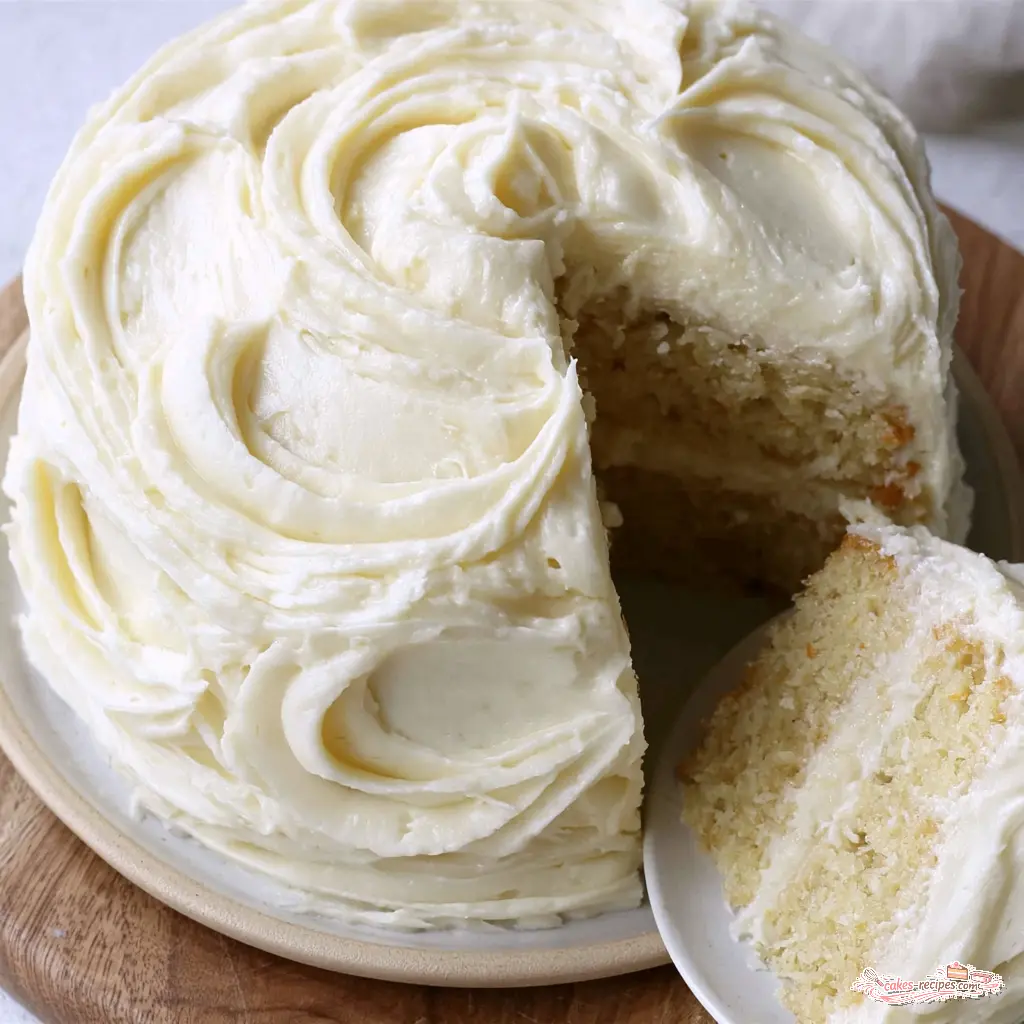
You’ll Never Buy Frosting Again
Five minutes, three ingredients, one bowl. That’s the whole recipe, and it will out-taste anything in a plastic tub.
Once you’ve made this a few times, you’ll stop measuring and start going by feel. You’ll know it’s ready when it looks like thick, glossy whipped cream and holds a soft peak on the beater.
Then you’ll frost that Thanksgiving carrot cake, or those pumpkin cupcakes, and you’ll wonder why cream cheese frosting ever scared you.
If you want to see how I decorate with it, come find me over on my seasonal baking boards on Pinterest. There’s a whole board of fall cakes that this frosting was basically invented for.
Go make that cake. You’ve got this.
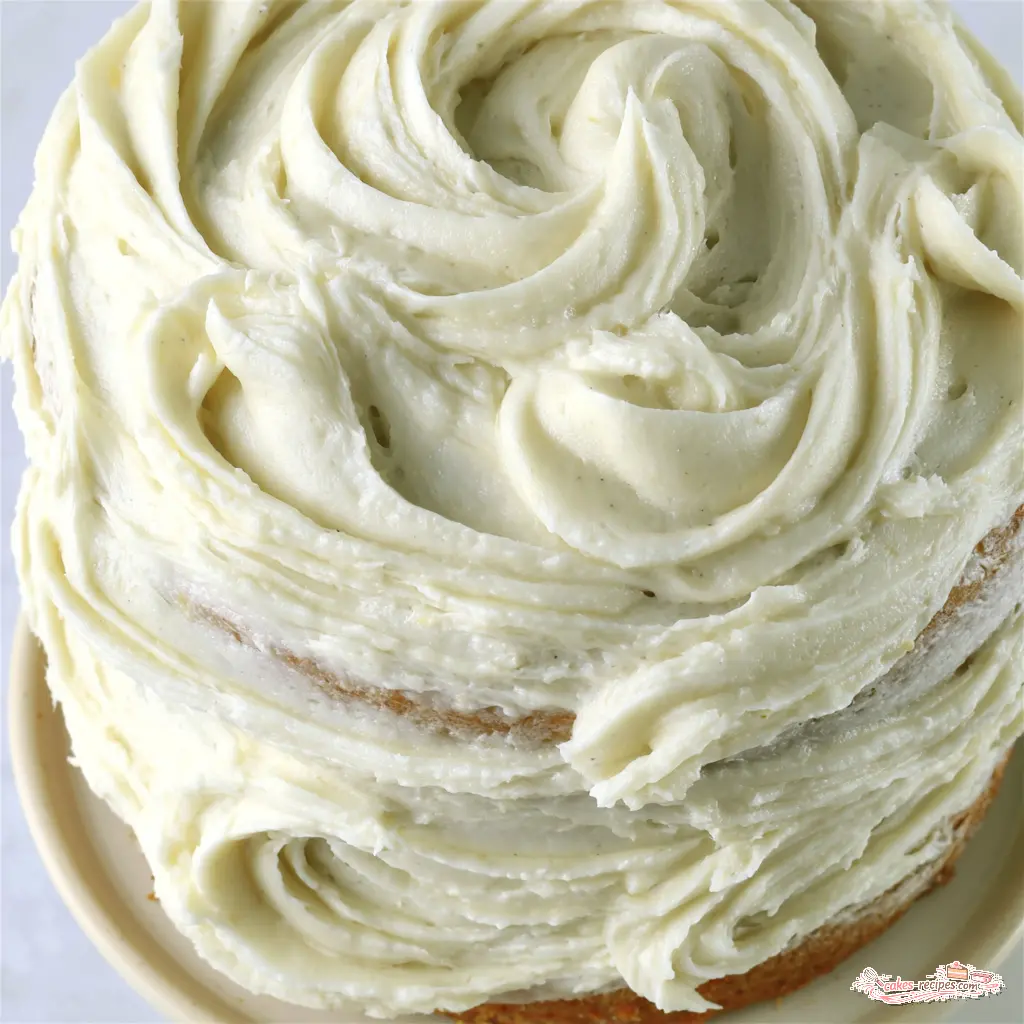
Silky Cream Cheese Frosting for Cakes and Cupcakes
Ingredients
Method
- In a large mixing bowl, beat the softened cream cheese and butter with an electric mixer on high speed until the mixture is light and fluffy. Turn the mixer to low and gradually add the powdered sugar, mixing just until smooth. Do not overmix. Allow baked goods to cool completely before frosting.
Nutrition
Notes
Tried this recipe?
Let us know how it was!Cream Cheese Frosting FAQ
Source: Learn More About This Dish
Can you freeze homemade cream cheese frosting?
Yes. Store it in an airtight container for up to 3 months. Thaw overnight in the refrigerator, then re-whip on low for about 15 seconds. The texture comes back nearly perfect, though thawed frosting is slightly softer than fresh, so chill it again before piping.
How do I fix runny cream cheese frosting?
Chill it for 20 to 30 minutes first, since that alone fixes most batches. If it’s still slack, add powdered sugar 2 tablespoons at a time on low speed. For a runnier batch, one tablespoon of cornstarch at a time works without adding sweetness.
How do I thin out frosting that’s too thick?
Add milk or heavy cream one teaspoon at a time, mixing on low after each addition. Heavy cream keeps it richer, milk keeps it lighter. Stop as soon as it loosens, because a single extra teaspoon can push a stiff frosting straight past spreadable into runny.
Can cream cheese frosting be used for piping?
Absolutely. It pipes simple swirls, rosettes, and borders beautifully. Fill the bag, refrigerate it for 20 to 30 minutes, then work with a large star tip. Keep the designs uncomplicated, since cream cheese frosting isn’t as stable as buttercream for fine detail work.
How do I make my cream cheese frosting thicker?
Two ways. Add powdered sugar 2 tablespoons at a time for a sweeter, stiffer frosting, or add cornstarch 1 tablespoon at a time, up to three, if you don’t want extra sweetness. Chilling for 20 to 30 minutes before either fix often does the job by itself.
Can I add cornstarch to my cream cheese frosting?
Yes, and it’s the better choice when your frosting is already sweet enough. Add one tablespoon at a time, mixing on low, and stop at three tablespoons. Go past that and you’ll taste a faint chalkiness that no amount of cream cheese covers up.
How do I prevent runny cream cheese frosting before I start?
Use an 8 oz brick of full-fat cream cheese, never the spreadable tub kind. Soften the cream cheese and butter to the same room temperature. Then mix on low and stop the second the powdered sugar disappears. Those three habits prevent almost every runny batch.
Can this cream cheese frosting hold piped swirls and borders?
It can, with one step most people skip: chill the filled piping bag for 20 to 30 minutes before you start. Cold frosting holds a peak. Warm frosting sags. On cooler fall days it stays stable much longer on the counter between swirls.