Why You’ll Love This Cornbread Dressing Casserole
The last cookout of summer is this weekend. The grill’s going to be smoking, the lemonade glasses are going to sweat, and someone’s going to bring the same sad pasta salad they always bring. That someone won’t be you. Let’s be honest. We’ve all stood over a casserole that crumbled into dry, sad dust. It’s a Southern tragedy. But this cornbread dressing casserole? It stays moist. It’s packed with savory flavor. And it’s honestly hard to mess up. Think juicy chicken, a creamy mushroom sauce that soaks into every crumb, and a golden cornbread top with crispy edges. The kind of side dish that makes people stop mid-bite and ask who brought it. Here’s why it works:- Moist, never dry. The sauce does the heavy lifting.
- Make-ahead friendly. Assemble tonight, bake tomorrow.
- Main dish or side. Perfect for potlucks and weeknights alike.
Dressing vs Stuffing: What’s the Difference?
Quick Southern lesson. My grandmother had one hard rule: if it’s cooked inside the bird, it’s stuffing. If it’s baked in a dish by itself, it’s dressing. This is a cornbread dressing casserole, baked slow until the whole kitchen smells like the holidays. Some folks call it a cornbread stuffing casserole, and that’s fine too. The name stops mattering once people taste it. What matters is texture. Moist, silky, with a crispy golden top that gives way to soft, savory goodness underneath.Cornbread Dressing Casserole Ingredients
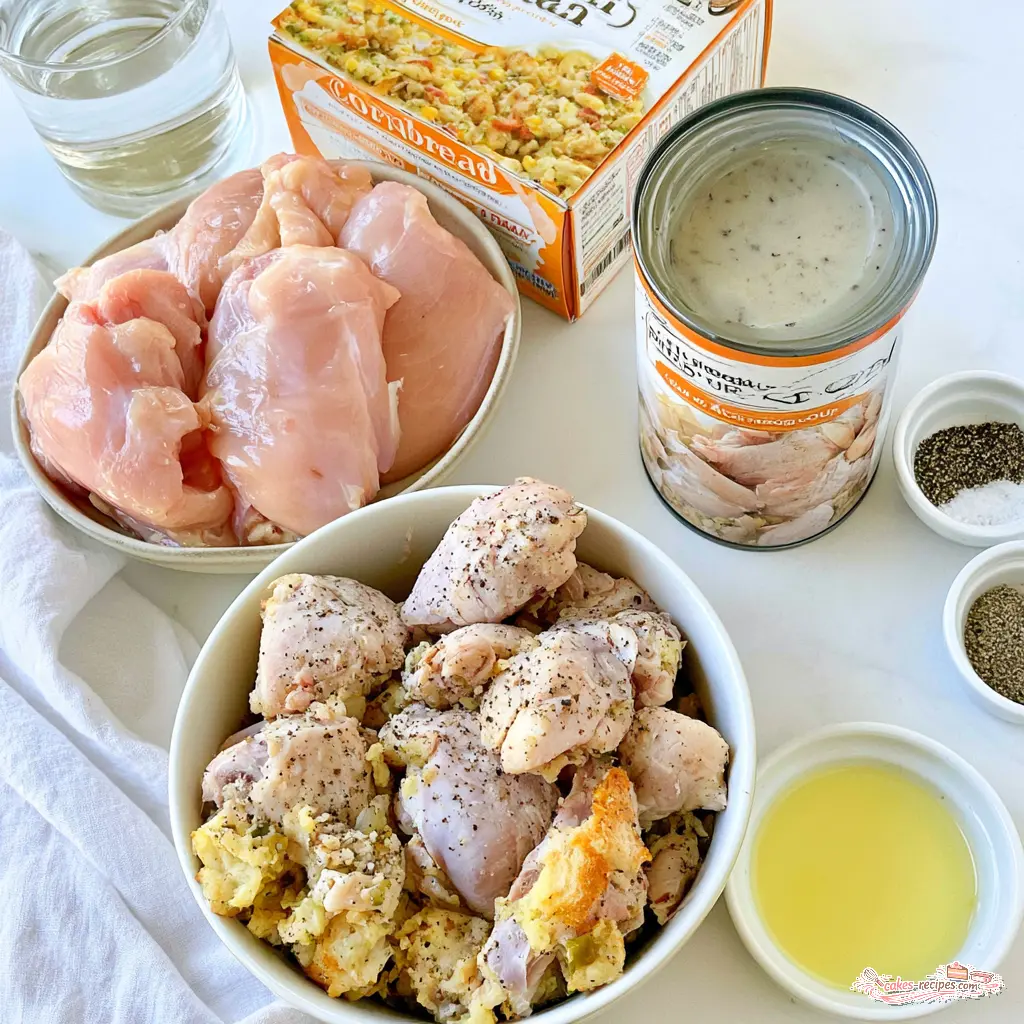
Here’s the beautiful part. You need six everyday ingredients:- 3 pounds boneless, skinless chicken (breasts or thighs)
- 3 cups water
- 1 can (10.25 oz) condensed cream of mushroom soup
- 1/4 cup salted butter, melted
- 8 ounces cornbread stuffing or dressing mix
- Kosher salt and freshly ground black pepper
How to Make Cornbread Dressing Casserole
This cornbread dressing casserole comes together in about an hour, and most of that is hands-off. Here are the four stages, plus the why behind each one.Poach the Chicken
Place the chicken in a large pot with 3 cups of water. Season generously with salt and pepper, bring to a simmer, and cook for 15 to 20 minutes until cooked through. Here’s the trick: don’t use more water than the recipe calls for. Less water means a more concentrated, flavorful broth, and that broth is the backbone of the whole dish. Let the chicken cool, chop it into bite-size pieces, then reserve 1 1/2 cups of that liquid gold. Don’t skip this, the broth matters.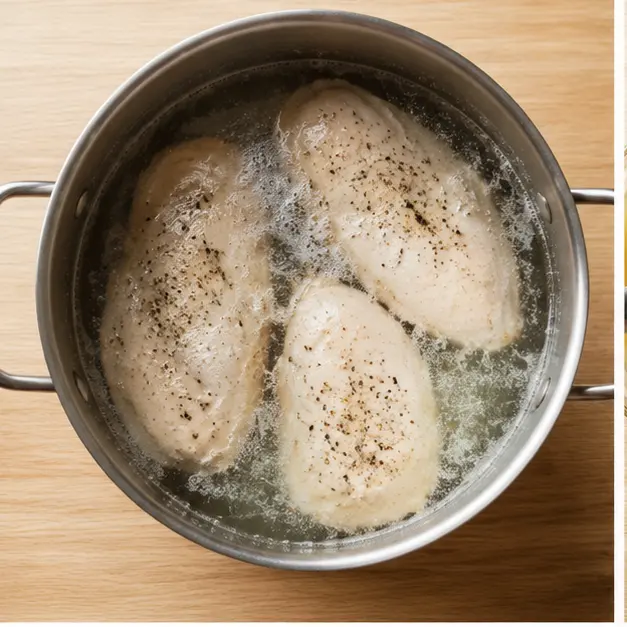
Make the Sauce
Whisk the reserved broth and cream of mushroom soup together until smooth. That’s your sauce. It soaks into the cornbread as it bakes, creating that moist stuffing texture everyone loves. In a separate bowl, toss the stuffing mix with the melted butter until every crumb is evenly coated. Honestly, the first time I made this, I overmixed until it turned into paste. Don’t do that. Keep it light and fluffy, like coarse sand. Some dressing recipes use an egg binder to hold things together. This one doesn’t need it. The soup and broth do that job, so the texture stays soft and silky instead of dense.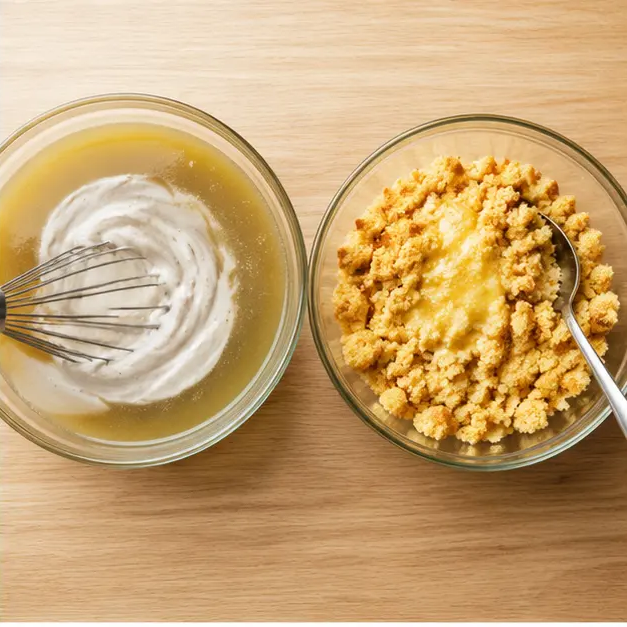
Layer the Casserole
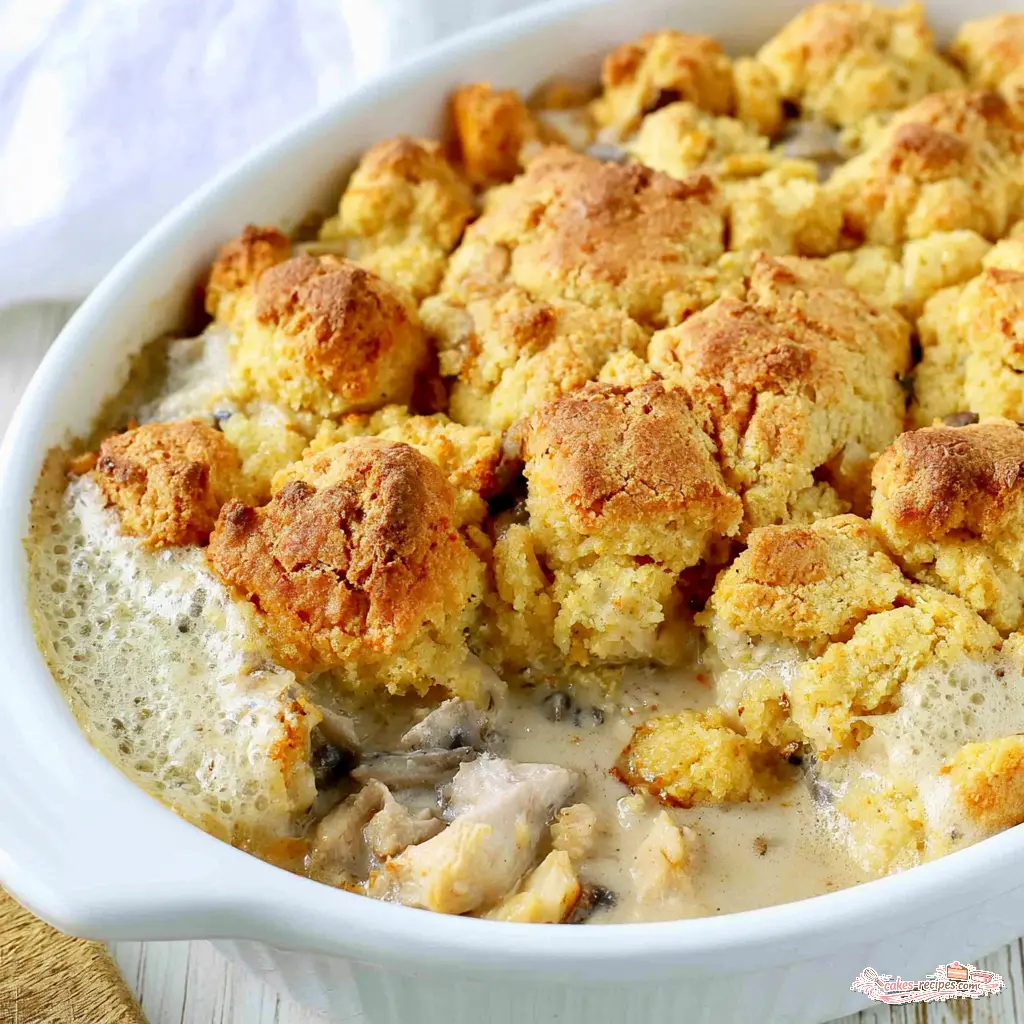
This is where the cornbread dressing casserole magic happens. Spread half the buttered stuffing in an even layer in your 8×8 dish. Scatter half the chicken over it. Repeat with the remaining stuffing, then the rest of the chicken. Pour the soup-broth mixture evenly over the whole thing. Don’t stir. The layers matter. As it bakes, the sauce sinks down through the crumbs and keeps everything moist.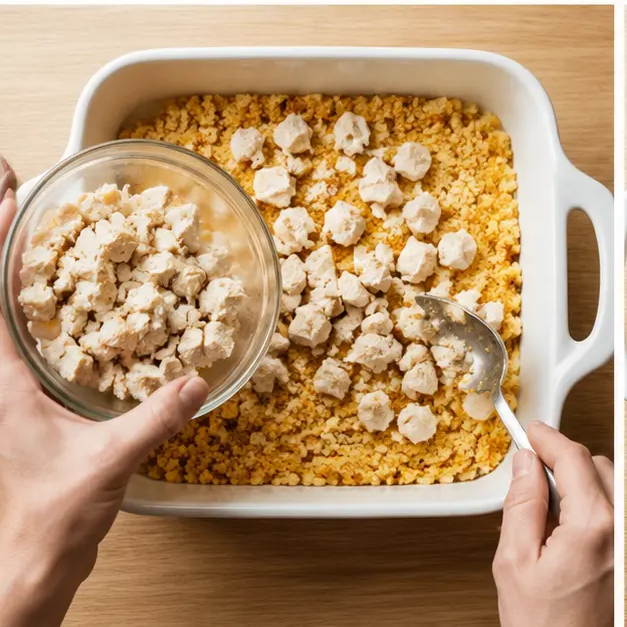
Bake Until Golden and Bubbly
Bake the cornbread dressing casserole at 350°F for about 30 minutes. Bake it uncovered for a crispy golden top, and cover it only if the top browns before the center sets. That’s the covered vs uncovered baking answer, in one sentence. The edges will pull away from the pan just to tell you it’s ready. You’re looking for bubbling edges and a lightly golden crown. When the spoon cuts through, it should glide through a silky, moist center, not crumble.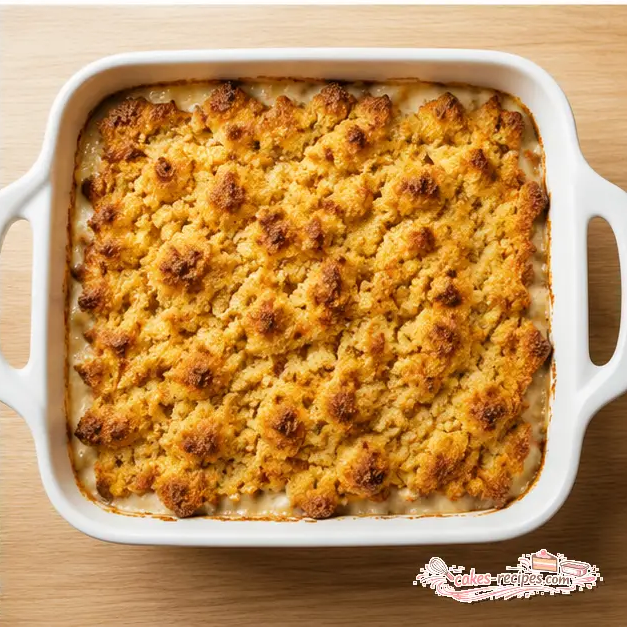
Pro Tips for the Best Cornbread Dressing Casserole
Let me save you from my early mistakes.The Secret to a Perfect Cornbread Casserole
Moisture balance. The mixture should look soupy before it goes in the oven. Cornbread absorbs liquid like a sponge, so if it looks dry now, it’ll bake up dry. Add a splash more broth if needed. That’s the whole secret to the perfect cornbread dressing casserole.
- ❌ Overbaking until it dries out. ✅ Bake just until golden and bubbly, about 30 minutes.
- ❌ Overmixing the stuffing into paste. ✅ Toss gently. Light and fluffy wins.
- ❌ Skimping on seasoning. ✅ This recipe has no raw eggs, so taste the broth as it poaches and season it generously.
- ❌ Baking covered the whole time. ✅ Uncovered gives you that crispy top. Tent with foil only if it browns too fast.
Quick Fixes
Too dry? Pour warm chicken broth over the top before reheating.
Too wet? Bake it longer, uncovered, until it firms up.
Top browning too fast? Tent it loosely with foil.
Honestly, this is the most forgiving recipe I know. Swap the chicken for turkey, the soup for whatever’s in your pantry, the mix for leftover cornbread. It all works. The layers do the work, the sauce does the hydrating, and you get to take all the credit.
Cornbread Dressing Casserole FAQ
I’ve made this cornbread dressing casserole more times than I can count, and these are the questions I hear the most. If yours isn’t here, leave it in the comments and I’ll answer you directly.
Can I use Jiffy mix for this recipe?
Yes. Jiffy is a little sweet for dressing, but you can fix that by adding 1/2 cup of sour cream to the batter before baking your cornbread. It balances the sweetness and gives you a more savory cornbread that works beautifully here.
Can I use leftover, canned, or rotisserie chicken?
All three work great. Skip the poaching step, grab 3 pounds of cooked chicken, and use 1 1/2 cups of store-bought low-sodium chicken broth instead of the reserved poaching liquid. If you’re using rotisserie chicken, pull the meat while it’s still warm and season it lightly.
Can I use Stove Top or Pepperidge Farm stuffing instead of cornbread mix?
You can, but you’ll need a little more liquid because those mixes are more dehydrated. Start with an extra 1/4 cup of broth and add more if the mixture doesn’t look soupy before baking. And if you’re using Stove Top, taste before adding any salt it’s already heavily seasoned.
Can I make this with leftover turkey?
Absolutely. Leftover Thanksgiving turkey might be the best possible version of this. Use the same 3 pounds, shred it into bite-size pieces, and follow the recipe exactly. Just add an extra splash of broth since turkey tends to be drier than poached chicken.
Is this a main dish or a side dish?
Both. Honestly, it’s whatever you need it to be. For a weeknight, it’s a hearty main dish with a side salad. For Thanksgiving, it’s the best side dish on the table. For a potluck, it’s the thing people line up for.
Why does the mixture need to look soupy before baking?
Cornbread is basically a sponge. It absorbs liquid as it bakes, so if the mixture looks dry when it goes into the oven, it will come out dry. That soupy look is exactly what you want. Trust the process.
How do I know when the casserole is fully cooked?
You’re looking for three things: golden edges that pull away from the pan, a lightly golden top, and a center that’s hot and bubbling. If you want to be precise, the center should register 165°F on an instant-read thermometer.
Can I freeze this casserole?
Yes. Assemble it in the dish, wrap it tightly in plastic wrap and foil, and freeze for up to 3 months. Thaw overnight in the fridge, then bake as directed, adding 10 to 15 minutes since you’re starting from cold. You can also freeze it after baking just cool it completely first and add a splash of broth when reheating.
What can I use instead of condensed cream of mushroom soup?
Cream of chicken, cream of celery, and cream of onion all work perfectly. Cream of celery adds a subtle vegetable note, cream of chicken makes it richer, and cream of onion brings a gentle sweetness. Just use the same 10.25-ounce can.
How do I scale this from an 8×8 dish to a 9×13 dish?
Double everything. The recipe doubles cleanly, and the bake time only needs about 5 to 10 extra minutes because the casserole is thicker. Check the center with a thermometer and pull it at 165°F.
Can I make this gluten-free?
Yes. Use a gluten-free cornbread stuffing mix and a gluten-free condensed cream of mushroom soup. There are solid options at most grocery stores now. Everything else in the recipe is naturally gluten-free, but double-check the labels on the mix and soup.
Make-Ahead and Freezer Strategy
This is the casserole that saves your holiday sanity. Here’s the exact game plan.
Make It the Night Before
Assemble the whole thing, cover it tightly with foil, and stick it in the fridge. The cornbread soaks up all that flavor overnight, which honestly makes it taste better. When you’re ready to bake, add about 10 minutes to the cooking time because you’re starting from cold.
Freeze Before Baking
Assemble, wrap the dish in a layer of plastic wrap and a layer of foil, and freeze for up to 3 months. Thaw overnight in the refrigerator, then bake at 350°F until golden and bubbly, about 40 to 45 minutes.
Freeze After Baking
Cool the casserole completely, then wrap and freeze. When the craving hits, thaw overnight in the fridge and reheat in a 350°F oven, covered with foil, until hot in the center. Add a splash of chicken broth before reheating to bring back all that moisture.
Pan Size and Scaling Chart
Here’s your cheat sheet for feeding exactly the crowd you’ve got.
| Pan Size | Recipe Amount | Bake Time | Serves |
|---|---|---|---|
| 8×8-inch dish | As written | 30 minutes | 4 to 6 |
| 9×13-inch dish | Double the recipe | 35 to 40 minutes | 8 to 12 |
| Muffin tins | As written | 20 to 25 minutes | 12 muffins |
For muffin-tin portions, grease the tins well, scoop the mixture in, and bake until the tops are golden and set. They’re perfect for parties, and honestly? Kids love them.
Recipe Science: Why the Layers Matter
This is the part nobody talks about. The cornbread dressing casserole works because of how it’s built, not just what’s in it.
Don’t stir the layers. When you pour the sauce over the top and let it sink down naturally, every crumb gets hydrated evenly without getting crushed. Stirring turns the cornbread into paste.
Toss, don’t mash. The buttered stuffing needs to stay light and fluffy, like coarse sand. That texture is what gives you a tender, silky casserole instead of a dense brick.
Moisture is a feature, not a bug. Cornbread absorbs an almost shocking amount of liquid. The soupy look before baking is exactly what guarantees a moist result after. If you’re nervous, add a little extra broth. It’s very hard to make this too wet, and very easy to make it too dry.
What to Serve With Cornbread Dressing Casserole
If you’re serving this as a main dish, keep the sides simple. A crisp green salad, some roasted green beans, or a bowl of black-eyed peas. The casserole does the heavy lifting.
If you’re serving it as a holiday side, you know the drill. Turkey, mashed potatoes, cranberry sauce, and a pitcher of sweet tea. Gravy on the side is never wrong, even though this casserole is moist enough to stand on its own. A sprinkle of fresh parsley on top adds color and brightness right before serving.
The Bottom Line
This cornbread dressing casserole is the recipe I make when I need to feed people food they’ll remember. It’s forgiving enough for a Tuesday night and good enough for Thanksgiving. The layers do the work, the sauce does the hydrating, and you get to show up looking like a hero.
Make it once, and it’ll become your new go-to. When you do, come back and tell me how it went. I read every comment, and I love hearing about the variations y’all come up with.
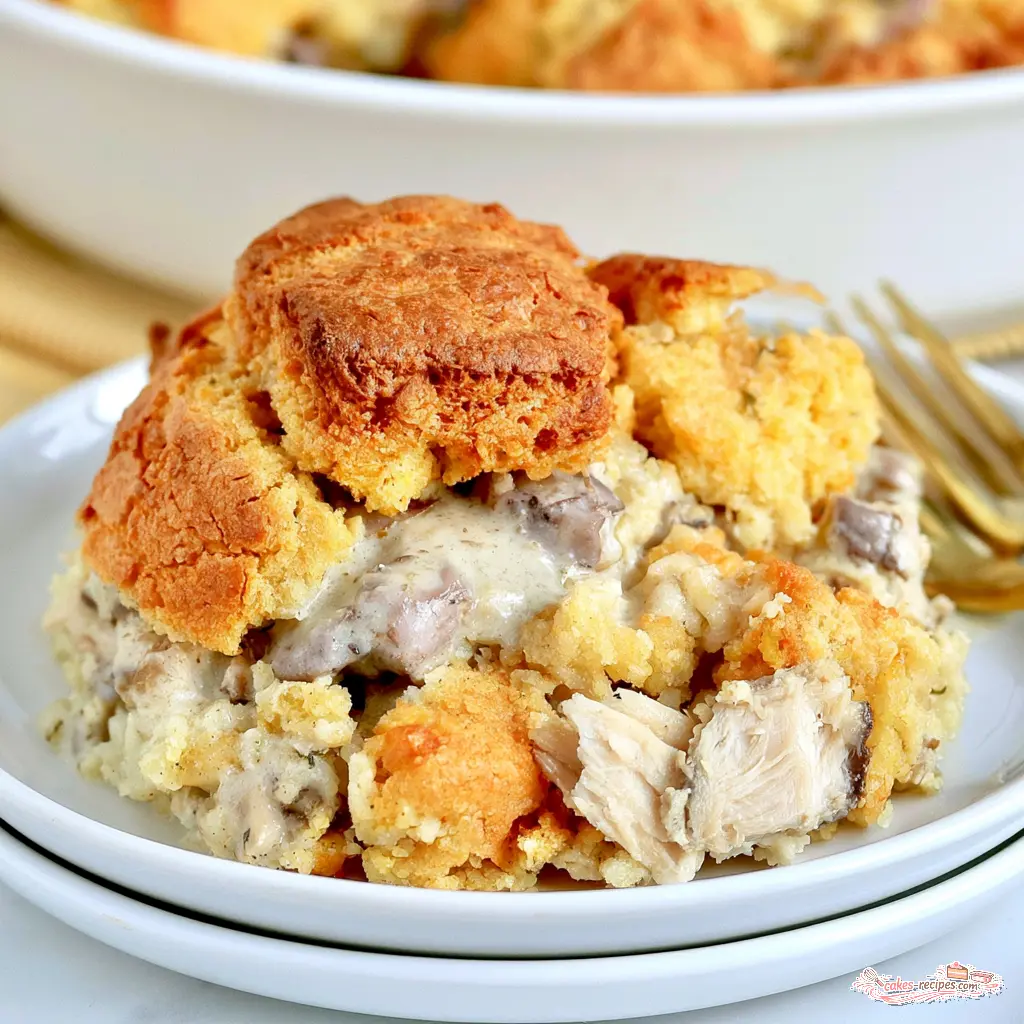
Expert Notes & Data Insights
Here’s the complete technical breakdown for anyone who likes to know exactly what’s happening and why.
- Total time: About 1 hour and 10 minutes from start to finish. That includes roughly 20 minutes of active prep; the rest is simmering and baking.
- Poaching liquid: 3 cups of water for 3 pounds of chicken yields about 2 cups of concentrated broth. You’ll use 1 1/2 cups in the sauce, leaving a little extra for reheating leftovers.
- Ideal liquid-to-stuffing ratio: 1 1/2 cups seasoned broth plus one 10.25-ounce can of condensed soup for an 8-ounce box of cornbread stuffing. That’s the moisture sweet spot.
- Bake temperature: 350°F, uncovered, for 30 minutes. Target an internal temperature of 165°F in the center.
- Make-ahead window: Assemble up to 24 hours in advance and refrigerate. Add 10 minutes to the bake time when baking from cold.
- Freezer life: Up to 3 months, either before baking (thaw in the fridge first) or after (reheat covered at 350°F).
- Leftover shelf life: 3 to 4 days in an airtight container in the refrigerator.
- Moisture rule of thumb: If the mixture doesn’t look soupy before baking, add 1/4 cup of broth at a time until it does. This single step prevents 90% of dry dressing disasters.
That’s it. That’s everything I know about making a cornbread dressing casserole that people genuinely fight over. Go make it, and don’t forget to save room for seconds.
What is the secret to a perfect cornbread dressing casserole?
The real secret to a perfect cornbread dressing casserole is moisture balance. The unbaked mixture should look soupy before it goes into the dish—cornbread soaks up liquid as it bakes, so if the mixture seems tight or dry at the start, it will come out dry in the end. Use a well-flavored chicken broth (homemade from poaching chicken is best), and don’t overbake: pull the casserole out just as the edges turn golden brown and the center is set, usually around 35 to 40 minutes at 350°F. Covering it loosely with foil during the first part of baking helps keep the inside tender while still allowing the top to brown. For even better flavor, mix everything a day ahead so the cornbread has time to absorb all the herbs, butter, and broth.
Can you give me a recipe using cornbread stuffing mix?
Yes! To make this cornbread dressing casserole with a cornbread stuffing mix like Stove Top or Pepperidge Farm, start with 1 box (about 6 ounces) of cornbread stuffing mix. In a large bowl, combine the stuffing mix with 1 can of condensed cream of chicken soup, 1 cup of cooked shredded chicken, 1/2 cup of finely chopped onion, 1 teaspoon of dried sage (or to taste), and 1 1/2 to 2 cups of chicken broth—stir until the mixture is very moist and soupy. Keep in mind that dehydrated stuffing mixes absorb more liquid than homemade cornbread, so add extra broth if needed. Spoon the mixture into a greased 8×8-inch baking dish and bake at 350°F for 30 to 35 minutes, until hot and golden around the edges. If you use a pre-seasoned mix like Stove Top, reduce or omit the added salt since the mix is already heavily seasoned.
What are some common mistakes to avoid when making cornbread dressing casserole?
The most common mistake is making the mixture too dry before baking. Cornbread dressing needs to look soupy in the bowl because the cornbread absorbs liquid as it bakes; if it doesn’t look wet enough, add more broth. Overbaking is the second big one—leave it in the oven too long and you’ll end up with a dry, crumbly casserole, so bake just until the edges are golden and the center is set. Another frequent issue is using too much sage or other dried herbs, since their flavors intensify during baking; start with less and taste the mixture first if there are no raw eggs. Finally, if you use sweet cornbread mix like Jiffy, balance the sweetness by adding 1/2 cup of sour cream to the batter, and if you use a highly seasoned stuffing mix, skip the extra salt. Measuring your broth carefully and seasoning to taste before baking will help you avoid these pitfalls every time.
Do I bake cornbread dressing covered or uncovered?
You can do either, depending on the texture you prefer. Bake the cornbread dressing casserole uncovered if you want a firmer, slightly crisp top with golden-brown edges—this is the classic choice for a holiday side. If you prefer a softer, more tender dressing, cover the dish loosely with foil for the first 20 minutes of baking, then remove the foil for the last 10 to 15 minutes so the top can brown. Keep in mind that covering the casserole traps steam and helps keep it moist, which is especially helpful if you made the dressing ahead of time or added extra broth. For the best of both worlds, bake uncovered at 350°F and check for doneness when the edges are golden and the center is hot and set.