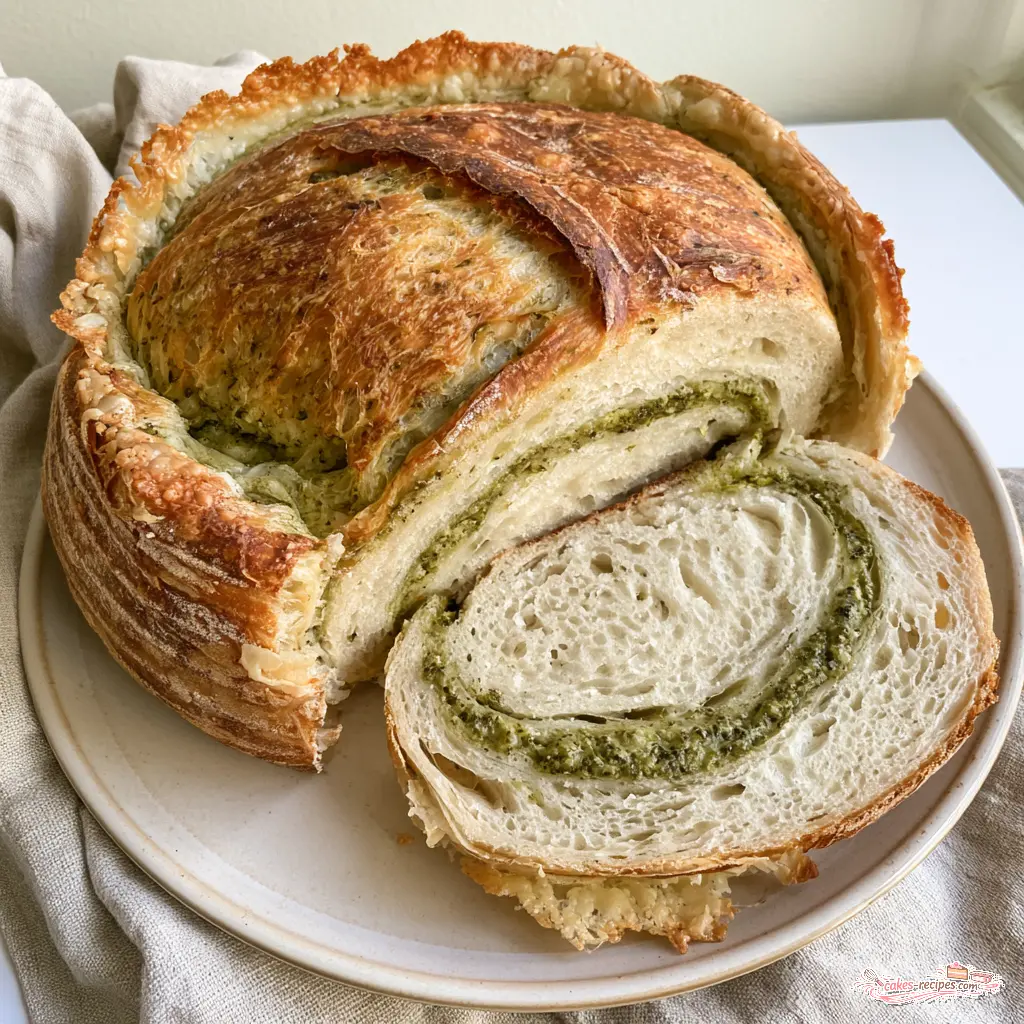
Artisan Pesto Parmesan Sourdough Bread
Ingredients
Method
- In a large bowl, combine the sourdough starter and warm water. Let it sit for about 15 minutes to loosen, then stir gently until blended.
- Add the honey, baking powder, and salt, and stir until evenly distributed.
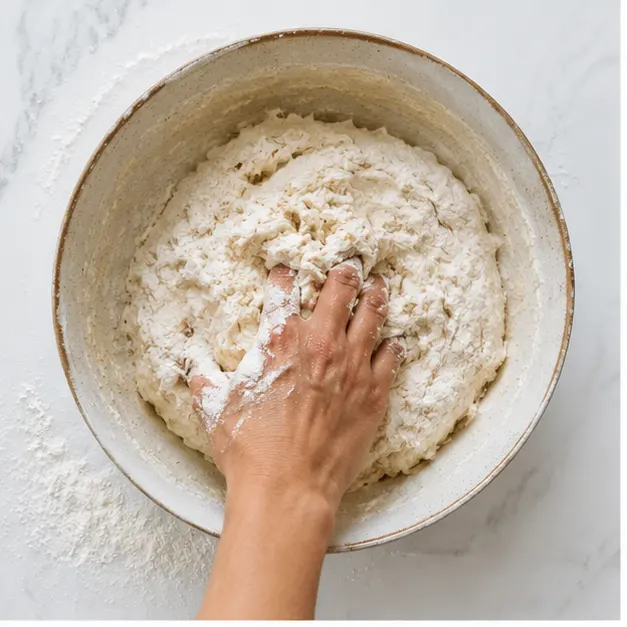
- Add 2 cups of the flour and mix well. Continue adding the remaining flour 1/4 cup at a time, mixing until the dough is soft, slightly sticky, and no longer clings to the sides of the bowl. A stand mixer works fine, but mixing by hand helps prevent overworking the dough.
- Transfer the dough to a lightly oiled or floured bowl, cover it, and let it rise at room temperature for 1 hour. For the best flavor and texture, refrigerate the covered dough for 8 to 12 hours.
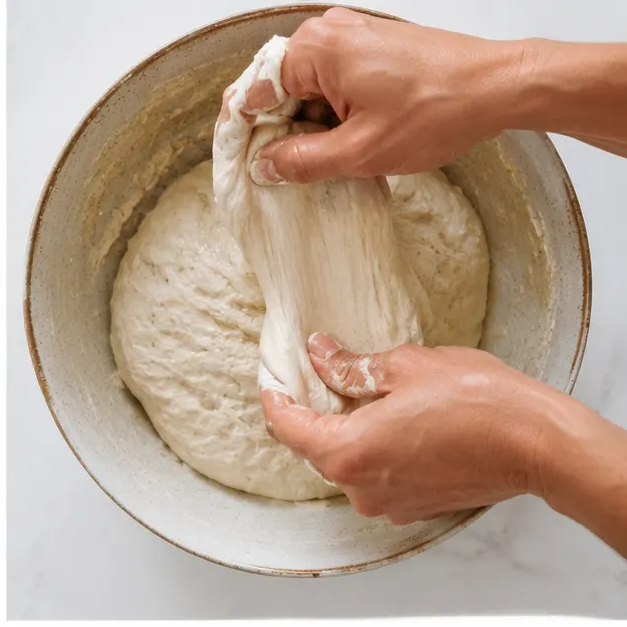
- After the cold fermentation, perform stretch and folds by lifting the edge of the dough upward and folding it over the center. Repeat this around the dough 4 to 6 times, letting it rest briefly if it becomes too elastic.
- Turn the dough out onto a lightly floured surface and gently press it into a flat rectangle or round, being careful not to overwork it.
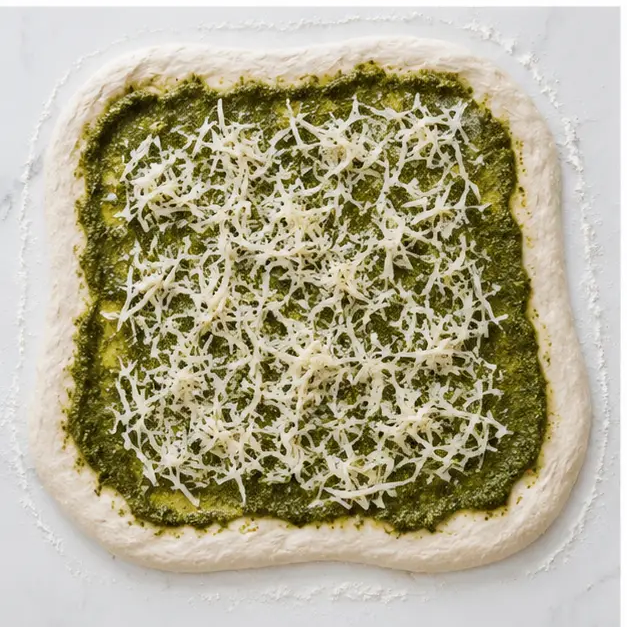
- Spread half of the pesto over the surface and sprinkle with half of the shredded Parmesan, leaving a 1-inch border around the edges.
- Fold the dough into thirds like a letter.
- Press the dough flat again and repeat with the remaining pesto and shredded Parmesan, again leaving the edges clear.
- Fold the dough into thirds once more, then gently shape it into a round loaf without excessive handling.
- Place the shaped loaf on parchment paper and refrigerate it uncovered for 1 hour. Meanwhile, preheat the empty Dutch oven with its lid on in the oven to 425°F for 1 full hour.
- Remove the loaf from the refrigerator and score the top with a sharp knife or lame, creating any decorative pattern you like.
- Carefully place the dough into the hot Dutch oven, cover with the lid, and reduce the oven temperature to 400°F. Bake for 20 minutes.
- Remove the lid and bake for 8 more minutes so the crust can brown.
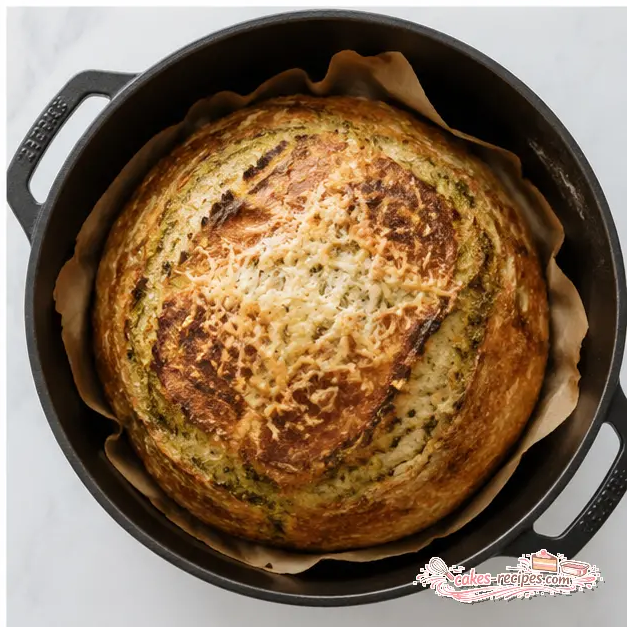
- Sprinkle the finely grated Parmesan over the top of the bread and bake for an additional 7 minutes.
- Carefully remove the finished bread from the Dutch oven and let it cool completely on a wire rack before slicing.
Nutrition
Notes
Tried this recipe?
Let us know how it was!Why You’ll Love This Pesto Parmesan Sourdough
Labor Day is tomorrow. Everyone’s bringing the same potato salad, the same burgers, the same sad store-bought rolls. You could do that. Or you could walk in with a pesto parmesan sourdough loaf that turns every sandwich on the block into a conversation piece.
Here’s the thing: if your plain sourdough is finally perfect, I get why you’d hesitate. Why risk two days of careful fermentation on a flavored experiment that might flop?
Because this is the $14 bakery loaf you can bake at home for about $3. And honestly? My first attempt at pesto parmesan sourdough was a frisbee. A dense, oily, very expensive frisbee with a leathery crust. That failure taught me exactly how much pesto the dough can handle, when to add it, and how to keep the parmesan from burning. Now this is the loaf people photograph before they slice it.
Basil is at its peak right now, so if you’ve got an active starter on the counter, you’re already most of the way to a great pesto parmesan sourdough. Here’s why this one earns a permanent spot in your rotation:
- Foolproof swirl: The pesto and parmesan get folded in during shaping, not mixed into the dough, so that green ribbon stays distinct and dramatic.
- Frico crust: The parmesan topping melts into crispy, golden edges that shatter when you bite into them. Pure magic.
- Baking powder insurance: Yes, it’s in the recipe card. It keeps the loaf light and tall even when the pesto oil tries to weigh things down.
- That crackle: You’ll hear the crust singing as it cools. It’s the sound of a bake well done, and it never gets old.
This isn’t just a pesto sourdough bread. It’s a showstopper that makes plain loaves feel unfinished. Real talk: once you bring this to one gathering, you’ll be the person they ask to bring the bread forever.
Ingredients & Substitutions
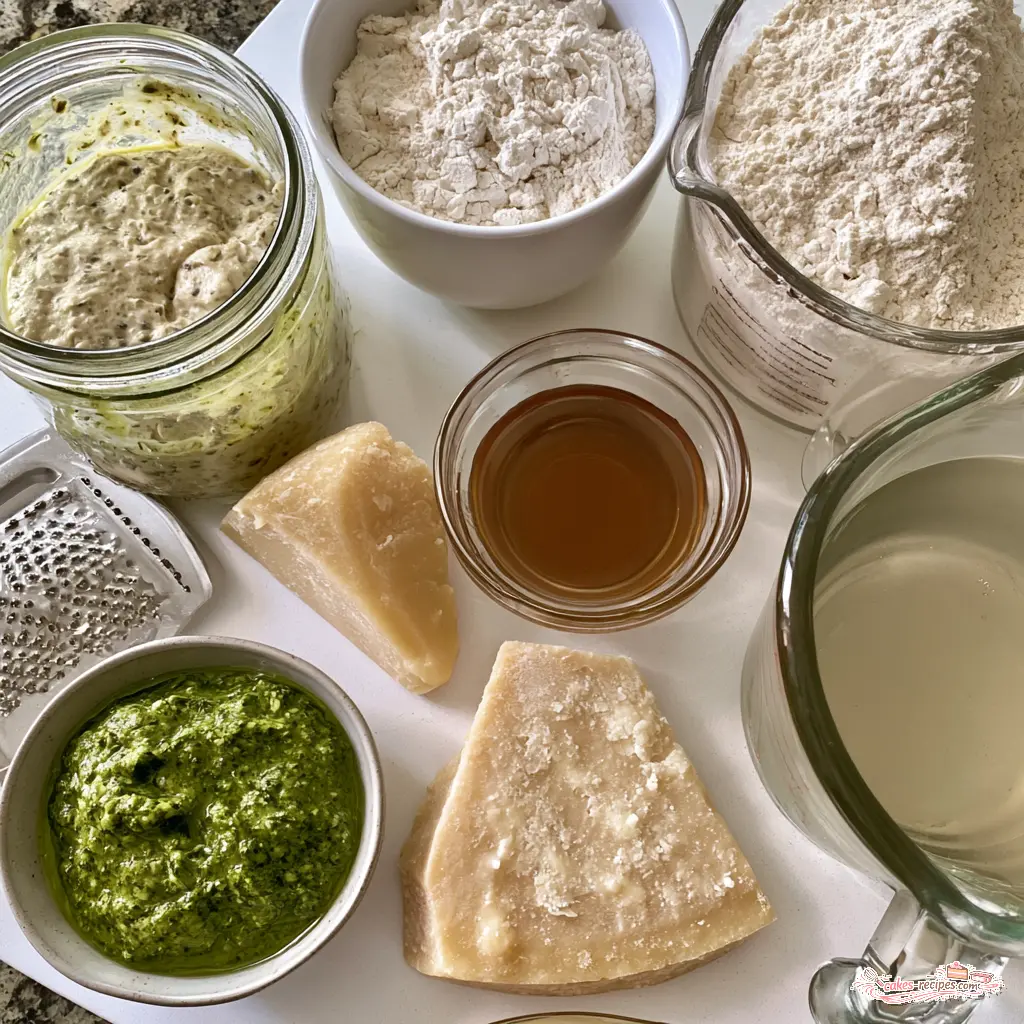
The ingredient list for this pesto parmesan sourdough is blessedly short, and each item does something specific. Let’s break down the ones that matter most.
Active sourdough starter: Use one that’s been fed a few hours before mixing, at 100% hydration, and at room temperature. A bubbly, mature starter gives the best rise and that signature tang. If your starter is sluggish, the baking powder in this recipe has your back.
Baking powder: This is the quiet genius of the whole loaf. Most sourdough recipes skip it, but here it provides a safety net, a bit of extra lift that keeps the crumb airy and tall even with the pesto’s olive oil coating the gluten strands.
Prepared basil pesto: Homemade or store-bought both work beautifully. If you’re using a jar, stir it thoroughly before measuring, the oil separates and you want it evenly distributed. Brands loaded with extra oil are the ones to avoid; oily pesto makes slack, sticky dough that’s hard to shape.
Shredded Parmesan: Please grate it from a block. Freshly shredded parmesan melts and blends better than the pre-shredded shelf stuff, which is coated with anti-caking agents that turn gummy when baked.
Unbleached all-purpose flour: This recipe was built for it. Bread flour works in a pinch, but all-purpose keeps the crumb tender and the dough easy to handle.
A few substitutions worth trying:
- Red pesto or sun-dried tomato pesto: Swap them in for basil pesto and you’ll get a different color swirl but the same great structure.
- Mozzarella: Shred it in place of some of the parmesan for a stretchier, milder filling. Optional, and honestly the parmesan version is my favorite.
- Homemade pesto: Use it if you have it, just don’t let it be too oily. End-of-summer garden basil makes the best pesto of the year, and this is the perfect way to use it up.
How To Make Pesto Parmesan Sourdough
You’ll find the full instructions in the recipe card below. But here’s the thinking behind each stage, because the method is where most flavored sourdoughs go wrong.
Mix the Dough
Every good pesto parmesan sourdough starts with a soft, slightly sticky dough. You’re combining the starter, warm water, honey, baking powder, salt, and flour into one supple mass. Warm water around 110°F wakes up the starter, and the honey gives the yeast something to feast on.
Mix by hand if you can. It’s easier to feel when the dough is right: it should cling to the bowl, then pull away cleanly, soft and pliable, not stiff and not soup. The baking powder gets fully distributed here, so make sure it’s blended in evenly.
Cold Ferment for More Flavor
After an hour on the counter, the dough goes into the fridge for 8 to 12 hours. This overnight proofing is where the sourdough character develops, that gentle tang and the tender, complex crumb. The cold also firms the dough up, which makes the next step much easier to handle.
One heads-up for hot summer kitchens: warm weather accelerates fermentation, so expect your dough to move faster than it would in spring. Watch the dough, not the clock. If it looks puffy and airy after 8 hours, it’s ready to go. And if your kitchen runs warm, consider mixing in the evening and baking the next morning, you’ll avoid the worst of the heat.
Fold in Pesto & Parmesan
This is the heart of the whole thing. After the cold ferment, you’ll do a few stretch and folds to strengthen the gluten network. Then you pat the dough into a flat rectangle and spread half the pesto across the surface, sprinkling on half the shredded parmesan. Leave a one-inch border so the filling doesn’t squeeze out during shaping.
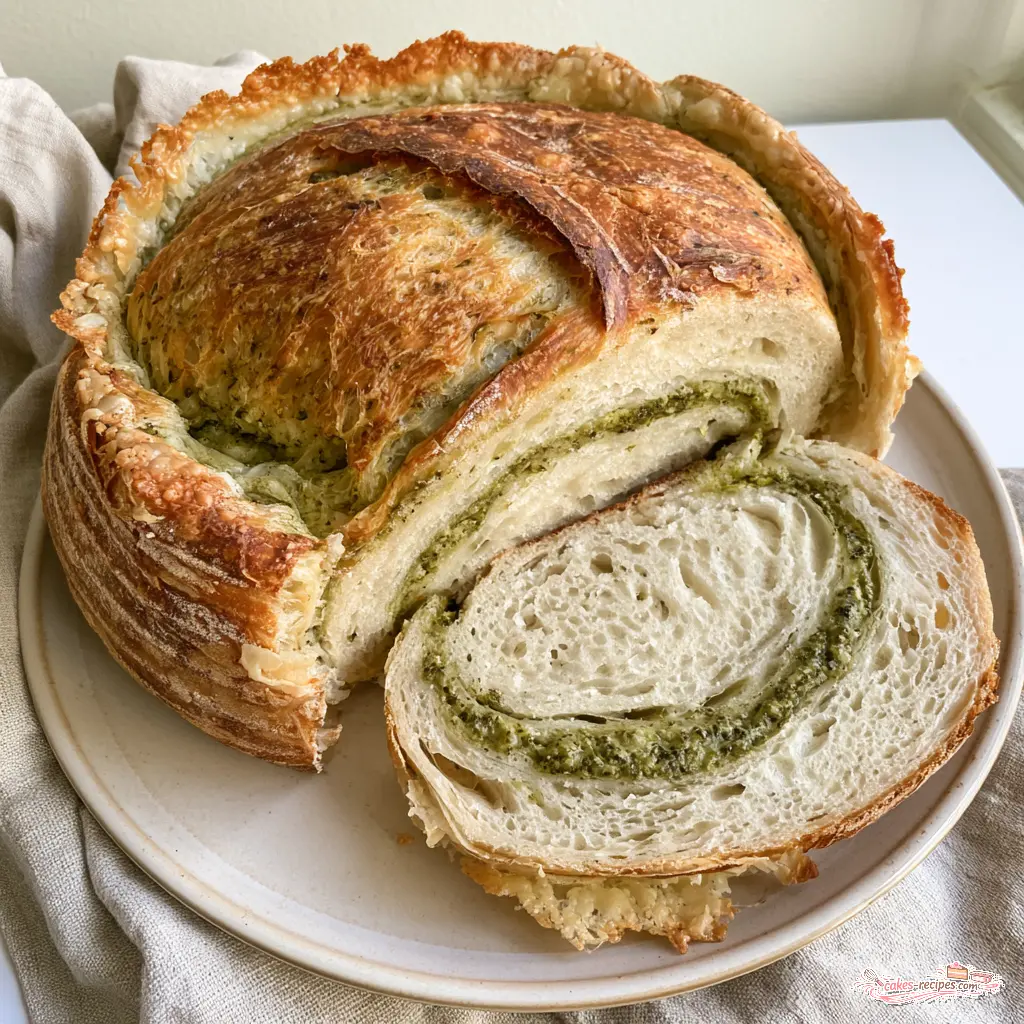
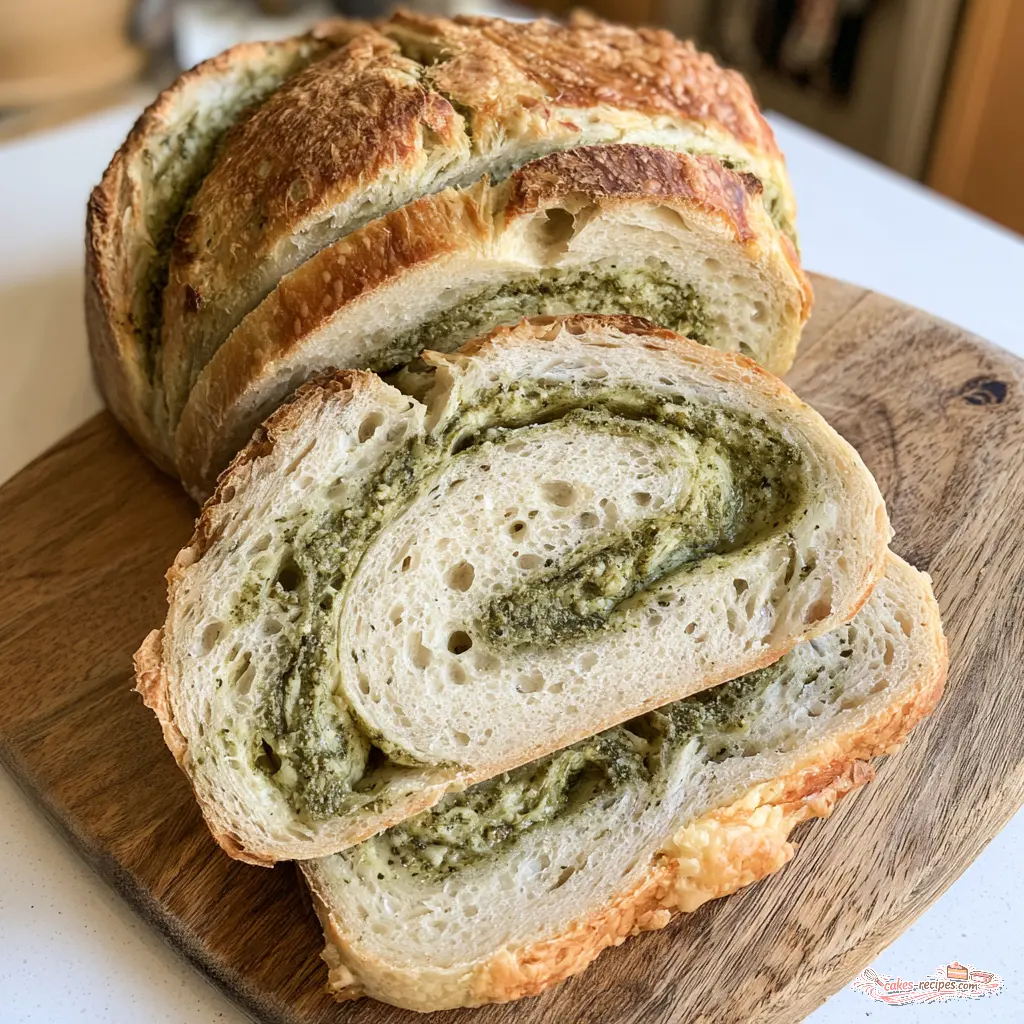
Fold it like a letter, press it flat again, and repeat with the remaining pesto and parmesan. That double letter fold creates the dramatic pesto swirl bread effect you see when you slice into the finished loaf. You’re essentially laminating the dough, building layer after layer of basil pesto bread goodness into every bite.
Why this window and not earlier? Oil coats gluten strands and shortens the network, which makes dough slack and hard to shape. By adding the pesto after the cold ferment, you give the gluten a chance to fully develop first. The dough stays manageable, and the swirl stays intact. Yes, pesto in sourdough is absolutely a real thing, Italian bakeries have been making flavored loaves for generations, but this timing is the secret to doing it right.
Bake in a Dutch Oven
You’ll refrigerate the shaped loaf uncovered for one hour while the Dutch oven preheats to 425°F. That uncovered rest dries the surface just enough to help the crust blister and crackle. Then you score the top, lower the oven to 400°F, and bake covered for 20 minutes. The trapped steam gives you that shiny, crackly artisan crust.
Eight more minutes uncovered lets the crust brown. Then comes the best part: you sprinkle the finely grated parmesan over the top and bake for another 7 minutes. The cheese melts into the score marks and forms a golden frico crust at the edges. It smells like a fancy bakery in your kitchen, and when you pull the loaf out, you’ll hear the crust crackle and pop as it cools.
Give it time to cool before slicing. I know it’s hard. Trust the process here, the pesto oil needs to settle into the crumb, and a hot knife will tear that beautiful swirl.
Pesto Parmesan Sourdough Baking Timeline
Here’s the beauty of this pesto parmesan sourdough bread: the active time is short, but the schedule bends around your life. It slots beautifully into a weekend or a work-from-home day.
- Evening, Day 1: Mix the dough. Let it sit at room temperature for 1 hour, then refrigerate it for 8 to 12 hours.
- Morning, Day 2: Pull the dough from the fridge. Do the stretch and folds, fold in the pesto and parmesan, and shape it into a round loaf.
- Midday, Day 2: Refrigerate the shaped loaf uncovered for 1 hour while the Dutch oven preheats.
- Bake: Score, bake, and about 35 minutes later you’re pulling out a golden, crackling masterpiece.
The cold ferment is flexible, so don’t stress about exact timing. You can push it to 12 hours or pull it at 8; the dough is forgiving either way. That flexibility is what makes this a successful pesto parmesan sourdough even for busy home bakers.
Tips for the Best Pesto Parmesan Sourdough
After years of baking flavored loaves, and a few spectacular failures, these are the tips that actually move the needle. Skip these and the bread will still work. Follow them and it’ll be unforgettable.
- Feed your starter ahead of time. Use it at its peak, a few hours after feeding, not when it’s fallen back flat.
- Stir store-bought pesto well. That layer of oil on top needs to be worked back in before you measure.
- Keep your hands wet. The dough is sticky by design. Wet hands or a bench scraper beat adding extra flour every single time.
- Don’t rush the cooling. Let the loaf cool for at least an hour, ideally longer. Pesto oil needs time to settle into the crumb, and cutting early gives you a gummy slice.
- Protect the bottom of the loaf. Place a baking sheet on the rack under your Dutch oven to prevent the base from burning.
Save Your Loaf
Slack, oily dough? Do two extra coil folds during shaping. A tighter crumb beats a flat loaf every time.
Burning parmesan? Keep the grated parmesan off the loaf until the final 7 minutes of baking, exactly as the recipe calls for. That gives it time to melt into a golden frico crust without scorching.
Pesto Parmesan Sourdough Variations
Once you’ve mastered the base loaf, this recipe becomes a playground. Here are a few ways to make it your own, all optional, all delicious.
- Red pesto: Swap the basil pesto for sun-dried tomato pesto. The swirl turns a dramatic red, and the flavor gets deeper and slightly sweet.
- Extra cheese: Shred some mozzarella in with the parmesan for a stretchier, milder version. Not part of the base recipe, but a fun twist.
- Garlic lovers: Store-bought pesto is tamer than fresh, which actually helps fermentation stay predictable. Fresh garlic can slow things down, so don’t be tempted to add extra.
- Mini pizzas: This is the best leftover move, hands down. Top thick slices with sauce and mozzarella, broil until bubbling, and you’ve got instant pizza night from a loaf that was already spectacular.
Storage & Serving Suggestions
This loaf stays soft for about 3 days thanks to the oil in the pesto, which is a nice bonus. Store it wrapped in a paper bread bag on the counter, or under a glass cloche if you have one. Leftover pesto parmesan sourdough also freezes beautifully. Slice it first so you can pull out individual pieces as needed.
To reheat, toast the slices or warm the whole loaf in a 300°F oven for about 10 minutes. You’ll bring some of that crackle back to the crust and re-melt the parmesan frico edges.
Serve this alongside a bowl of soup, with pasta, or as the base for bruschetta. It’s also spectacular with grilled meats and all those end-of-summer tomatoes. Slice it thick for sandwiches, the bread is sturdy enough to hold up to any filling you throw at it.
Or just pull it apart while it’s still warm. No judgment here, I do it every single time.
Pesto Parmesan Sourdough FAQ
Can I use bread flour instead of all-purpose flour?
Yes, you can, and it will still bake into a gorgeous loaf. Bread flour brings slightly more structure and a chewier crumb, which some people genuinely prefer. All-purpose keeps this pesto parmesan sourdough more tender on the palate. If you swap, just expect to add a touch more water and mix a minute or two longer, since bread flour is thirstier.
Why is there baking powder in sourdough bread?
It’s a safety net, pure and simple. The pesto’s olive oil softens gluten and makes the dough a little less springy. Baking powder adds a controlled burst of lift during baking, so the crumb comes out tall and airy instead of dense. It isn’t a replacement for the starter; it’s just insurance, and it works beautifully.
Can I add the pesto during the initial mixing stage?
I wouldn’t. Adding oil-heavy pesto too early coats the gluten strands before they’ve developed, which makes the dough slack and very hard to shape. The dough also struggles to hold onto the gas that creates an open crumb. This recipe builds the gluten first, then folds in the pesto during shaping. That timing is exactly what delivers that dramatic swirl.
How do I know when the bread is fully baked?
Use a digital thermometer and look for an internal temperature of 200°F to 205°F in the center of the loaf. Then do the old-fashioned knuckle test: take the loaf out and tap the bottom. A hollow knock means the crumb is set. If it sounds dense, slide it back in for a few more minutes uncovered.
Does garlic in pesto really affect the fermentation?
It genuinely can. Fresh garlic contains antimicrobial compounds that slow yeast activity. Since store-bought pesto uses more processed garlic, it’s less active and therefore more predictable in sourdough. If you’re using a pungent homemade pesto with lots of raw garlic, just watch your bulk ferment and shape a little earlier if the dough seems extra airy.
How do I keep the pesto oil from making the crumb soggy?
Three small habits do the trick. First, stir your pesto thoroughly before measuring so you’re not scooping up a pool of separated oil. Second, spread the pesto in a thin, even layer when folding, leaving that one-inch border. Third, let the finished loaf cool completely before slicing; the oil needs time to redistribute into the crumb. Cutting early is the fastest route to a gummy middle.
Can I make pesto parmesan sourdough without a Dutch oven?
Definitely. Use a rimmed baking sheet or a cast iron skillet for the baking surface, and place a shallow pan of boiling water on the bottom rack to create steam for the first 20 minutes. The crust won’t be quite as dramatic, but the pesto swirl and parmesan topping will still get the applause.
How long can the dough stay in the fridge during the cold ferment?
Plan for 8 to 12 hours, but you can push it to 24 if life gets in the way. The longer cold ferment means more tang and a slightly more complex flavor. Just keep in mind the dough will continue to ferment slowly in the fridge, so handle it gently during shaping if you’ve gone past the 12-hour mark.
Expert Notes & Data Insights
Alright, let’s talk numbers for a minute, because this is where pesto parmesan sourdough stops feeling like a gamble and starts feeling like a science you can trust.
Temperature runs the show. During bulk fermentation, your dough is happiest in the 78°F to 82°F range. The overnight cold ferment, around 38°F to 40°F, slows fermentation to a gentle crawl, which builds tang and gives gluten time to strengthen without letting the pesto oil wreck the structure. And for doneness, trust the thermometer: pull the loaf at 200°F to 205°F internal temperature, and you’ll get a set crumb that’s still tender enough to squish.
The baking powder is a calculated move, not a cheat. Two teaspoons add just enough extra lift to compensate for the way olive oil shortens gluten. I’ve made this pesto parmesan sourdough with a starter that was moving slow, and the loaf still rose with confidence. That’s the kind of reliability that makes a recipe worth keeping.
Garlic deserves your respect here. Fresh garlic has natural antimicrobial properties that can slow wild yeast activity, which is why store-bought pesto is so dependable in sourdough. It uses processed garlic with less of that aggressive punch. If you go the homemade route with lots of raw garlic, just keep a closer eye on the bulk ferment.
And that parmesan crust? It’s a textbook Maillard reaction. Shredded parmesan hitting that hot oven surface for the final 7 minutes crosses the temperature threshold where proteins and sugars brown at lightning speed, creating that crackly, nutty frico everyone fights over.
You don’t need to memorize any of this to bake a great loaf. Your hands will learn the dough, and the recipe card will keep you on track. But knowing the why behind each step means you can adapt, troubleshoot, and bake with real confidence.
So feed your starter, stir that pesto well, and preheat the Dutch oven. This is the bread that will have people asking for your recipe, and the answer is simple: it’s pesto parmesan sourdough, and you made it at home.
Does Parmesan cheese pair well with pesto?
Yes, Parmesan and pesto are a classic pairing. The salty, nutty flavor of Parmesan balances the bright, herbal notes of basil pesto, while the cheese’s umami richness deepens the overall taste. In this artisan pesto parmesan sourdough bread, Parmesan not only complements the pesto filling but also creates a golden, flavorful crust when sprinkled on top. For the best results, use freshly grated Parmesan or a high-quality pre-shredded variety, and add it over the pesto just before baking for an extra savory finish.
What type of bread should you serve with pesto?
Crusty artisan breads are the best choice for serving with pesto. A rustic sourdough, baguette, or focaccia has a chewy interior and crisp crust that soaks up pesto beautifully without becoming soggy. This pesto parmesan sourdough bread takes that idea one step further by baking the pesto directly into the dough, so every slice is infused with basil and garlic. If you’re serving pesto as a dip or spread, slice a crusty loaf into thick pieces, toast them lightly, and spread or dip away for a simple, delicious appetizer.
Which bread is the hardest to make at home?
Many home bakers consider sourdough bread among the hardest to make because it relies on a live starter, precise fermentation timing, and proper shaping techniques. Recipes like this pesto parmesan sourdough add an extra layer of challenge by incorporating a filling during the stretch-and-fold process, but they’re absolutely manageable with patience and a few good tips. If you’re new to sourdough, focus on using an active starter, watching your dough for proper rise, and letting the loaf cool completely before slicing — that cooling step is just as important as the baking for getting that perfect crumb.
What type of bread is best for Parmesan bread?
For Parmesan bread, a sturdy artisan bread with a good structure is best. Sourdough is an excellent base because its tangy flavor and hearty crumb hold up to the bold, salty taste of Parmesan cheese. In this recipe, we use a classic sourdough dough, then layer in pesto and top it with shredded Parmesan for a deliciously cheesy crust. If you’re not making sourdough, a French or Italian loaf also works well — just look for a bread with a crisp crust and airy interior that will support the cheese and fillings without becoming dense.