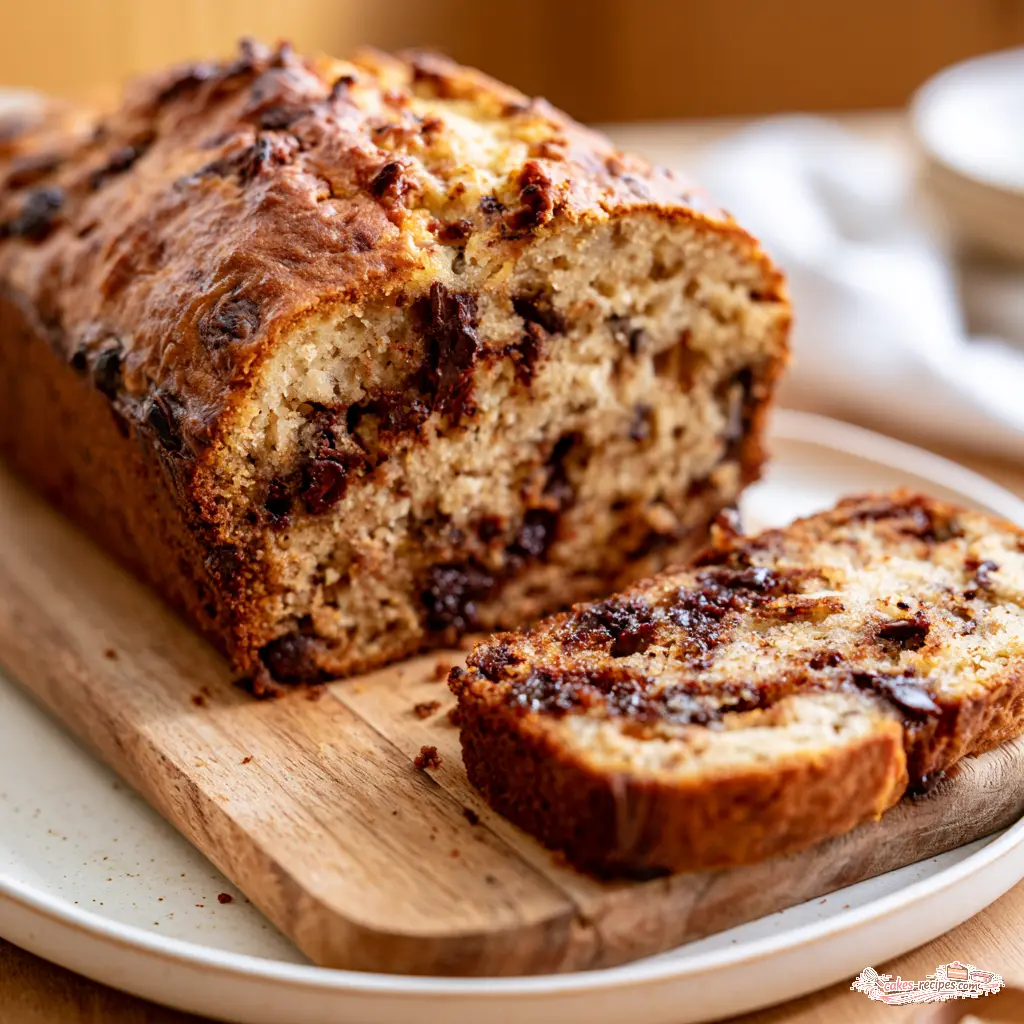
You know those sad, spotty bananas on your counter? That’s not a problem. That’s banana bread knocking on your door.
I’ve been on both sides of this moment. The side where you almost toss them into the compost. And the side where you turn them into something the whole family fights over. This extra moist banana bread recipe, with brown butter and dark chocolate chunks, is the one I keep coming back to. It’s forgiving, it’s deeply flavorful, and it smells like everything good about a home kitchen.
This time of year, with the August heat, bananas go spotty faster than you’d think. That’s a gift, honestly. It means banana bread season is basically whenever you want it to be, especially with back-to-school lunchboxes right around the corner.
The Banana Bread Ingredients Worth Gathering
Before we bake, let’s think about what goes into this loaf. Not just as a shopping list, but why each ingredient earns its place. That’s the part that makes you feel like a better baker without any extra effort.
- Very ripe bananas: The darker and more speckled, the sweeter and more fragrant your loaf will be.
- Unsalted butter, browned: This is the quiet upgrade. Browning the butter adds a deep, nutty warmth that plain melted butter simply doesn’t have.
- Greek yogurt: The moisture keeper. It gives the crumb a tender softness that stays for days.
- Dark chocolate chunks: Melted pockets of bittersweet richness against that soft, sweet crumb. Worth every chunk.
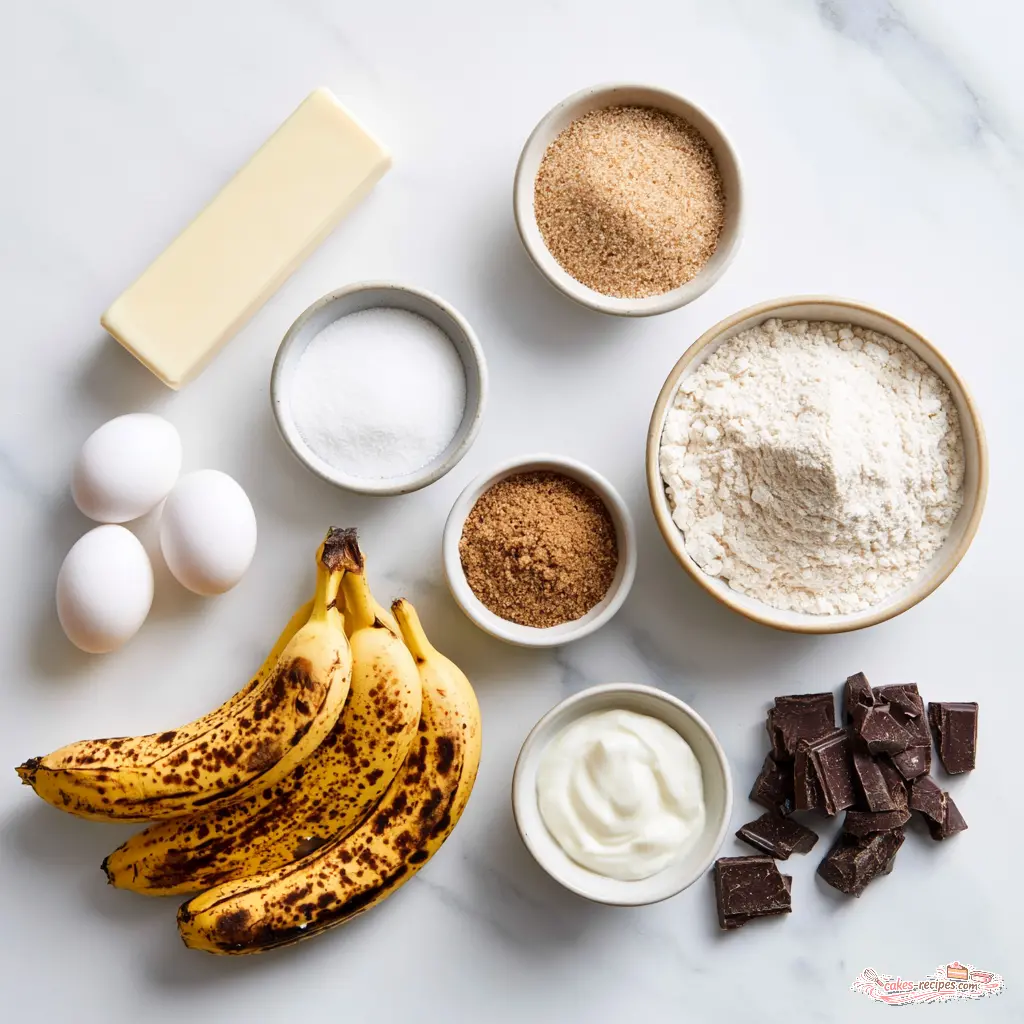
Everything else, the sugars, eggs, flour, and a little cinnamon, does the supporting work. The baking soda, not baking powder, reacts with the acidity in the bananas and brown sugar. That’s what helps this quick bread rise tall and stay tender. Make sense? Good. Let’s keep going.
The Secret to Super Moist Banana Bread
Ask ten bakers for the secret to a moist banana bread and you’ll get ten answers. In my experience, it comes down to three things, and this recipe nails all of them.
First, brown butter. Melting the butter and cooking it until it turns golden and smells nutty does more than add flavor. It removes some of the water from the butter, which means less steam and a crumb that feels rich instead of soggy. That’s the kind of trade I’ll take every time.
Second, Greek yogurt. This is the same trick your favorite diner pancakes use. The yogurt adds tenderness and moisture without thinning the batter. If you don’t have it, sour cream works as a perfect one-for-one swap. Both give you that soft, bakery-style texture.
Third, those overripe bananas. I know you’ve been staring at them. When they’re ripe to the point of dark, speckled skins, they break down easily, release natural sweetness, and keep the crumb profoundly moist. Green bananas just can’t do that.
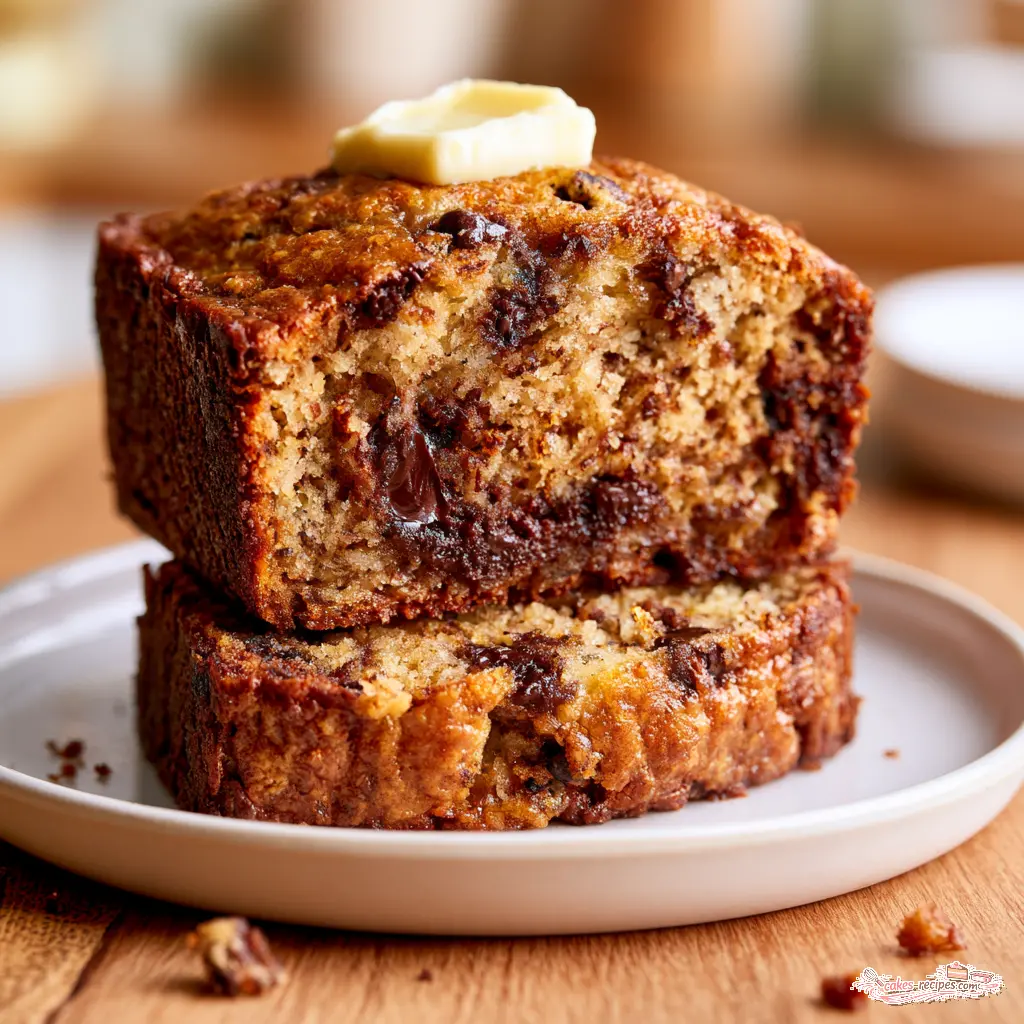
The result? A golden, crackly top. A center that’s soft, tender, and almost custardy around the chocolate. That’s what we want.
Test Kitchen Tips for Getting This Banana Bread Right
This is a simple recipe, but a few techniques make the difference between good banana bread and memorable banana bread. Let’s walk through the moments that matter.
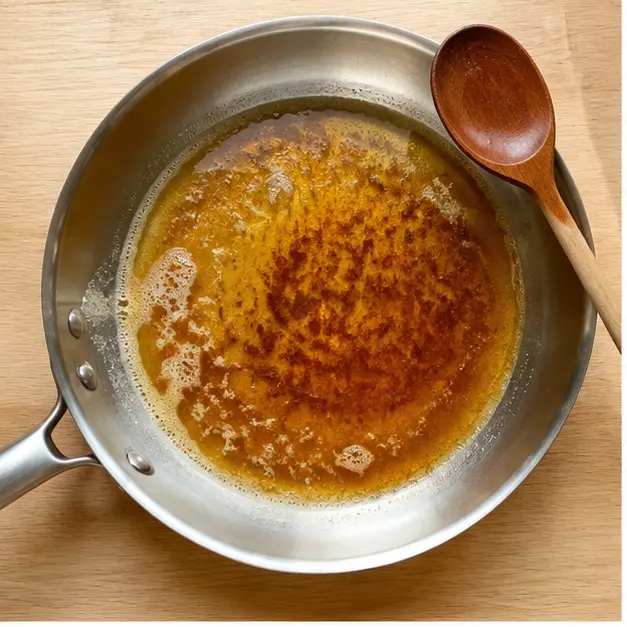
Stage 1: Brown the butter with patience.
Melt the unsalted butter in a medium skillet over medium heat, stirring often. At first, nothing seems to happen. Keep going. Around the five to seven minute mark, the butter will foam, then turn a deep golden brown and smell wonderfully nutty. The moment you smell that, pull it off the heat. It goes from brown to burnt fast, so be attentive. Let it cool slightly while you prep everything else.
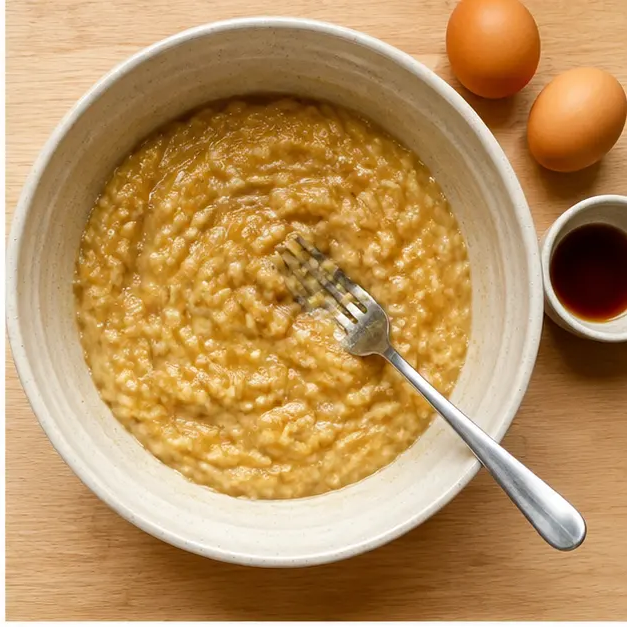
Stage 2: Mash the bananas, then whisk in the wet ingredients.
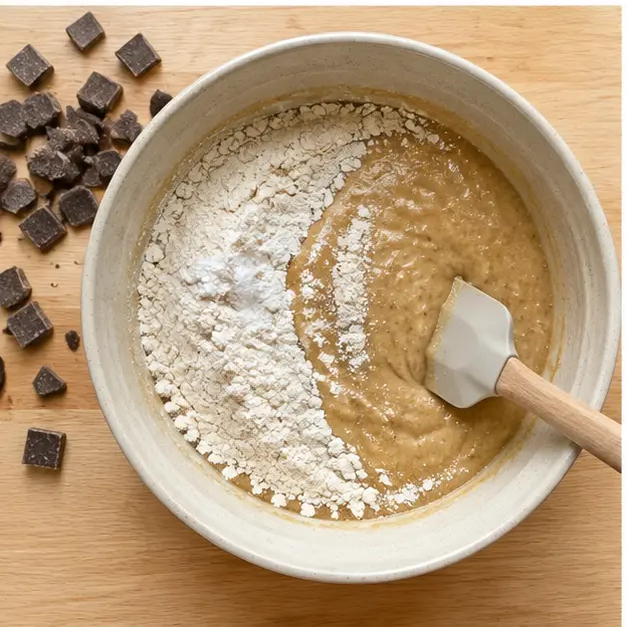
In a large bowl, mash those overripe bananas with a fork until mostly smooth with a few small lumps. That texture is perfect, don’t worry about making it uniform. Whisk in the cooled browned butter, both sugars, eggs, vanilla, and Greek yogurt until well blended. I prefer a separate bowl for the dry ingredients because it gives you more control, but if you’d rather do a true one-bowl banana bread, sift the dry ingredients over the wet and fold from there.
Stage 3: Fold gently. Seriously, gently.
Whisk the flour, baking soda, salt, and cinnamon in a separate bowl, then add them to the banana mixture. Fold with a spatula just until no flour streaks remain. A few streaks are fine. Overmixing develops gluten, and gluten is what makes banana bread dense and tough. Gentle folding keeps the crumb light. Then fold in the dark chocolate chunks until they’re evenly distributed. Take your time here.
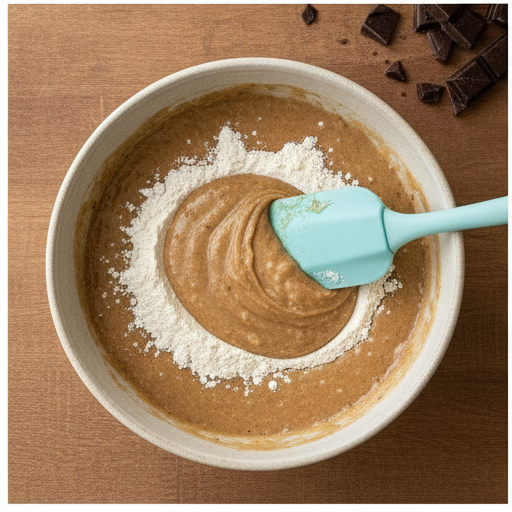
Stage 4: Bake until golden, crackly, and just set.
Pour the batter into a greased 9×5-inch loaf pan and smooth the top. If you want that bakery-style look, sprinkle a little demerara sugar over the surface before it goes in the oven. It bakes into a lovely, crunchy crust that contrasts beautifully with the soft crumb underneath.
Bake at 350°F for 50 to 55 minutes, but start checking around the 45-minute mark. Insert a toothpick into the very center you’re looking for moist crumbs, not wet batter. The top should be deeply golden and crackled, and the edges should be just pulling away from the pan. If the top is browning too quickly while the center still needs time, tent the pan loosely with aluminum foil. Every oven runs a little differently, and this is where patience pays off.
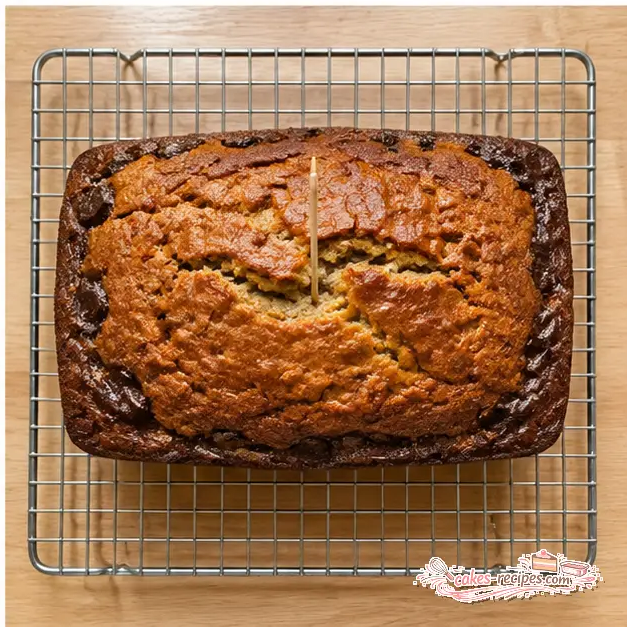
Let the loaf cool in the pan for about 15 minutes, then turn it out onto a wire rack. I’ll be honest with you: this is the hardest part of the whole recipe. The house smells like brown butter and warm bananas, and suddenly everyone in the kitchen has an urgent need for a snack. But slicing too early makes the crumb crumble and the chocolate smear. Give it at least another 15 minutes on the rack. Warm is wonderful. Hot is a mess waiting to happen.
The Full Banana Bread Recipe Card
Here’s everything in one place every ingredient with both cup and gram measurements, plus the full method from start to finish. This is the version to save, screenshot, or pin for later.
Ingredients
- 3 very ripe bananas, mashed (about 1½ cups / 340 g)
- ½ cup (113 g) unsalted butter, browned and slightly cooled
- ¾ cup (150 g) packed brown sugar
- ¼ cup (50 g) granulated sugar
- 2 large eggs, at room temperature
- 1 teaspoon vanilla extract
- ⅓ cup (80 g) Greek yogurt or sour cream
- 1¾ cups (220 g) all-purpose flour, spooned and leveled
- 1 teaspoon baking soda
- ½ teaspoon kosher salt
- 1 teaspoon ground cinnamon
- ¾ cup (120 g) dark chocolate chunks, plus a handful for the top
Method
- Brown the butter in a skillet over medium heat, stirring often, until it turns deep golden and smells nutty, about 5 to 7 minutes. Remove from the heat and let cool slightly.
- Mash the bananas in a large bowl. Whisk in the browned butter, both sugars, eggs, vanilla, and Greek yogurt until well combined.
- Whisk the flour, baking soda, salt, and cinnamon together in a separate bowl. Fold into the wet mixture just until no streaks of flour remain. Gently fold in the chocolate chunks.
- Pour the batter into a greased 9×5-inch loaf pan. Bake at 350°F for 50 to 55 minutes, until a toothpick inserted in the center comes out with moist crumbs. Cool in the pan for 15 minutes, then transfer to a wire rack.
Prep time: 15 minutes | Cook time: 50 to 55 minutes | Servings: 10 to 12 slices | Approximate nutrition per slice: 350 calories, depending on your chocolate and slice thickness
Variations and Substitutions That Actually Work
This loaf takes kindly to a little improvisation. Here are the swaps I’ve tested and would happily make again.
Sour cream for Greek yogurt: Use a one-for-one swap. Both add the same tenderness and moisture. Plain full-fat yogurt works too, just skip anything flavored or sweetened.
Add nuts: Toasted walnuts or pecans folded in with the chocolate add a lovely crunch. Toast them briefly in a dry skillet first it deepens their flavor and keeps them crisp inside the loaf.
Cut the sugar: If your bananas are practically collapsing with ripeness, you can reduce the sugar to ¾ cup total without missing it. The bananas carry plenty of natural sweetness on their own.
Go whole wheat: Swap half of the all-purpose flour for whole wheat flour. The loaf will be a little more rustic and hearty, but every bit as moist.
Make it vegan: Replace each egg with a flax egg one tablespoon of ground flaxseed whisked with two and a half tablespoons of water, left to rest for five minutes. Use a good vegan butter or coconut oil in place of the browned butter. The texture will be a touch different, but the flavor still shines.
Turn It Into Banana Bread Muffins
This is the most requested variation in my house, especially with school mornings around the corner. Line a 12-cup muffin tin with liners and fill each cup about three-quarters full. Bake at 350°F for 20 to 24 minutes, or until a toothpick comes out clean. You’ll get a full dozen, and they freeze beautifully for grab-and-go breakfasts.
Choosing the Best Chocolate for Banana Bread
Let’s talk about the chocolate, because it’s not an afterthought in this recipe. I reach for 70% cacao dark chocolate chunks. At that percentage, the chocolate leans into bittersweet territory, which means it doesn’t compete with the ripe bananas and brown sugar. Instead, it balances them. That little bit of bitterness is the same trick pastry chefs use to make the sweet things taste even sweeter.
Standard chocolate chips work in a pinch, but here’s the thing: chips are formulated to hold their shape when baked. Chunks, or a roughly chopped chocolate bar, melt into luscious, irregular pools. Every slice ends up a little different, and that’s part of the charm.
If you’re chopping a bar, look for something in the 60 to 72% cacao range. Below 60% skews toward candy, and above 72% can get intensely bitter against the loaf’s sweetness. And if you have a favorite chocolate you love to eat out of hand, that same bar will make this bread sing.
How to Store and Freeze Banana Bread
Here’s the thing about banana bread: it’s somehow even better the next day. The flavors settle, the brown butter gets nuttier, and the crumb turns silky. But only if you store it right.
There’s plenty of conflicting advice out there about refrigerating banana bread. My rule is simple: keep it at room temperature. The fridge pulls moisture out of baked goods and accelerates staleness. Wrap the cooled loaf tightly in plastic wrap or store it in an airtight container on the counter, and it will stay moist for up to four days.
For humid kitchens and I know a few of those, especially in August the paper towel trick is a cheat code. Place a paper towel at the bottom of your storage container, set the loaf on top, and lay another paper towel over it. The towels absorb excess moisture without drying out the bread. Swap them if they get damp.
Freezing the whole loaf
Wrap the completely cooled loaf in plastic wrap, then add a layer of aluminum foil. It will keep in the freezer for two to three months. To thaw, let it sit on the counter while still wrapped the condensation collects on the wrap instead of seeping into the bread.
Freezing individual slices
This is my favorite method for school mornings. Slice the cooled loaf, wrap each slice individually in plastic wrap, and pile them into a freezer bag. Pop a frozen slice straight into the toaster, and it tastes nearly fresh-baked. The microwave works too, if you’re in a hurry.
Troubleshooting Banana Bread Problems
Every baker has a banana bread story that didn’t quite go to plan. Here’s how to prevent the most common issues and what they mean if they happen anyway.
Why did my banana bread sink in the middle?
That’s almost always underbaking. The center is the last part to set, and if it hasn’t stabilized before leaving the oven, it collapses as it cools. Check doneness with a toothpick inserted into the center, not the edge. And resist the urge to open the oven door during the first 30 minutes of baking a sudden drop in temperature can deflate the loaf.
Why is my banana bread dry and crumbly?
The usual culprits are too much flour and overbaking. Spoon the flour into your measuring cup and level it with a knife, rather than scooping directly from the bag, which packs in extra flour. And pull the loaf from the oven when the toothpick has moist crumbs not when it comes out completely clean and dry.
Why is the top burnt but the middle raw?
Your oven is running hot, or the pan is sitting too close to the heating element. Move the rack to the center position and tent the loaf with foil if the exterior is browning too quickly. An inexpensive oven thermometer is worth every penny if this is a recurring theme.
Your Banana Bread Questions, Answered
Over the years, these are the questions I hear most often. Consider this your cheat sheet.
Can I use frozen bananas?
Yes. Thaw them at room temperature and pour off the excess liquid that pools around them. They’ll be very soft, sometimes even a little gray that’s a sign of maximum sweetness. Mash them as usual. Frozen bananas are actually a gift; they force you to wait until they’re perfectly ripe for baking.
How do I ripen bananas quickly?
Two reliable methods. Place the bananas on a baking sheet and warm them in a 250°F oven for 15 to 20 minutes, until the skins darken and soften. Or stash them in a paper bag with an apple overnight; the ethylene gas they release speeds up ripening naturally.
Can I double this recipe?
Absolutely. Double every ingredient and bake in two 9×5-inch loaf pans side by side. You may need to rotate the pans halfway through baking, and check for doneness at the 45-minute mark the extra batter can extend baking time by a few minutes.
What if I don’t have a 9×5 loaf pan?
Use an 8×4 pan for a taller, sturdier loaf just extend the bake time by 5 to 10 minutes. Or bake the batter in a 12-cup muffin tin for about 20 to 24 minutes. Either way, the toothpick test is your guide.
How do I know when it’s done?
Three visual cues: the top is deeply golden and crackled, the edges are pulling away from the pan, and a toothpick inserted into the center comes out with just a few moist crumbs clinging to it. Wet batter means it needs more time; a completely clean toothpick means it’s one minute past perfect.
Should I refrigerate banana bread?
In my experience, no. Room temperature in an airtight container is the sweet spot. The fridge dries out baked goods faster than it preserves them. If you’re not going to finish the loaf within four days, freeze it instead that stops the clock much more effectively.
Expert Notes & Data Insights
After more loaves than I can count, here’s what I want you to take with you.
Ripeness isn’t a suggestion it’s the recipe. When bananas ripen past the point of eatability, their starches convert to sugar and their cell walls break down. That means they blend into the batter effortlessly, sweeten the loaf without relying entirely on added sugar, and lock in moisture that green bananas never could. Every side-by-side test I’ve done confirms it: the spottier the banana, the better the bread.
Brown butter is the highest-leverage upgrade in baking. In about five minutes, the Maillard reaction transforms simple melted butter into something deeply nutty and complex. It’s a small window of attention just watch for the foam to turn golden for a flavor payoff that makes this loaf taste like it came from a slow Sunday at a fancy bakery.
Moisture retention is the sum of its parts. Brown butter has less water than regular melted butter, so it creates a tighter, richer crumb. Greek yogurt brings tenderness through fat, not liquid. And overripe bananas, humble as they look, are doing the heavy lifting for both flavor and structure. The paper towel storage trick is the final piece, regulating humidity so the loaf stays soft for days instead of hours.
And the oven? A steady 350°F, a center rack, and a baker who trusts the process. That’s the data that never changes.
When that loaf comes out of the oven golden, crackly, fragrant with brown butter give it those few patient minutes to cool. Then cut a thick slice. Maybe add a smear of salted butter, because you deserve it. That’s the moment this recipe was always about. That’s the moment you’ll come back to, again and again.
Now go find those spotty bananas. They’ve been waiting for their moment.
What are some tips for making moist banana bread?
Start with very ripe bananas—look for peels speckled with brown spots because they mash easily and add natural sweetness and moisture. Avoid overmixing the batter; stir just until the flour disappears so the gluten doesn’t tighten up and make the loaf dense. Brown butter is another game-changer: it adds richness and a nutty depth that keeps the crumb tender. You can also boost moisture by folding in a few tablespoons of sour cream or Greek yogurt. Finally, pull the loaf from the oven when a toothpick inserted in the center comes out with a few moist crumbs—overbaking is the fastest way to dry out banana bread.
What is the origin of banana bread?
Banana bread as we know it became popular in the United States during the Great Depression, when home cooks were looking for resourceful ways to use overripe bananas instead of tossing them. The widespread availability of baking powder and baking soda around that time made quick breads simple, fast, and reliable without yeast. Over the decades, banana bread became a beloved classic in American home baking, and today it ranges from humble everyday loaves to elevated versions like this brown butter banana bread with dark chocolate chunks.
What are the different variations of banana bread?
There are endless ways to customize banana bread. Classic add-ins include walnuts, pecans, chocolate chips, and raisins, while more creative versions add blueberries, a cinnamon swirl, or a crunchy demerara sugar topping. You can also change the flours—whole wheat or gluten-free blends work well—or swap some of the butter for Greek yogurt to make it lighter. For special diets, try a flax egg and dairy-free butter for a vegan loaf. One of our favorite variations is this brown butter banana bread with bittersweet dark chocolate chunks, which takes the classic recipe to a whole new flavor level.
What are some common mistakes when making banana bread?
A few common mistakes can leave you with a less-than-perfect loaf: using pale, greenish bananas, which lack sweetness and moisture; overmixing the batter, which develops too much gluten and makes the bread dense and tough; and overbaking, which dries out the crumb. Choosing the wrong loaf pan size without adjusting the bake time can also cause a burnt outside or a soggy center. Store banana bread at room temperature in an airtight container—refrigerating it tends to dry it out faster. Follow a tried-and-true banana bread recipe, check doneness a few minutes early, and you’ll avoid these pitfalls.
What is the secret to good banana bread?
The real secret is using extremely ripe bananas with soft, browning flesh—they bring maximum sweetness, intense banana flavor, and natural moisture. The next big secret is not overmixing the batter; stir only until the dry ingredients are incorporated. And when you make this particular banana bread recipe, browning the butter first adds a deep caramelized, nutty note that pairs beautifully with bittersweet dark chocolate chunks. Those three elements—ripe bananas, a gentle hand, and browned butter—make the difference between a forgettable loaf and a truly memorable one.
Is banana bread healthy or unhealthy?
The answer depends on the recipe and portion size. On one hand, banana bread often includes bananas, which provide potassium, vitamin B6, and dietary fiber, and eggs and butter add protein and fat. On the other hand, many standard recipes call for significant amounts of refined sugar and white flour, making it more of a dessert than a health food. This brown butter banana bread with dark chocolate chunks is a delicious treat best enjoyed in moderation. To lighten it up, you can reduce the sugar, use whole wheat flour, or swap one egg for a flax egg and some of the butter for Greek yogurt.
How to make banana bread?
In a large bowl, mash about 3 ripe bananas with a fork. Whisk in melted brown butter, sugar, eggs, and vanilla until smooth. In a separate bowl, combine flour, baking soda, and a pinch of salt. Fold the dry ingredients into the wet mixture until just combined, then gently fold in bittersweet dark chocolate chunks. Pour the batter into a greased 9×5-inch loaf pan and bake at 350°F for 50 to 60 minutes, or until a toothpick inserted in the center comes out with just a few moist crumbs. Cool in the pan for 10 minutes, then transfer to a wire rack. Slice and enjoy warm or toasted.