
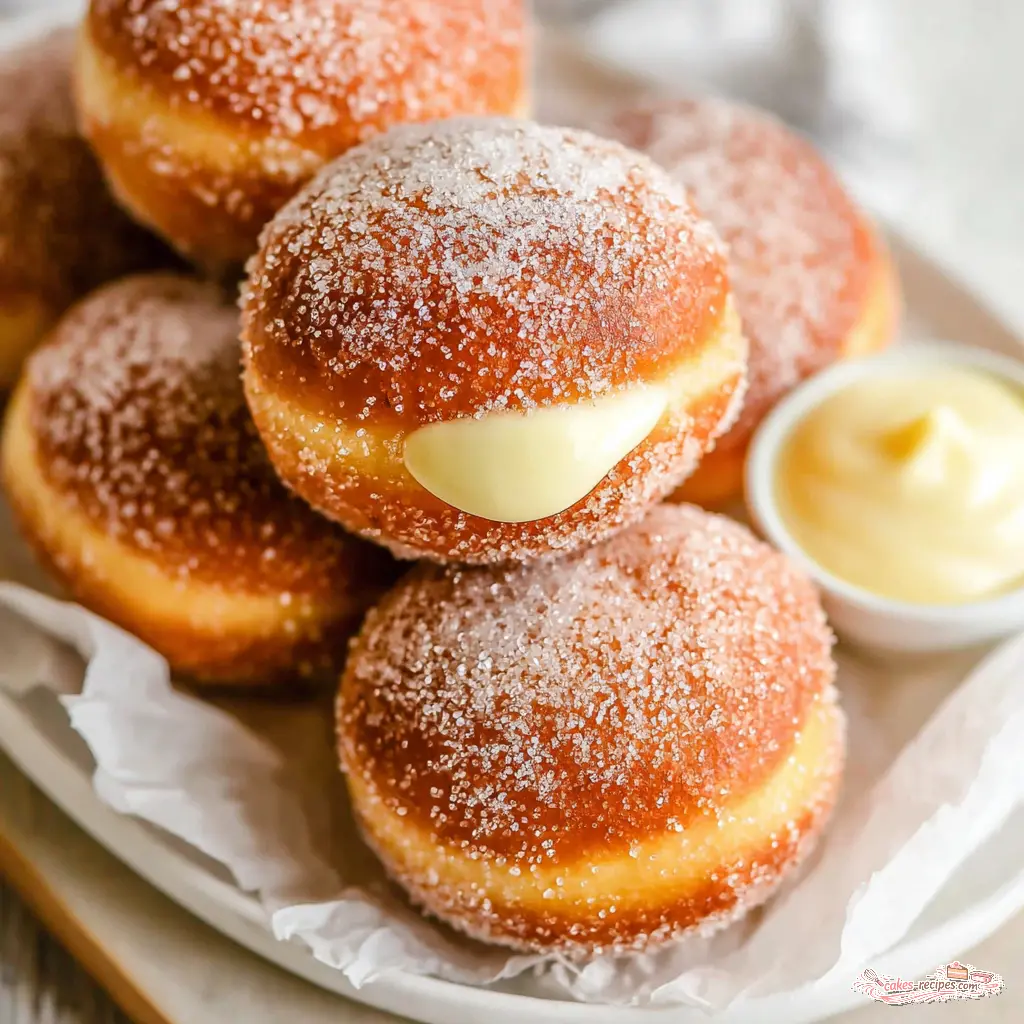
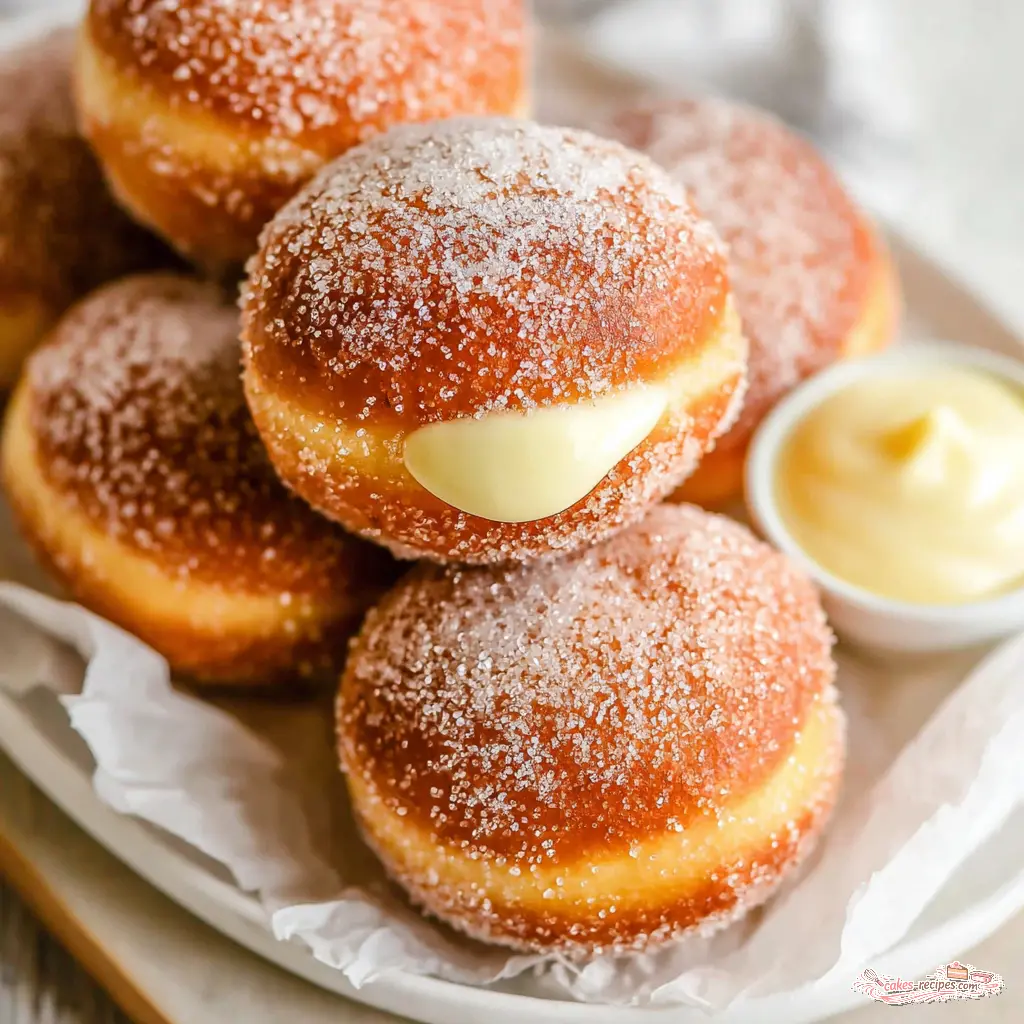
Fluffy Bomboloni Italian Donuts with Pastry Cream Filling
Ingredients
Method
- Check the instructions on your yeast packet. Some yeast can be added directly to the dry ingredients, while others need to be activated in a little warm liquid first. If activating, use a bit of the lukewarm milk from the recipe.
- In the bowl of a stand mixer fitted with the dough hook, combine the bread flour, 00 flour, and sugar. Add the softened butter cubes, then pour in the eggs, lukewarm milk, vanilla, and salt.
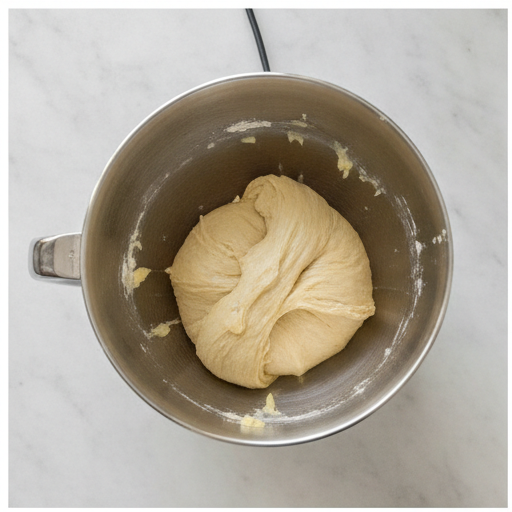
- Knead on low speed (KitchenAid speed 2) for 10 minutes, until the dough is smooth, elastic, and slightly tacky to the touch. If using cups, the dough should be tacky, not wet or sticky—if too wet, add a tablespoon of flour at a time.
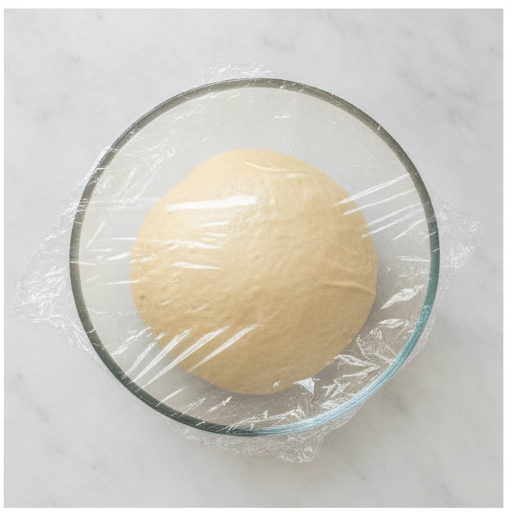
- Turn the dough out onto a clean, unfloured surface. Gently knead 2-3 times to form a smooth ball. Place in a lightly oiled bowl, cover with plastic wrap, and let rise for 2-3 hours, or until tripled in size.
- Once risen, turn the dough out onto a clean surface, punch it down to release the air, and knead a few times to bring it back into a smooth ball. Flatten with your hands, then roll into a rectangle 1/2 inch (1.5 cm) thick.
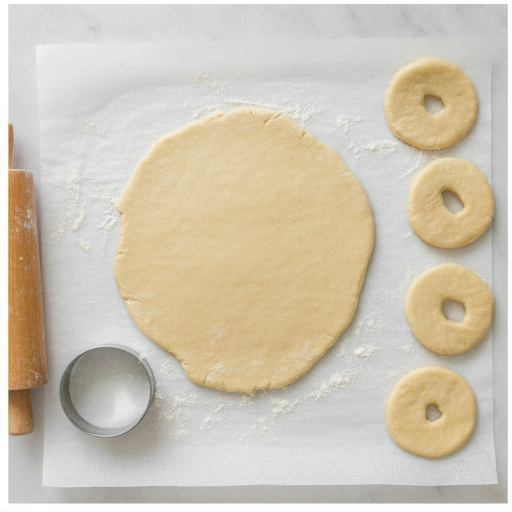
- Using a 3.5-inch round cookie cutter or a glass, cut out doughnuts. Gather the scraps, re-knead, and re-roll to cut more. Place the cut doughnuts on a parchment-lined baking sheet, cover loosely with plastic wrap, and let rise for 1 to 1.5 hours, until tripled in size.
- While the doughnuts are rising, prepare the pastry cream (see below) and let it cool completely.
- When ready to fry, heat vegetable oil in a deep, heavy pot to 340°F (170°C). The oil should be about 3 inches deep. Line a plate with paper towels and have a bowl of superfine sugar ready.
- Cut the parchment into squares so each doughnut sits on its own piece. Carefully lower each doughnut into the hot oil, parchment side up, then immediately remove the parchment with tongs. Fry in batches without overcrowding the pan.
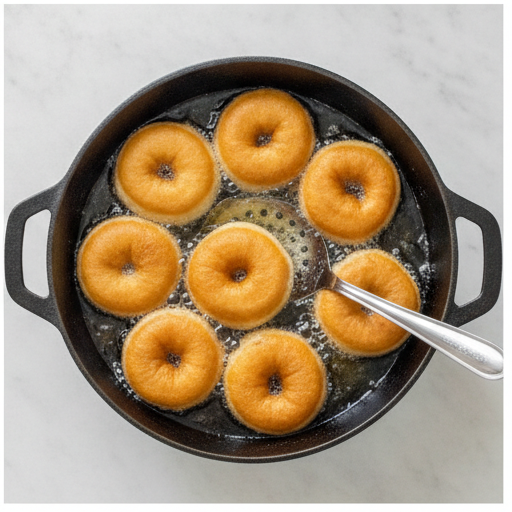
- Fry for 2 minutes on the first side, then flip and fry for another 2 minutes, until deep golden brown. Remove with a slotted spoon and drain on paper towels for about 2 minutes. While still warm, roll in the sugar to coat evenly. Cool completely before filling.
- To fill the bomboloni, use a small knife to make a small incision in the side of each cooled doughnut, gently moving the knife to create a pocket.
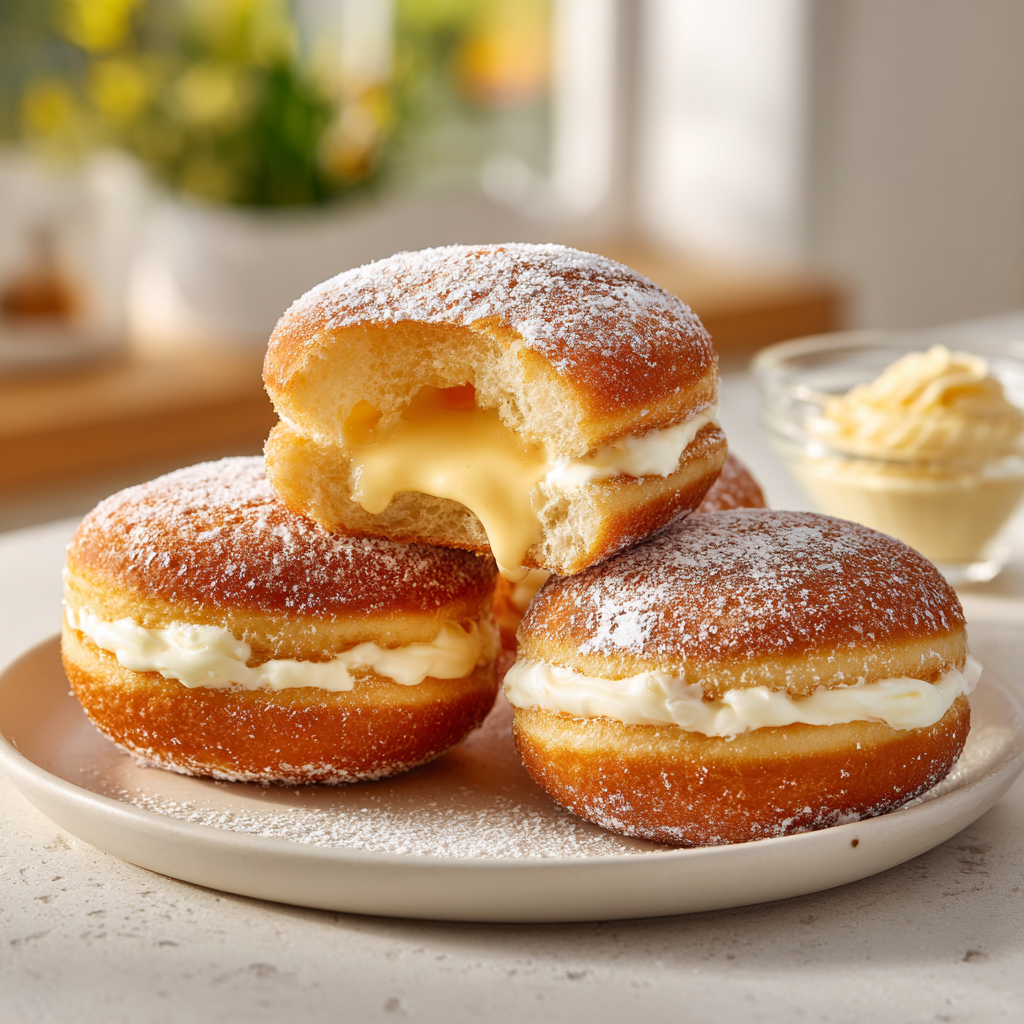
- Fit a piping bag with a small round tip and fill with the cooled pastry cream. Insert the tip into the incision and pipe the cream until it starts to bulge slightly. Repeat with all doughnuts.
- Serve immediately for best texture, or store in an airtight container at room temperature for 1-2 days. For longer storage, refrigerate the filled doughnuts, but let them come to room temperature before serving.
- In a large bowl, whisk together the egg yolks, sugar, vanilla, and lemon zest until well combined. Add the cornstarch and whisk until smooth and lump-free.
- In a saucepan, heat the milk over medium heat until hot but not boiling. Remove from heat and let sit for 1 minute. Slowly pour the hot milk into the egg mixture, whisking constantly to prevent the eggs from scrambling.
- Return the mixture to the saucepan and cook over low heat, stirring constantly with a wooden spoon or whisk, until it thickens and becomes very creamy, about 10-15 minutes. Do not increase the heat, or the eggs may scramble.
- Once thick, remove from heat and pour into a clean bowl. Press plastic wrap directly onto the surface of the cream to prevent a skin from forming. Let cool completely at room temperature, then refrigerate until ready to use.
Nutrition
Notes
Tried this recipe?
Let us know how it was!Why You’ll Love These Bomboloni
I still remember the first time I bit into a warm bomboloni. It was at a tiny bakery in Florence, and I was jet-lagged and grumpy. The woman behind the counter handed me one of these golden puffs, still warm from the fryer, and said, “Mangia.” I took a bite, and that first moment where the cream spills out, the dough practically melts on your tongue. I was hooked.
These bomboloni italian donuts are exactly what you’re looking for if you want something special. They’re lighter than American donuts, filled with silky vanilla custard, and rolled in sugar while still warm. I promise you can do this. Even if they aren’t perfect, they’ll taste amazing. My first batch had some lopsided ones, and my kids still ate them all.
This recipe comes from years of testing and a lot of trial and error. I’ve killed my fair share of yeast, trust me. But once you get the feel for this dough, it becomes second nature. Let me show you how.
Simple Ingredients
Let’s talk about what goes into these bomboloni italian donuts. The ingredient list might look long, but most of it is pantry stuff you probably already have.
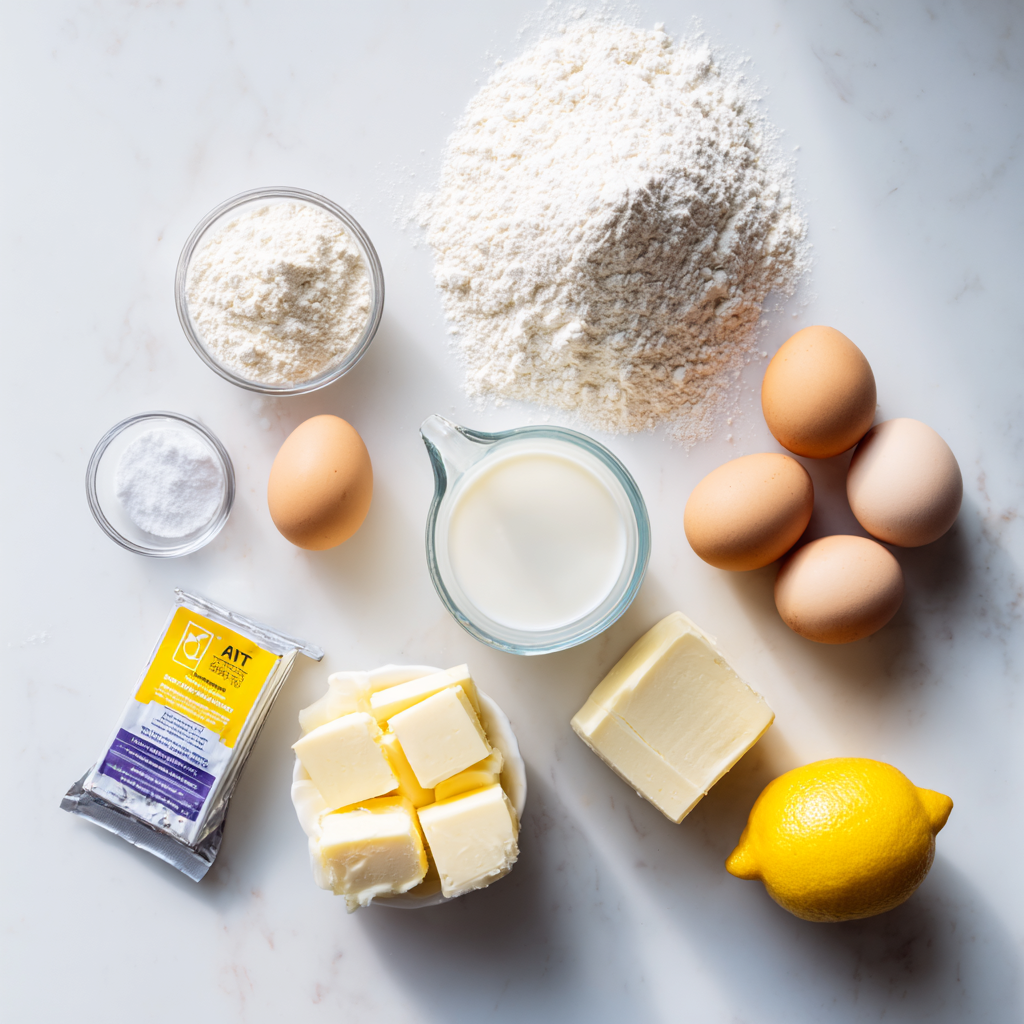
The dough uses a combination of strong bread flour and 00 flour (or all-purpose if that’s what you have). That mix gives you the perfect texture: light and airy but with enough structure to hold up to frying. I know 00 flour sounds fancy, but you can find it at most grocery stores now, or just use all-purpose. It works fine, though the texture will be a bit less delicate.
For the pastry cream, you’ll need egg yolks, whole milk, cornstarch, sugar, vanilla, and lemon zest. The lemon zest is what makes this crema pasticcera so special. It brightens everything up without being obvious. I prefer Meyer lemons when they’re in season, but regular ones work great too.
- Flour combo: Bread flour + 00 flour (or all-purpose substitute)
- Yeast: Instant or fast-acting is easiest
- Butter: Unsalted, softened, cut into small cubes
- Milk: Whole milk for richness, lukewarm for the dough
- Oil for frying: Vegetable oil with a high smoke point
Variations & Substitutions
Here’s where things get fun. The base recipe for these bomboloni italian donuts is already amazing, but there are so many ways to make them your own.
Fillings: The classic is vanilla custard filling, but you can switch it up. Try chocolate ganache (melted chocolate and cream), Nutella, fruit jam, or even a whipped cream filling. For a summer twist, use fresh strawberry jam. My daughter loves when I make them with lemon curd.
Dough variations: Add lemon or orange zest to the dough for a citrus note. You can also make a chocolate version by adding a few tablespoons of cocoa powder to the flour. If you’re looking for a lighter option, you can bake these instead of frying them. Bake at 350°F for about 20 minutes until golden. They won’t be exactly the same, but they’re still delicious.
Flour swaps: If you don’t have 00 flour, just use all-purpose. The texture will be slightly denser, but still wonderful. For a gluten-free version, use a good gluten-free flour blend. I’ve tested it, and it works, though the dough is a bit trickier to handle.
How to Make Bomboloni Step by Step
Let’s walk through the process together. I’ll break it into four main stages so you know exactly what to expect.
Stage 1: Making the Dough
Start by combining the flours, sugar, softened butter, eggs, lukewarm milk, vanilla, and salt in your stand mixer. Use the dough hook on low speed (KitchenAid speed 2) for about 10 minutes. The dough should become smooth, elastic, and slightly tacky to the touch. If it feels too wet, add a tablespoon of flour at a time. If it’s too dry, add a splash of milk. You’re looking for that soft, slightly sticky texture, like a baby’s cheek.
Stage 2: Proofing the Dough
Turn the dough out onto a clean surface, shape it into a smooth ball, and place it in a lightly oiled bowl. Cover with plastic wrap and let it rise for 2 to 3 hours, until tripled in size. This is the most important step for achieving that light, airy texture. If your kitchen is warm, it might rise faster. Keep an eye on it. The dough should look puffy and jiggly when it’s ready.
Stage 3: Cutting and Second Proofing
Once risen, punch the dough down to release the air. Roll it out into a rectangle about 1/2 inch thick. Use a 3.5-inch round cookie cutter or a glass to cut out rounds. Place them on a parchment-lined baking sheet, cover loosely, and let them rise again for 1 to 1.5 hours until tripled in size. This second proof is what makes them pillowy.
Stage 4: Frying and Filling
Heat vegetable oil in a deep, heavy pot to 340°F (170°C). The oil should be about 3 inches deep. Carefully lower each donut into the hot oil, frying in batches without overcrowding. Fry for 2 minutes per side until deep golden brown. Drain on paper towels for about 2 minutes, then roll in sugar while still warm. Cool completely before filling. Use a piping bag with a small round tip to inject the pastry cream through a small incision in the side.
Recipe Tips for Perfect Bomboloni
After making these bomboloni italian donuts more times than I can count, here are the things that make the biggest difference.
- Roll in sugar while still warm. If you wait too long, the sugar won’t stick. Trust me on this one.
- Maintain oil temperature. Use a thermometer. 340°F is ideal. Too hot and they’ll burn outside but stay raw inside. Too cool and they’ll be greasy.
- Don’t overcrowd the pan. The oil temperature drops when you add too many. Fry in small batches.
- Cool before filling. If you fill them while they’re warm, the cream will melt and the donuts will get soggy.
- Use a kitchen scale for flour. If you’re using cups, spoon the flour into the cup and level it off. Too much flour makes dense donuts.
Common Mistakes to Avoid
❌ Overcrowding the pan: Lowers oil temperature, making greasy donuts. ✅ Fry in small batches.
❌ Oil temperature too high or low: Causes burning or greasiness. ✅ Use a thermometer at 340°F.
❌ Not rolling in sugar while warm: Sugar won’t stick. ✅ Roll within 2 minutes of draining.
❌ Filling before cooling: Cream melts, donuts get soggy. ✅ Cool completely, then fill.
❌ Not activating yeast properly: Dough won’t rise. ✅ Check your yeast instructions first.
Serving Suggestions
These bomboloni italian donuts are best served the day you make them, still slightly warm with that creamy filling. They’re perfect for a special brunch or a summer gathering. I love serving them with a strong espresso or cappuccino for that authentic Italian feel.
For a summer brunch spread, arrange them on a platter with fresh berries and a bowl of extra pastry cream for dipping. They also pair beautifully with other Italian desserts like tiramisu or panna cotta if you’re going all out. My family loves them just as they are, with a glass of cold milk for the kids.
If you’re feeling creative, dust them with a little powdered sugar or drizzle with a simple chocolate glaze. The possibilities are endless.
Storage and Leftovers
Let’s be honest, these bomboloni italian donuts rarely last long enough to need storage. But if you do have leftovers, here’s what works.
Unfilled donuts: Store in an airtight container at room temperature for up to 2 days. They’re best reheated briefly in a 350°F oven for about 5 minutes to crisp them up again.
Filled donuts: Store in the refrigerator in a sealed container for 1 to 3 days. Let them come to room temperature before serving for the best texture. You can also reheat filled donuts in the microwave for about 10 seconds, but the texture won’t be quite as good.
Pastry cream: Cover with plastic wrap pressed directly onto the surface and store in the fridge for up to a week. Give it a good whisk before using.
Freezing: Unfilled donuts can be frozen individually wrapped for up to a month. Thaw and reheat before filling. I don’t recommend freezing filled donuts, as the texture suffers.
Frequently Asked Questions
I hope you give these bomboloni italian donuts a try. They’re one of those recipes that feels like a real accomplishment, and the joy on people’s faces when they take that first bite is worth every minute of work. Tag me when you make these, I can’t wait to see your bomboloni! And if you’re looking for more inspiration, follow me on Pinterest for more delicious recipes.
Source: Nutritional Information
What are bomboloni donuts?
Bomboloni are Italian yeast dough donuts, typically round and filled with pastry cream or other sweet fillings. They’re lighter and airier than American donuts, rolled in sugar, and often served warm. Think of them as Italy’s answer to the classic donut.
What is the difference between bomboloni and Zeppole?
Zeppole are also Italian fried dough, but they’re usually smaller, denser, and often served without filling or with just a dusting of powdered sugar. Bomboloni are larger, lighter, and almost always filled with cream or custard. Zeppole are more like fritters.
What makes bomboloni different?
What sets bomboloni apart is the dough itself. It uses a combination of bread flour and 00 flour for a very light, airy crumb. They’re also proofed twice, which gives them that pillowy texture. And that creamy vanilla custard filling is the signature touch.
How do you pronounce bomboloni in English?
It’s pronounced u0022bom-bo-LOH-nee.u0022 The emphasis is on the third syllable, and all the vowels are pronounced. It rolls off the tongue nicely once you get the hang of it.
What is the unhealthiest donut?
That’s hard to say, but filled and glazed donuts tend to be higher in calories and sugar. Bomboloni, with their pastry cream filling and sugar coating, are definitely a treat. But everything in moderation, right?
Is bomboloni healthy?
Bomboloni are a fried pastry with a creamy filling, so they’re not exactly health food. But they’re made with real ingredients like eggs, milk, and butter. One as an occasional treat is fine. Each one has about 420 calories.
What is a bomboloni also called?
In different regions of Italy, they might be called u0022bomboloni alla cremau0022 or simply u0022bomboloni.u0022 Some people also call them Italian donuts or Italian fried dough. The name varies, but the deliciousness is consistent.
What is bomboloni slang for?
In Italian slang, u0022bomboloniu0022 can sometimes refer to something round and plump, like a little ball. But in the context of food, it always means these wonderful filled donuts.
What is the Italian version of beignets?
Bomboloni are often considered the Italian version of beignets. Both are fried yeast dough, but beignets are usually square and dusted with powdered sugar, while bomboloni are round, filled, and rolled in granulated sugar.
Is bomboloni served hot or cold?
Bomboloni are best served at room temperature or slightly warm. They’re fried, rolled in sugar while warm, then cooled before filling. Serving them slightly warm lets the cream filling shine without melting.
What is a hillbilly donut?
A hillbilly donut is a term sometimes used for a rustic, homemade-style donut, often without a hole and filled with jam or cream. It’s not a formal term, but it describes a similar concept to bomboloni.
Which country eats the most donuts?
The United States is the biggest consumer of donuts, with Canada not far behind. But Italy has a strong tradition of fried pastries too, especially during Carnival season when bomboloni are everywhere.
Do I need to use a stand mixer to make doughnuts?
Not at all. If you don’t have a stand mixer, you can knead the dough by hand on a lightly floured surface for about 15 minutes until smooth and elastic. It’s a great arm workout, and the dough will be just as good.
How do you achieve the white ring around a doughnut?
The white ring happens when the dough is fried and the part that was touching the oil gets darker while the top stays lighter. It’s a sign of properly fried donuts. Make sure your oil temperature is consistent at 340°F.
What oil should I use for frying?
Use a neutral oil with a high smoke point, like vegetable oil, canola oil, or peanut oil. These oils won’t impart any flavor to the donuts and can handle the high frying temperature without burning.
What’s the best temperature for frying Bomboloni?
The ideal temperature is 340°F (170°C). Use a thermometer to keep it consistent. Too hot and the outside burns before the inside cooks. Too cool and the donuts absorb too much oil and become greasy.
How long do Bomboloni last?
Unfilled bomboloni last 1 to 2 days at room temperature in an airtight container. Filled ones last 1 to 3 days in the refrigerator. They’re best eaten the same day you make them for the perfect texture.
Can the donuts be baked?
Yes, you can bake them instead of frying. Bake at 350°F for about 20 minutes until golden. They won’t be as light and airy as fried bomboloni, but they’re still delicious and a bit healthier. An air fryer works too.
What are the best fillings to use?
The classic is vanilla pastry cream, but you can use chocolate ganache, Nutella, fruit jam, lemon curd, or even whipped cream. The key is to use a filling that’s thick enough to hold its shape and not make the donut soggy.
How to store and reheat donuts?
Store unfilled donuts at room temperature in an airtight container. Reheat in a 350°F oven for 5 minutes to crisp them up. Filled donuts go in the fridge. Let them come to room temperature before serving.
Can I use all-purpose flour instead of 00 or bread flour?
Yes, you can substitute all-purpose flour for both the bread flour and 00 flour. The texture will be slightly less light and airy, but they’ll still be delicious. Use a kitchen scale for the most accurate measurements.
My dough didn’t rise – what went wrong?
This usually happens when the yeast is old or the liquid was too hot and killed it. Check the expiration date on your yeast and make sure your milk is lukewarm (about 110°F), not hot. Also, cold ingredients can slow down rising.
Where are they from in Italy?
Bomboloni are popular all over Italy, but they’re especially associated with Tuscany. You’ll find them in bakeries and cafes throughout the region, often served with morning coffee or as an afternoon treat.



6 Responses
Decent recipe, but the frying temperature was tricky. My first batch got too dark before they puffed up properly. I ended up lowering the oil temp to 340°F and that helped. Also, the cream filling was a bit loose for my taste—maybe more cornstarch next time? Still, the flavor was lovely.
Hi David, thanks for the feedback! Frying temperature definitely takes practice—I find that an instant-read thermometer is a lifesaver here. For the cream, yes, an extra teaspoon of cornstarch should tighten it up nicely. I’ll add a note about that in the recipe notes. Glad the flavor came through!
Great recipe overall, but my dough came out a bit sticky even after adding the full amount of flour. I had to add an extra tablespoon to get it manageable. Any tips for adjusting hydration? Also, how long do you recommend letting the dough rest before rolling out?
Hi Mark! That sticky dough can happen if your eggs are on the larger side or if the humidity is high. Next time, try adding the flour gradually and stop when the dough feels just slightly tacky but not sticky. For resting, I give it a full 10-minute bench rest after the first rise before rolling out—this really helps relax the gluten and makes it easier to handle.
I’ve never fried doughnuts before, but your step-by-step instructions made me feel confident enough to try. The bomboloni were a huge hit at brunch! My only tweak was using vanilla extract instead of paste (what I had), and they still tasted amazing. I’ll definitely be making these again for Christmas morning.
Made these for my family on Sunday and they were absolutely divine! The dough was so soft and easy to work with. I used all-purpose flour since I didn’t have 00 flour, and they still turned out perfectly light and airy. The lemon zest in the pastry cream really makes it sing. Thank you for such a clear recipe!