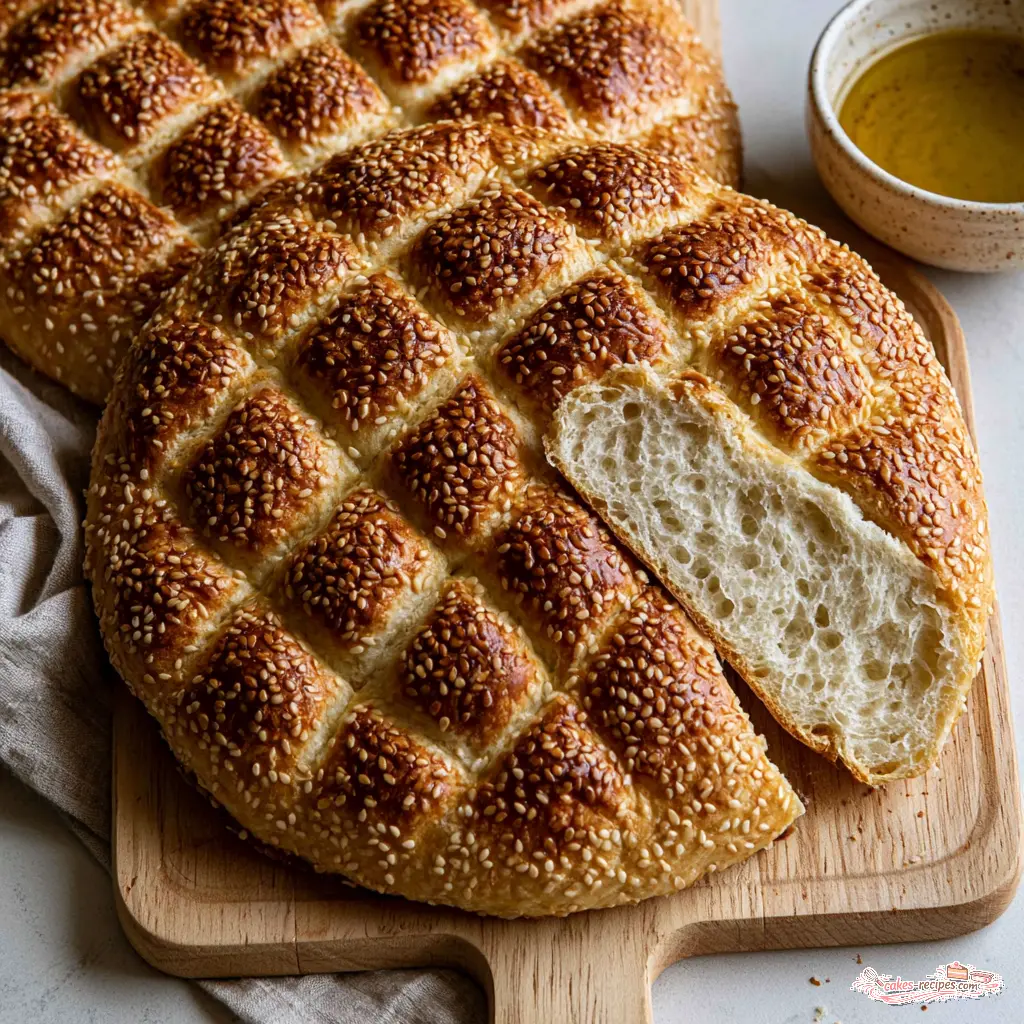
Why This No Knead Turkish Bread Works
I used to think Turkish bread required a wood-fired oven and Popeye forearms. Turns out, neither is true. This no knead turkish bread needs one bowl, a spatula, and about 90 minutes of mostly hands-off time. That’s it.
No stand mixer. No bread machine. No wrestling dough until your wrists give up. The secret is the wet dough technique: a loose, sticky mix that lets time do the kneading. Gluten develops on its own when flour and water hang out long enough. That’s the whole science behind any good no knead bread recipe.
I’ve made my share of flat, dense bricks. My eighth-grade science fair chocolate cake could have doubled as a doorstop. The fix wasn’t more elbow grease, it was understanding the process. Here, the process is basically “do nothing.” Sound too good to be true? That’s what I thought too.
- You’ll touch this dough maybe three times. Mix, fold, shape. Done.
- It’s forgiving. Sticky is normal, even desirable.
- Summer-proof. Warm weather bread rising means a faster, fluffier rise. August kitchens are perfect for this.
That last point matters right now. It’s grilling season, and a golden, sesame-dusted loaf to tear alongside kebabs is the move for any backyard gathering. This no knead turkish bread makes you look like you planned a whole Mediterranean feast when you really just stirred a bowl.
What Is Turkish Pide Bread?
Turkish pide is a whole family of breads. You’ve probably seen the long, boat-shaped ones stuffed with cheese or spiced meat. This is a different branch: the soft, round, dimpled flatbread known as ramazan pide, which shows up on iftar tables during Ramadan and at meze spreads all year.
Those pressed diamond indentations aren’t just for looks. They keep the bread flat and even while it bakes, and the little pockets catch olive oil and hummus. Honestly, clever design.
This no knead turkish bread gives you that same soft crumb and golden, crackly-enough crust without any of the fuss. It lands somewhere between a Mediterranean flatbread and a rustic Turkish bread, softer than a bazlama flatbread, less chewy than a baguette.
Key Ingredients for a No Knead Bread Win
You probably have almost all of this already. A quick trip to Ralphs or Trader Joe’s, and honestly you’re set. Let me walk through what each ingredient does, because it helps when you’re staring at a sticky blob and wondering if you messed up.
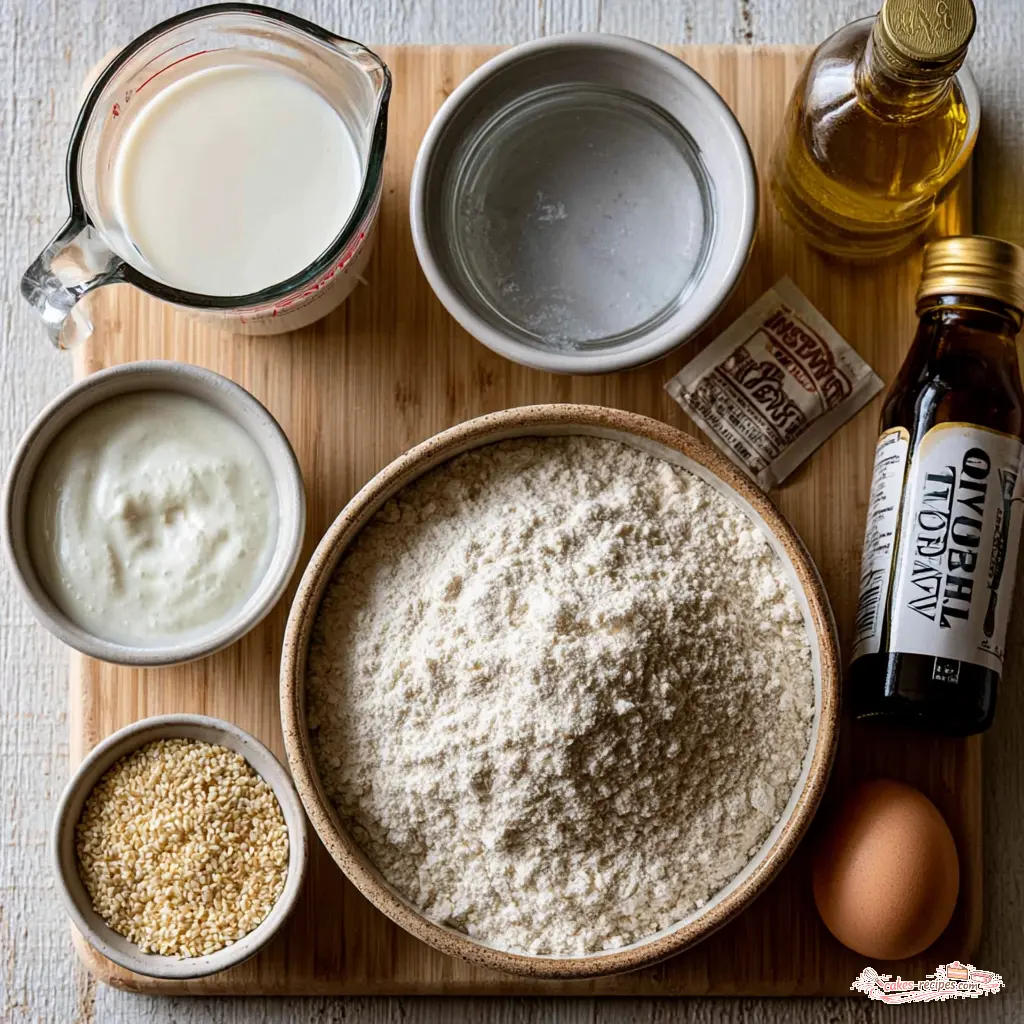
- All-purpose flour: The foundation. Bread flour works too, you’ll just get more chew. All-purpose keeps the crumb tender, which is what you want here.
- Instant yeast: No blooming needed with instant yeast, just stir it into the dry ingredients. If you only have active dry yeast, dissolve it in the lukewarm water first and expect a longer rise. Instant yeast vs active dry yeast matters, but both can deliver.
- Whole milk and water: Both lukewarm. The milk adds tenderness and richness to the olive oil dough. That’s what separates this from a crusty country loaf.
- Olive oil: California olive oil if you have it. It flavors the crumb and keeps the bread from drying out.
- Egg yolk and yogurt wash: The secret to that deep golden, glossy top. This is what makes your loaf look like it came from a bakery.
- Sesame seeds: Don’t skip them. They toast in the oven and smell incredible. The texture and flavor they add is genuinely important in Turkish bread.
How to Make No Knead Turkish Bread
The full recipe card for this no knead turkish bread is waiting for you at the bottom. Here’s the big picture: four stages, each simpler than you expect. And yes, the dough is supposed to look like a puddle of chaos at first. That’s the magic.
Stage 1: Mix the Wet Dough
Whisk the dry ingredients, add the olive oil and lukewarm milk, then slowly stir in the water. You’ll get a sticky, lumpy dough. Resist every instinct to add more flour. This is exactly what a no knead turkish bread dough looks like at this stage: shaggy, wet, and a little ugly. Your spatula is the right tool, not your hands.
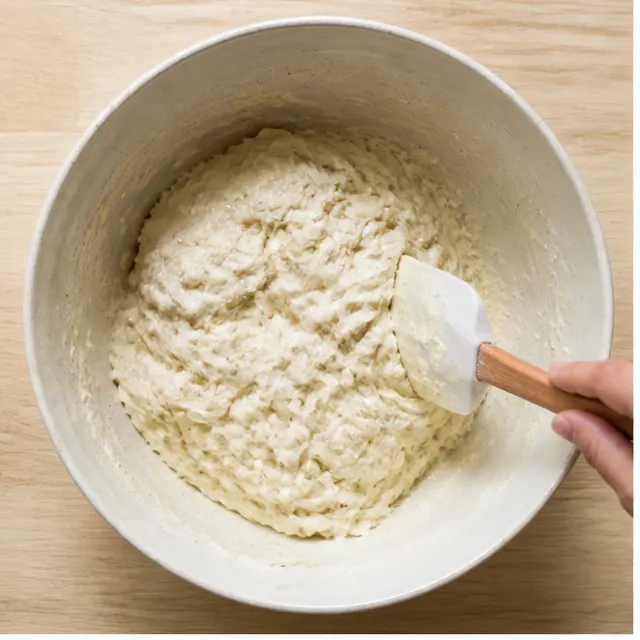
Stage 2: Rise and Fold
Slide the dough into an oiled bowl, flip to coat, cover it, and let it double in a warm spot. That’s 40 to 60 minutes, depending on your kitchen temperature. Go fold laundry, walk the dog, stare at the ceiling. The dough is doing the work. When it’s puffy, turn it onto a floured surface and fold the edges toward the center. A gentle stretch and fold, not kneading, just a few turns into a ball, then divide in two.
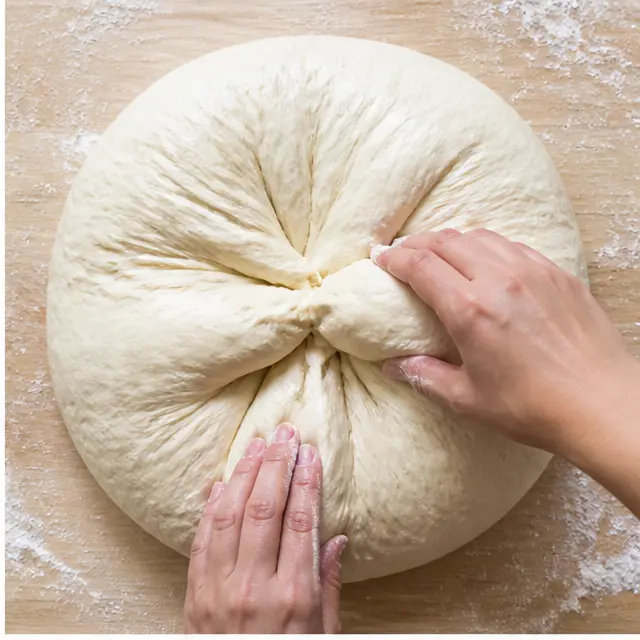
Stage 3: Shape and Press the Diamond Pattern
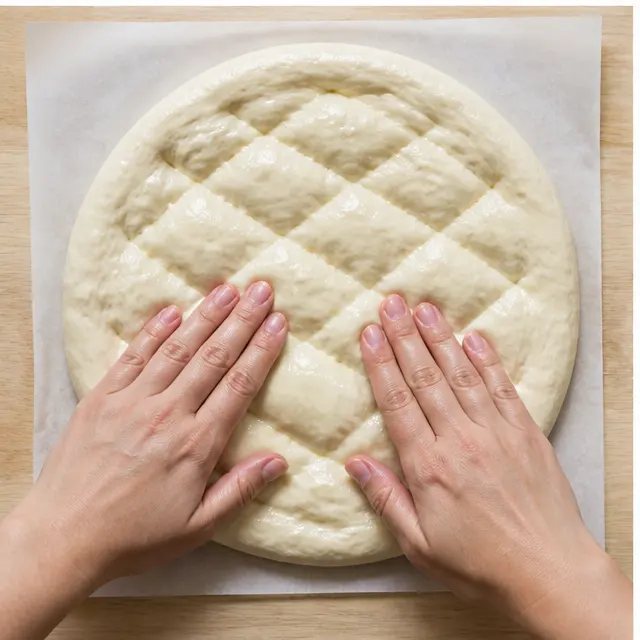
Press each piece into a round about half an inch thick. Use moistened hands to outline a border, then press horizontal and vertical lines to create the diamonds. If the dough springs back, wait a few minutes and try again. And here’s the pro trick: press the indentations again after the egg wash so the pattern holds its shape in the oven.
Stage 4: Bake With Steam
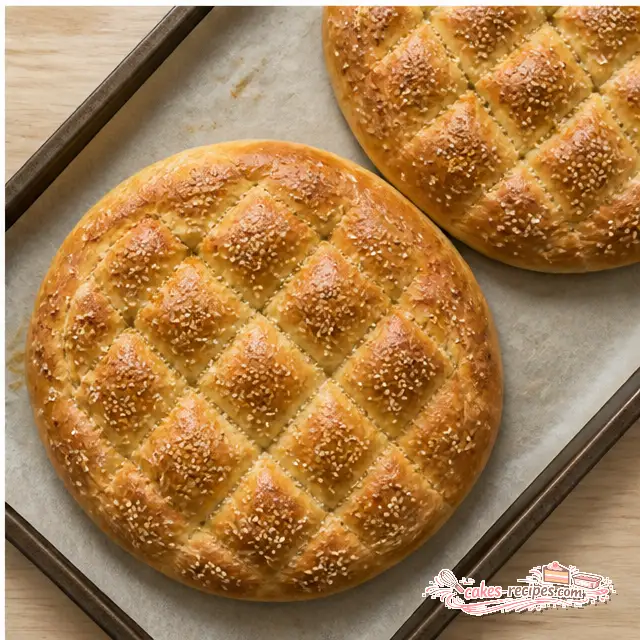
An oven-safe pan of water on the bottom rack does wonders here. That oven steam for crusty bread keeps the interior tender while the crust turns golden. Bake at 425°F on the lowest rack for 13 to 15 minutes. Don’t wander off, ovens vary and these can go from pale to perfect fast. Pull them out and cover with a clean towel for 10 minutes. That final rest softens the crust just enough, which is the result you want.
Pro Tips for a Golden Diamond Pattern
Little details separate good from gorgeous. A great no knead turkish bread comes down to these small moves, the ones I’ve learned the hard way so you don’t have to.
- Press twice. Once before the egg wash, once after. The pattern holds much better.
- Be gentle. Don’t tear the dough, and don’t pop the air bubbles you see. Those bubbles keep the crumb light and fluffy.
- Sprinkle seeds fast. Right after the egg wash. If the wash dries, the sesame seed bread topping falls off and you’ll be chasing seeds around the pan.
- Preheat the pan. Or use a pizza stone if you have one. A hot surface gives better oven spring and a crisper bottom. A cast iron pot works too, just adjust the timing.
- Rotate halfway. If one side browns faster, spin the pan. Cheap insurance.
Common Mistakes to Avoid
❌ Adding too much flour: It tightens the dough and kills the open crumb. Solution: oil your hands instead.
❌ Popping air bubbles: Those bubbles are your friend. Solution: handle the dough gently and let them be.
❌ Using expired yeast: The number one cause of dense bread. Solution: test your yeast in warm water with a pinch of sugar if you’re unsure.
❌ Rising in a cold spot: Your dough will lag and may never double. Solution: use the warmest corner of your kitchen or an oven with just the light on.
Variations & Serving Ideas
Once you’ve made this easy turkish bread a couple times, you’ll start scheming variations. Here’s what works in my kitchen:
- Whole wheat or bread flour: Swap up to half the all-purpose flour for whole wheat or bread flour for a heartier, chewier loaf. The no knead turkish bread technique stays the same.
- Swap the seeds: Nigella seeds or poppy seeds work beautifully in place of, or alongside, sesame.
- Vegan version: Skip the egg yolk wash and brush the top with olive oil or milk instead. Still golden, just less glossy.
- Fresh herbs: A sprinkle of chopped herbs before baking adds a garden-fresh twist.
For serving, think Turkish meze. Tear warm pieces and dip into hummus, swirl them through olive oil, or pile them next to soups and grilled meats. It’s the ultimate homemade bread for kebabs, and this Mediterranean flatbread pairs with just about anything you’re already grilling this August, including the Labor Day finale.
Storage & Leftovers
Real talk: no knead turkish bread leftovers rarely happen in my kitchen. But if you somehow have some, treat them right.
- Room temperature: Store in a paper bag for up to 2 days. Plastic makes the crust soggy.
- Freezer: Cool completely, wrap tightly, and freeze for up to 3 months. Thaw at room temperature.
- Reheat: A few minutes at 350°F revives the crust. Or just toast slices, that works too.
- Repurpose: Cube it, crisp it, and you’ve got croutons. Or grill slices and dip them in olive oil.
- Make ahead: For overnight proofing, refrigerate the dough after the first rise for up to 24 hours, then shape and proof when ready. You can also freeze raw dough: oil a sheet of plastic wrap, wrap it tightly, and freeze up to three months.
The Oven Moment
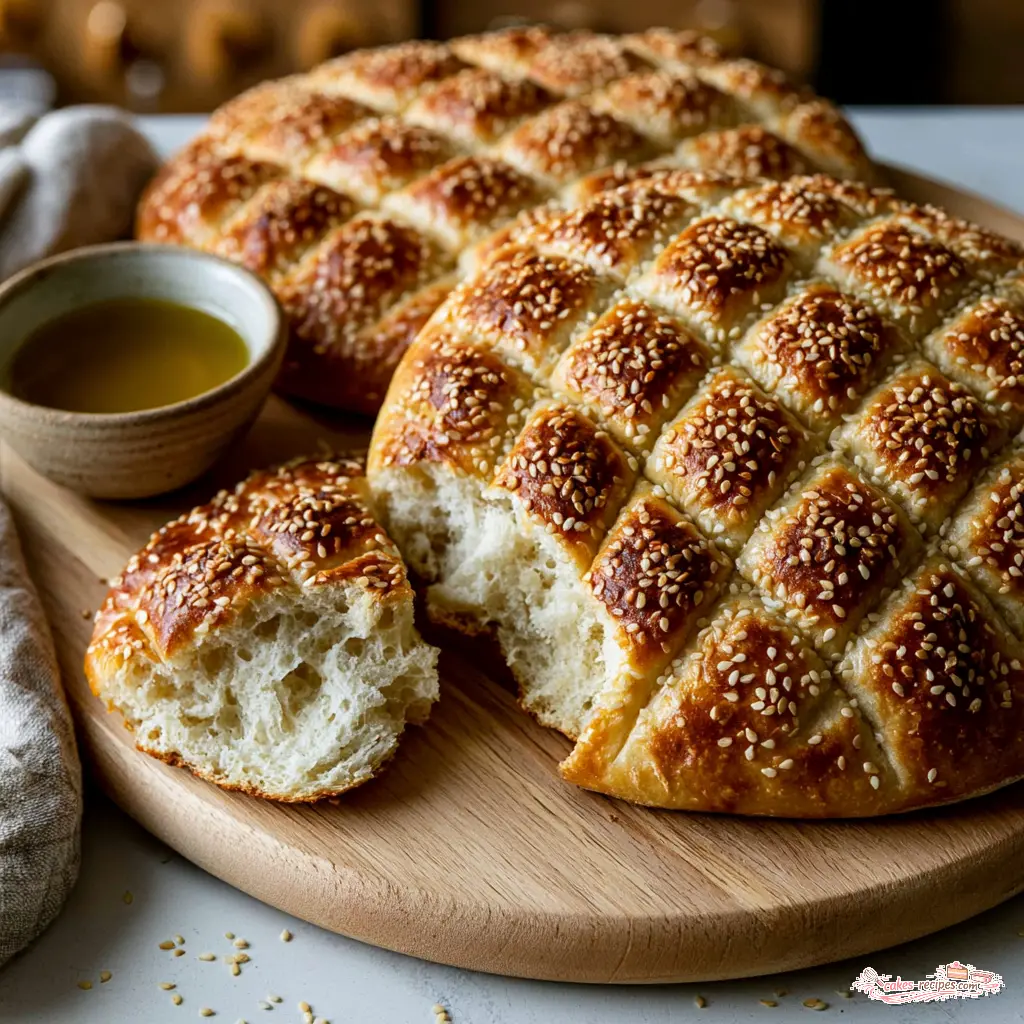
When that timer goes off and you pull out a golden, blistered, sesame-freckled loaf that crackles as it cools, you’ll know why this no knead turkish bread is the only bread recipe you’ll ever need. Your kitchen will smell like an İstanbul bakery, and everyone will assume you’ve been hiding a secret talent.
So tear it, dip it, share it. It’s the kind of bread that builds confidence, the kind that turns “I’m not really a bread person” into “I made this.” That’s exactly the result I want for you.
If you’re looking for more summer baking ideas, I’ve pinned some of my favorites on my Pinterest board. Come say hi, and happy baking.
No Knead Turkish Bread
Ingredients
Method
- In a large mixing bowl, stir together the flour, sugar, salt, and instant yeast with a whisk. Pour in the olive oil and the lukewarm milk, then mix with a spatula. Slowly add the water while stirring until a sticky, lumpy dough forms. The dough will be wet, so a spatula keeps it easier to combine.
- Oil a second large bowl with a little olive oil and slide the sticky dough into it. Flip the dough to coat all sides. Cover the bowl with a clean kitchen towel and let it rise in a warm spot until doubled in volume, about 40-60 minutes depending on room temperature.
- Scatter a light layer of flour on a work surface and dump the risen dough onto it. Using floured hands, fold the outer edges toward the center, without kneading. Gather it into a smooth-ish ball and divide it into two equal pieces.
- Line a baking sheet with parchment paper and dust it with flour. Set an oven-safe pan or bowl of water on the bottom oven rack, then preheat the oven to 425°F (220°C).
- Place one piece of dough on the prepared pan and press it outward with your fingertips into a round about 1/2 inch (1.27 cm) thick. If it springs back, wait a few minutes and try again, or lightly wet your hands to help press.
- Moisten your fingertips and press a circle into the dough, about 1/2 inch (1.27 cm) from the edge, to outline the border. Then press horizontal and vertical lines inside that circle to form a diamond pattern. Shape the second dough ball the same way, leaving space between them on the sheet.
- Cover the shaped breads with a towel or plastic wrap and let them rest for a second proof, 20-30 minutes.
- Whisk the egg yolk and yogurt together in a small bowl. Brush this mixture over the entire surface of both breads; you may have a little left over.
- Press the indentations down once more with your fingers to sharpen the pattern. Sprinkle sesame seeds evenly over the top.
- Bake the breads on the lowest rack for 13-15 minutes, until the tops are golden brown and the bottoms no longer look doughy. Rotate the pan halfway through if one side is browning faster.
- Pull the pan from the oven and cover the breads with a clean kitchen towel for 10 minutes. This steams the crust slightly to keep the crumb soft. Move the breads to a cooling rack after that rest.
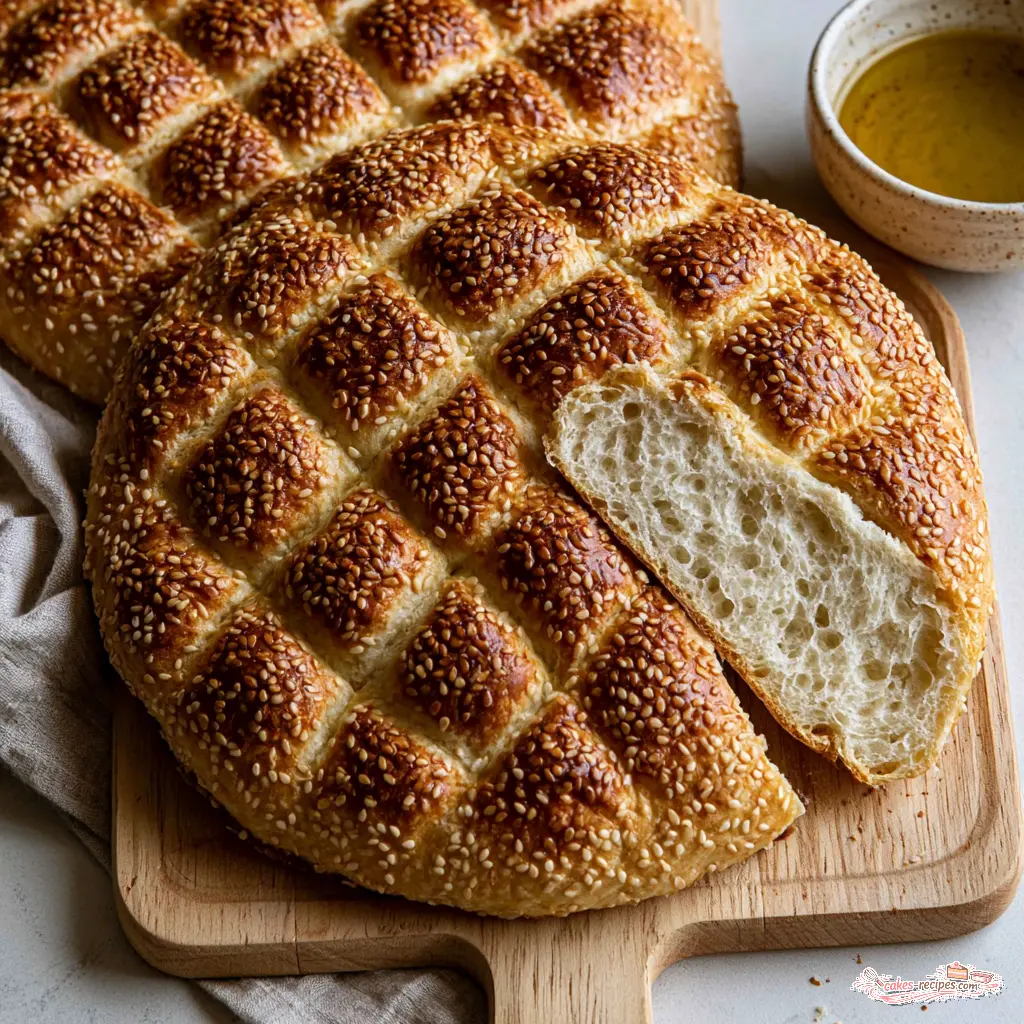
- Serve warm for the best fluffy texture, or cool completely and serve at room temperature with soups, kebabs, hummus, or a meze spread.
Nutrition
Notes
Tried this recipe?
Let us know how it was!No Knead Turkish Bread FAQ
Source: Learn More About This Dish
What is pide bread?
Pide is the Turkish word for bread, and it covers a few styles. The long, boat-shaped kind gets filled with cheese or meat, but this recipe is the round, soft, dimpled flatbread called ramazan pide. That’s the style this no knead turkish bread recreates at home.
Can I freeze Turkish bread?
Absolutely. Cool the baked loaf completely, wrap it tightly, and freeze for up to three months. Thaw at room temperature and reheat at 350°F for five to seven minutes. You can also freeze the raw dough after the first rise for an easy make-ahead bread.
How do I prevent the bread from being too dry?
Dry bread usually means too much flour or too long in the oven. Keep the dough sticky and resist adding flour while shaping. Bake for just 13 to 15 minutes at 425°F, and keep that pan of water in the oven for steam. That combination protects the soft crumb.
Why didn’t my dough rise?
The usual suspects are expired yeast, liquid that’s too hot, or a cold kitchen. Instant yeast needs warm, not hot, milk and water. If your counter is cool, move the bowl somewhere warmer, like an oven with just the light on. Give it the full 60 minutes first.
Do I have to serve authentic Turkish bread with only Turkish food?
Not at all. It’s a fantastic all-purpose side. Serve it with soups, chili, grilled meats, or use it for sandwiches and dipping. In my house, leftover slices become toast or croutons. The flavor works with just about anything you’re already cooking.