Why You’ll Love This Sausage Cornbread Stuffing
Thanksgiving is exactly 90 days out. I know, it feels like summer just started. But the secret to a stress-free holiday is locking in your side-dish lineup now, while there’s actual breathing room.
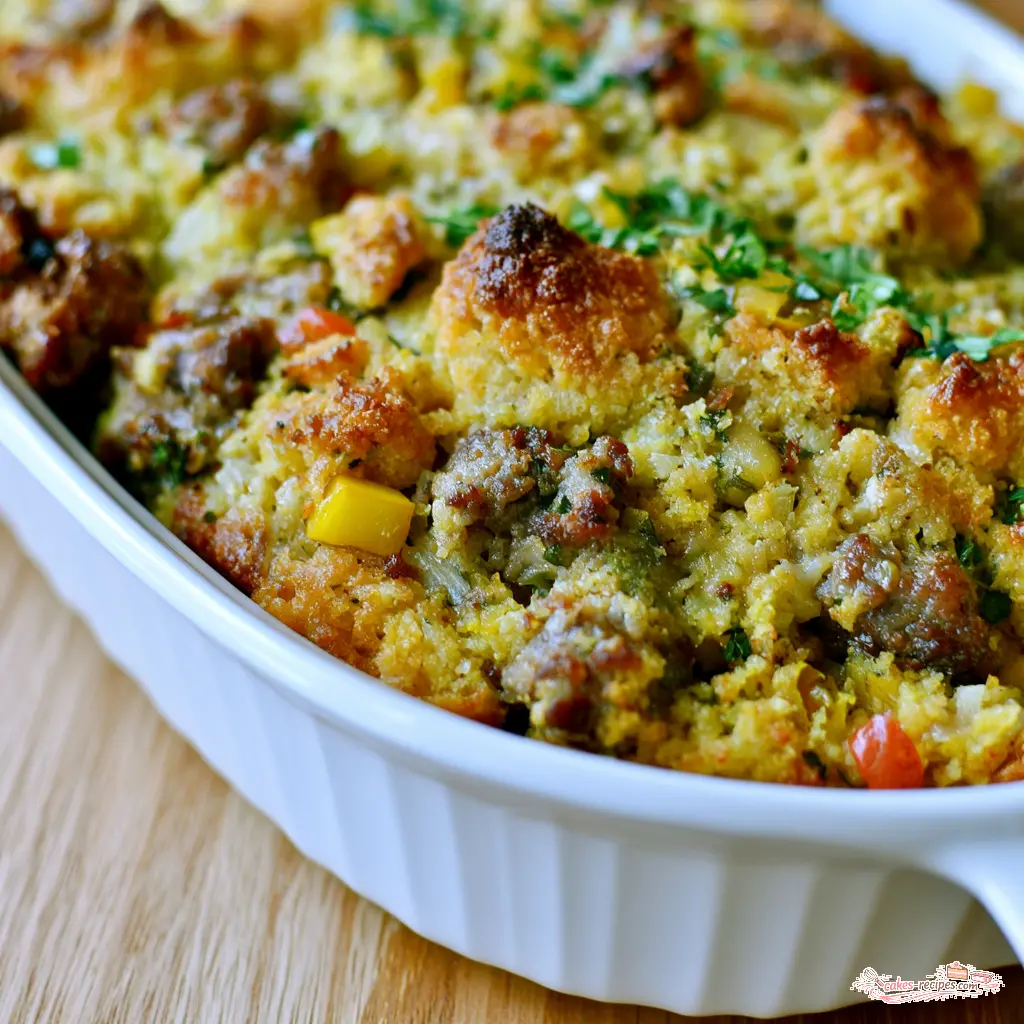
This sausage cornbread stuffing is the one I turn to year after year. It’s got everything: savory breakfast sausage, sweet squash and peppers, and a moist, tender crumb with crispy, golden edges that everyone fights over.
The first stuffing I ever made tasted like damp cardboard. Here’s exactly what I did wrong, and how you’ll avoid it. I’m a pastry chef by training, so I approach stuffing the same way I approach a delicate cake. Texture is everything.
The game-changer is toasting the cornbread cubes so they hold their structure and absorb the broth without dissolving into paste. You’re giving your bread a tan so it doesn’t turn to paste. It sounds funny, but it works.
Ingredients for Sausage Cornbread Stuffing
You don’t need a culinary degree or a specialty shop for this one. In fact, I’ll give you explicit permission right now: store-bought cornbread mix is totally fine. Use your grandma’s recipe or a bag from the bakery, both will shine here.

I like using buttermilk instead of water to give the cornbread a gentle tang that cuts through the rich sausage. The rest is classic holiday side dish territory:
- Diced yellow squash and bell pepper for sweetness
- Onion and celery for that aromatic, savory base
- Ground breakfast sausage for deep, meaty flavor
- Cream of chicken soup and chicken broth to keep things impossibly moist
If you’re nervous about dry stuffing, that’s totally normal. And the fix is coming right up. This recipe uses chicken broth rather than stock, and the cream of chicken soup adds an extra layer of richness that guarantees a moist cornbread stuffing.
How to Make Sausage Cornbread Stuffing
The full recipe card is below, but let’s walk through the four major stages. Each one has a specific job, and understanding the why makes everything easier on the big day.
Stage 1: The Cornbread Foundation
This is where the magic starts. I bake my cornbread in a cast iron skillet to get that crispy, golden crust. You’ll preheat the skillet with a little vegetable oil in a 450°F oven while you mix the batter.
Whisk the cornbread mix with buttermilk, then gently fold in the squash, celery, bell pepper, and onion. The batter should be thick and spoonable. Pour it into the hot skillet and bake until lightly browned and a toothpick comes out clean.

Stage 2: The Sausage Sizzle
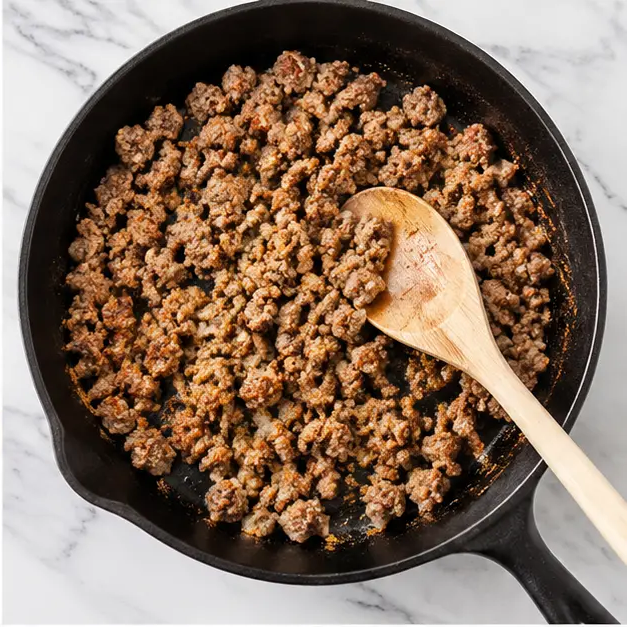
While the cornbread bakes, brown your breakfast sausage in a separate skillet over medium-high heat. Break it into small crumbles as it cooks. The fat renders out and coats the meat, which is where that deep, savory flavor comes from.
Transfer the cooked sausage to a plate and set it aside. Don’t wipe out the skillet, that seasoned goodness is flavor gold.
Stage 3: Building the Batter
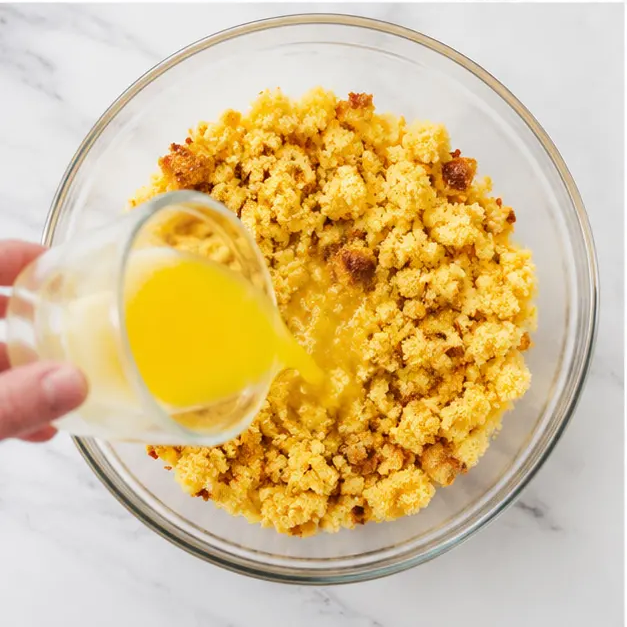
Here’s where the technique kicks in. Crumble the still-warm cornbread into a large bowl. Add the butter in small pieces and mix until it melts into the cornbread.
Now add the cooked sausage, cream of chicken soup, chicken broth, eggs, poultry seasoning, and black pepper. Stir thoroughly until everything is well incorporated and the mixture resembles a thick batter.
Here’s your hands-on test: squeeze a handful. It should hold its shape but never drip. It should look wet, not swimming. This is the perfect liquid-to-bread ratio for a make ahead stuffing that stays tender.
Stage 4: Baking to Golden Perfection
Spoon the dressing into a lightly buttered 9×13-inch casserole dish and spread it into an even layer. Bake at 350°F for 30 to 40 minutes, or until the center is set.
Out of the oven, the top is bronzed and crackly, the edges are crisp, and the center is tender and steamy. The edges pull away from the pan and the top is deep golden brown. That’s your signal.

Substitutions & Variations
This cornbread stuffing with sausage and sage is incredibly flexible. If you prefer a more herb-forward flavor, stir in 1/2 teaspoon dried sage with the poultry seasoning. For a spicier kick, use hot breakfast sausage or add a pinch of red pepper flakes.
And yes, we need to address the debate: stuffing vs dressing. In my house, if it’s baked in a dish, it’s dressing. If it’s baked inside the turkey, it’s stuffing. This recipe is technically a dressing, but I won’t tell anyone if you call it stuffing.
Gluten-Free Cornbread Option
This recipe adapts beautifully to a gluten free cornbread stuffing. Simply swap the regular cornbread mix for your favorite gluten-free brand. The texture stays surprisingly close, especially with the butter and broth keeping things moist.
More Vegetables & Mix-Ins
Don’t be afraid to clean out your crisper drawer. This classic holiday side dish loves extra vegetables. More squash, extra celery, or a handful of diced mushrooms would all be welcome additions.
- Add 1/4 teaspoon dried sage for a more herb-forward profile
- Pinch of red pepper flakes for gentle heat
- Use hot breakfast sausage for a spicier, bolder stuffing
- Swap in gluten-free cornbread mix for dietary needs
How to Store Cornbread Stuffing
Yes, you can prep this make ahead stuffing two days ahead. Here’s exactly how, step by step. Assemble the recipe completely, but stop before baking. Cover the casserole dish tightly with foil and refrigerate for up to 2 days.
When you’re ready to bake, bring it to room temperature for about 30 minutes while the oven preheats. Then bake as directed. If it’s cold from the fridge, add 10 minutes to the baking time.
For leftovers, store baked stuffing in a covered container in the fridge for up to 4 days. Reheat in a 350°F oven until warmed through. Leftover stuffing recipes are the best part anyway, crispy stuffing cakes for breakfast anyone?
How to Freeze Cornbread Stuffing
This sausage and herb stuffing freezes like a dream. Prepare through step 7, then freeze the unbaked dressing right in the baking dish. Wrap it tightly in plastic wrap and then foil to prevent freezer burn.
It will keep for up to 6 months. When you’re ready to bake, thaw overnight in the refrigerator, then bake as directed.
You can also freeze the fully baked stuffing. Cool completely, then freeze in smaller glass containers. Reheat straight from frozen in a 350°F oven until heated through.
Tips & Tricks for the Best Sausage Cornbread Stuffing
Over years of testing, I’ve learned exactly where this dish goes wrong. Here are the fixes for the three big fails. Pay attention to the egg binder for stuffing, it’s your best friend.
- ❌ Too dry: ✅ Your mixture should look wet, not swimming. Use the squeeze test. If it doesn’t hold together, add a splash more chicken broth.
- ❌ Too soggy: ✅ Toast your cornbread properly. Lightly toasting the cubes helps them absorb the liquid without dissolving into mush.
- ❌ Too bland: ✅ Don’t skimp on the poultry seasoning or the sausage. Breakfast sausage brings a lot of salt and flavor to the party.
- ❌ Falling apart: ✅ Make sure you include the eggs. The eggs act as a binder and help the stuffing hold its shape when you serve it.
One more thing. I know it’s hot out there. I know the oven is the last thing you want to turn on today. That’s exactly why this make ahead stuffing works. Prep it now, bake it when the oven won’t feel punishing. Your future self will thank you.
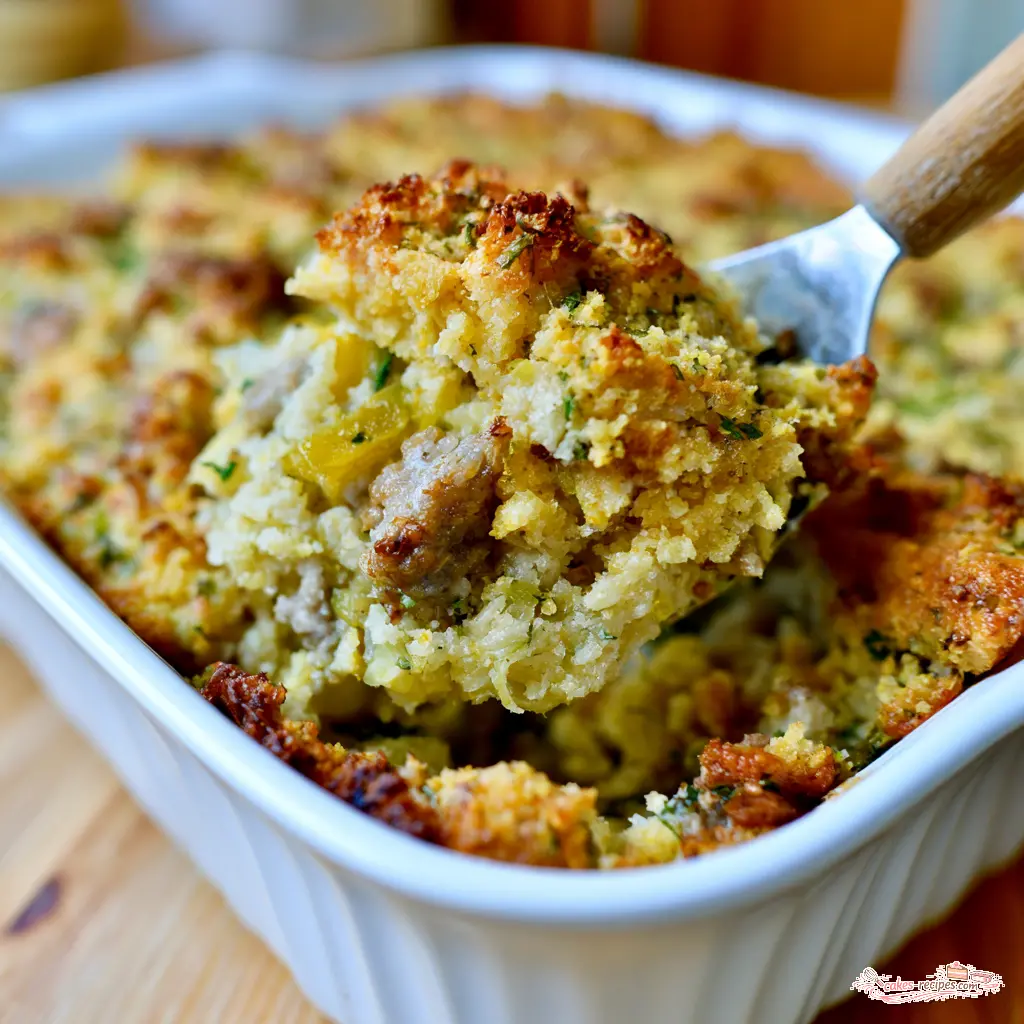
When you pull this out of the oven and hear that first crunch, you’ll know it was worth every second. Picture it sitting on your holiday table next to the turkey, the dish people reach for first.
I’d love to see how yours turns out. Tag me or drop a comment below, I read every single one. And if you’re looking for more holiday inspiration, I’m always pinning new ideas on my Pinterest boards.
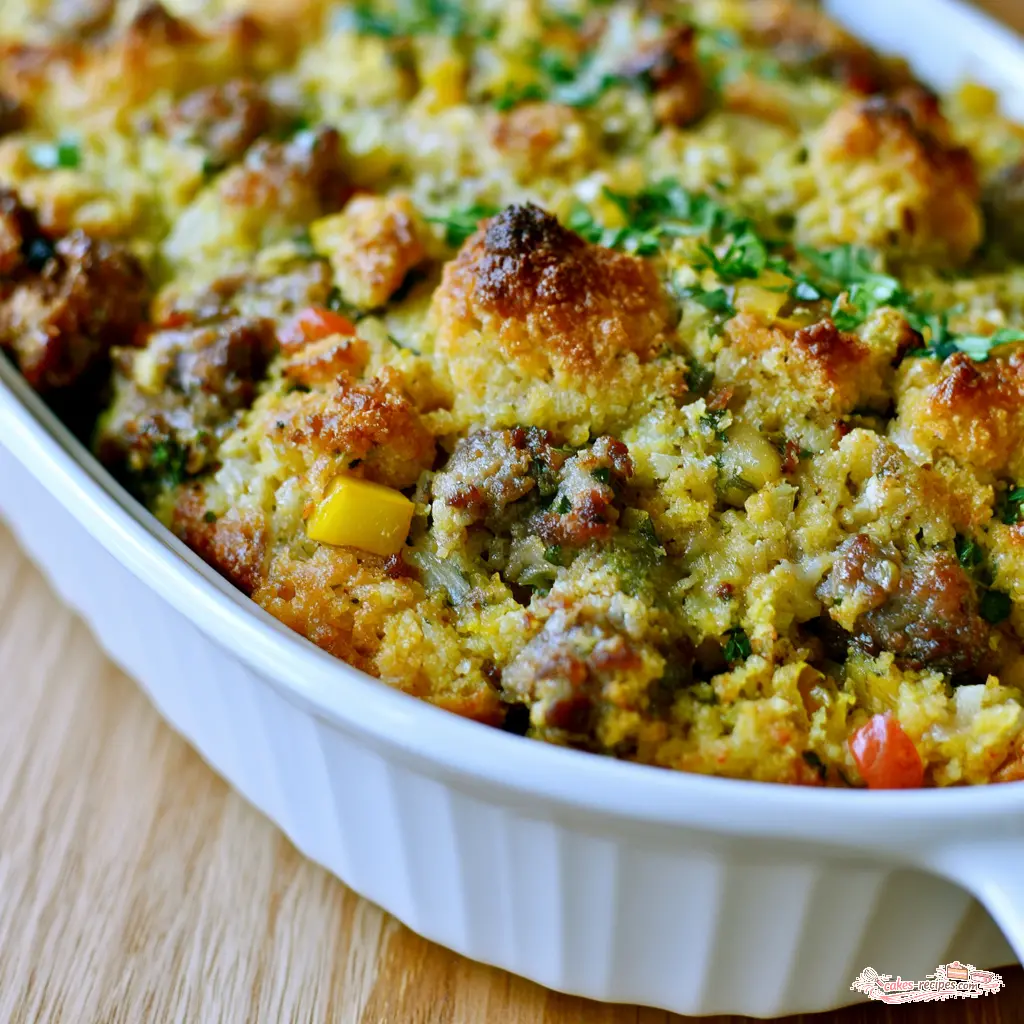
Sausage Cornbread Stuffing with Squash and Peppers
Ingredients
Method
- Preheat the oven to 450 degrees Fahrenheit. Lightly coat a 10-inch cast iron skillet with the vegetable oil and place it in the oven while it preheats. In a separate skillet over medium-high heat, cook the breakfast sausage, breaking it into small crumbles, until browned and fully cooked; transfer to a plate and set aside.
- In a large mixing bowl, whisk together the two packages of cornbread mix and the buttermilk, following the package directions but replacing the liquid with buttermilk in the same amount. The batter should be thick and spoonable.
- Fold the diced squash, celery, bell pepper, and onion into the cornbread batter until just combined, with the batter lightly binding the vegetables.
- Pour the batter into the preheated skillet and spread it evenly. Bake at 450 degrees Fahrenheit for the time indicated on the cornbread mix package, adding a few extra minutes if necessary, until the cornbread is lightly browned and a toothpick inserted in the center comes out clean.
- Remove the cornbread from the oven and let it cool in the skillet on a wire rack until just warm. Reduce the oven temperature to 350 degrees Fahrenheit.
- Crumble the still-warm cornbread into a large bowl. Add the butter in small pieces and mix until the butter melts and the cornbread is evenly crumbly.
- Add the cooked sausage, cream of chicken soup, chicken broth, eggs, poultry seasoning, and black pepper to the cornbread mixture. Stir thoroughly until everything is well incorporated and the mixture resembles a thick batter.
- Spoon the dressing into a lightly buttered 9x13-inch casserole dish, spreading it into an even layer. Bake at 350 degrees Fahrenheit for 30 to 40 minutes, or until the top is golden brown and the center is set.
Nutrition
Notes
Tried this recipe?
Let us know how it was!Frequently Asked Questions
Source: Learn More About This Dish
Why do you add eggs to stuffing?
Eggs act as the binder. They give the sausage cornbread stuffing that slightly custardy texture and keep it from crumbling into a pile on the plate. Without them, the bread and vegetables won’t hold together when you scoop it out of the dish.
Do I need to dry out the cornbread first?
Lightly toasting it is enough. Fully drying it out until it’s crunchy like a crouton is unnecessary. Since the cornbread is baked fresh and then combined with butter and broth, a light toast gives it the structure it needs to stay moist without turning to paste.
Can I add more eggs to the stuffing?
You can, but don’t go overboard. Two eggs is perfect for this ratio. If you add too many, it turns into a frittata. I’d stick to a maximum of three or four eggs total if you’re adjusting the recipe, and never add more than that.
What’s the difference between stuffing and dressing?
The difference is where you bake it. Stuffing is traditionally cooked inside the turkey, while dressing is baked in a separate casserole dish. This sausage cornbread stuffing is technically a dressing, but the names are used interchangeably depending on where you’re from.
Can I freeze cornbread stuffing?
Absolutely. Prepare the recipe completely through step 7, then freeze it unbaked in the baking dish, wrapped tightly in plastic wrap and foil. It will keep for up to 6 months. Thaw it overnight in the refrigerator before baking.
Can I prepare stuffing ahead of time?
Yes, this is the ultimate make ahead stuffing. Assemble the full recipe, cover it, and refrigerate for up to 2 days before baking. It actually gives the flavors more time to meld together and develop, making it taste even better.
How do I reheat leftover stuffing?
The best way to reheat leftover sausage cornbread stuffing is in a 350°F oven. Sprinkle a little extra chicken broth over the top if it looks dry, cover with foil, and heat until warmed through. You can also use the microwave in a pinch, but the oven keeps the crispy edges.
How long can I freeze stuffing?
You can freeze this cornbread stuffing for up to 6 months if stored properly. Use a combination of plastic wrap and foil to create an airtight seal. For best results, thaw it overnight in the fridge before you bake it fresh.
Should I use sweet or savory cornbread?
For this sausage cornbread stuffing, savory cornbread is definitely the way to go. Sweet, cake-like cornbread can clash with the richness of the sausage and the cream of chicken soup. The buttermilk in this recipe gives it a perfect tangy, savory balance.
Do I need to fully dry the cornbread?
No, fully drying the cornbread is a myth. The recipe calls for freshly baked cornbread that’s cooled until just warm. The structure comes from the butter and the toasted edges, not from using rock-hard stale bread. Lightly toasting cornbread cubes is enough to hold up in the casserole.