Why You’ll Love This Sourdough Focaccia
I’ve spent a lot of my career elbow-deep in chocolate, so I understand kitchen intimidation. Sourdough bread carries that same weight. Shaping. Scoring. Lame blades. Steam pans. It’s enough to make anyone grab a baguette instead.
Focaccia is the friendliest bread in the sourdough world. No shaping, no scoring, no special equipment. Just a wet dough, a generously oiled pan, and patience.
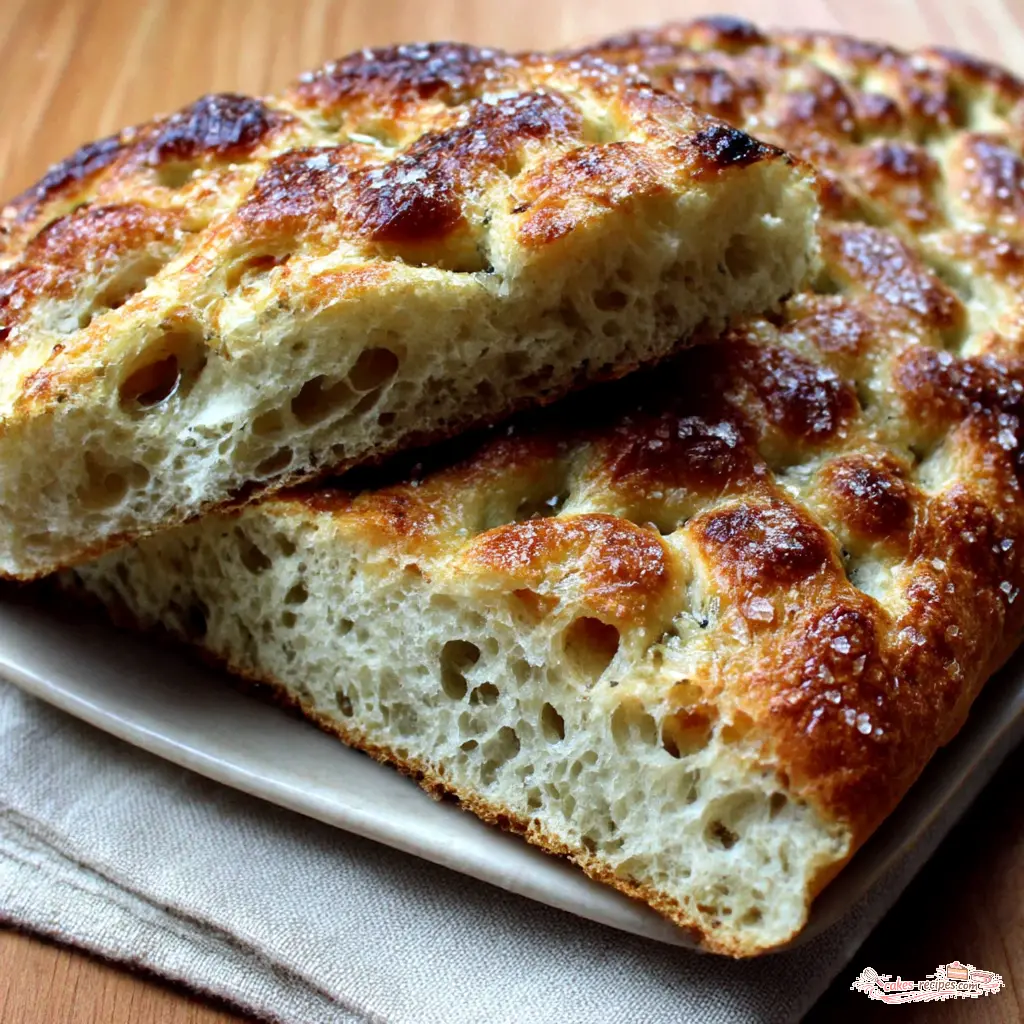
This easy sourdough focaccia delivers a deep golden crust that crackles when you squeeze it, a soft airy open crumb that soaks up extra virgin olive oil, and a tangy backbone from the wild yeast. The recipe runs on your schedule, not the other way around. Mix tonight, bake tomorrow. Or mix in the morning and bake by dinner.
My mom taught me that good technique is just chemistry with better stories. She used to say that while tempering chocolate on Sunday afternoons, and it applies here too. The high hydration dough looks like a mistake if you don’t know better. That’s exactly right, it’s the secret to those big bubbles.
How To Get A Sourdough Starter For This Recipe
You want an active sourdough starter here, not just leftover discard. That’s a common point of confusion. Discard works for pancakes and crackers, but for a proper rise in this sourdough focaccia, you need your starter fed, bubbly, and happy.
If your starter has been sitting in the fridge, feed it a few days before you plan to bake. That gives it time to recover and show you what it can do.
- Feed ratio: Equal parts starter, flour, and water by weight is a solid starting point.
- Peak test: Your starter is ready when it has doubled, domed on top, and smells pleasantly tangy. Usually 4 to 8 hours after feeding, depending on your kitchen temperature.
- Chlorine note: If your tap water is heavily chlorinated, leave it out at room temperature for 24 hours before mixing. Chlorine can slow fermentation.
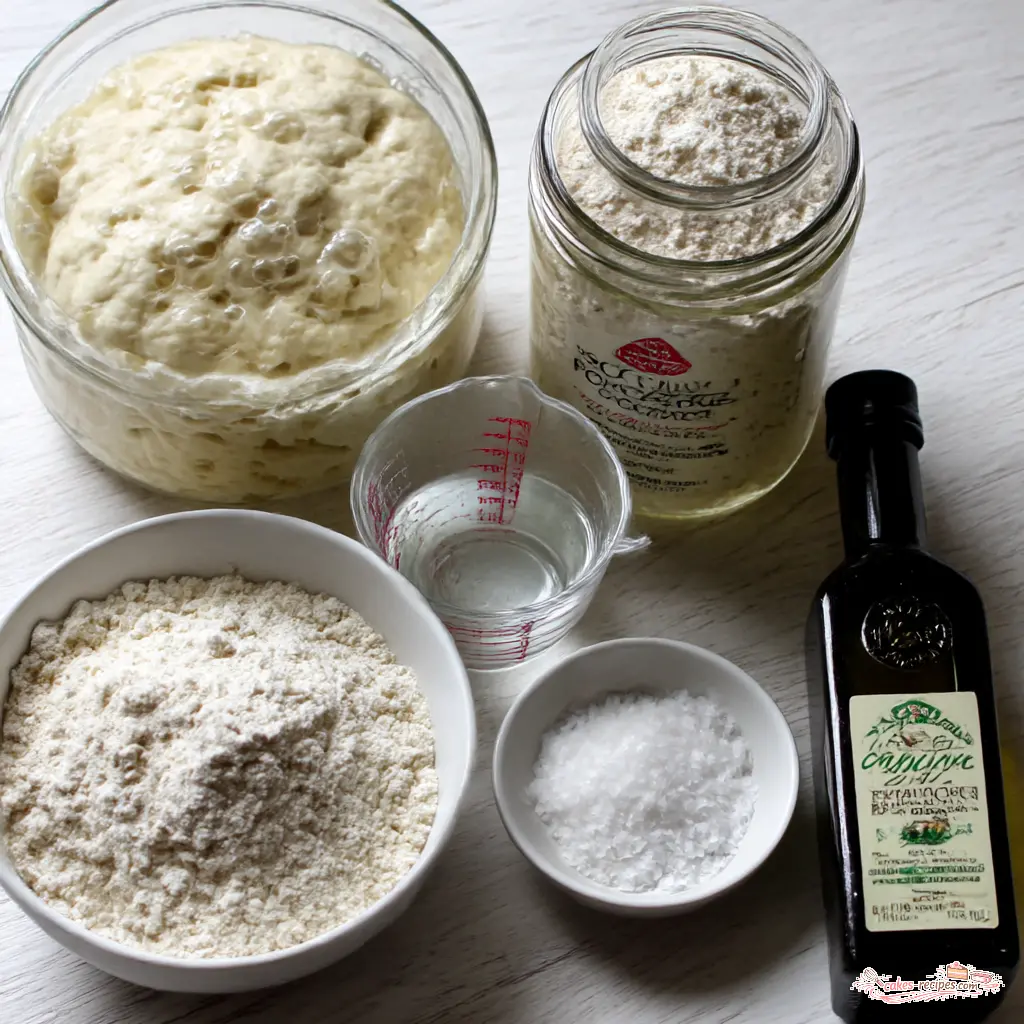
This recipe calls for 1/4 to 1/2 cup of active starter, so about 50 to 100 grams. Use the larger amount in cooler months and the smaller amount in summer. That makes sense when you think about it: warm kitchens make wild yeast party harder, so you need less starter to get the same rise.
How To Make Sourdough Focaccia
The process behind this sourdough focaccia has four big stages. None of them are hard. Each one just needs a little patience and an eye for what the dough is telling you.
Stage 1: Mix the dough. In a large mixing bowl, stir together the starter, kosher salt, and room-temperature water. It doesn’t need to be smooth. Add the bread flour and stir until no dry flour remains. You’ll get a shaggy, sticky mess.
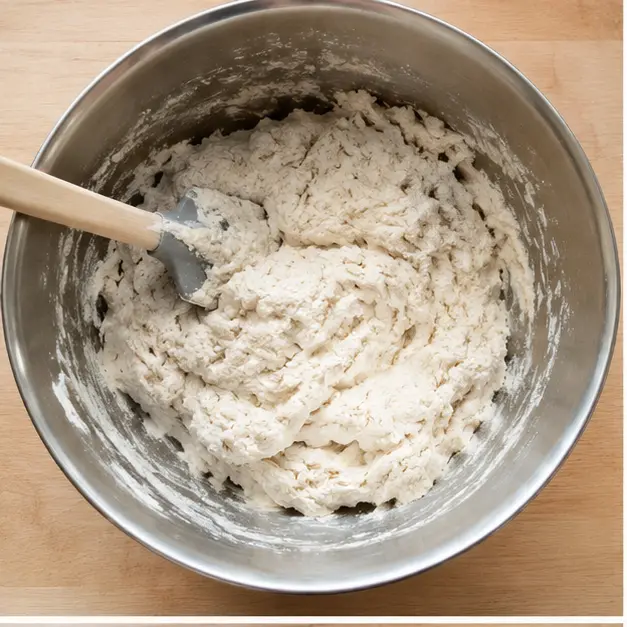
That stickiness is not a mistake. This is a high hydration dough, and that extra water is what creates the airy crumb and crispy edges you’re after. Trust the process. If you live in a humid climate, start with the smaller amount of water, about 430 grams. In drier conditions, go with the full 440.
Stage 2: Stretch and fold, then bulk fermentation. About 30 minutes after mixing, do one set of stretch-and-folds. Grab the dough from one side, pull it up and over to the center, rotate the bowl a quarter turn, and repeat 8 to 10 times.
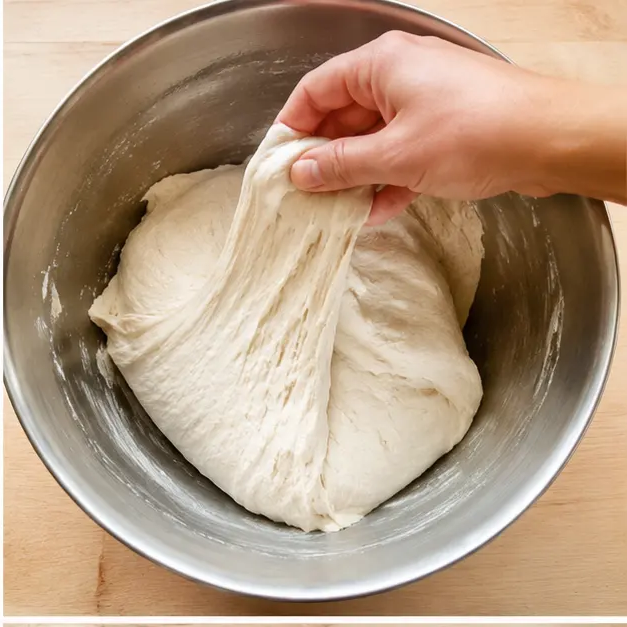
Drizzle a little olive oil over the dough, rub it to coat, and cover the bowl. Let it rise at room temperature, around 70F, for 4 to 18 hours, until the dough has nearly doubled. In a warm summer kitchen, that might take 4 to 6 hours. In winter, give it 12 to 18.
Judge by Volume, Not the Clock
My rule: The first rise is flexible. Judge it by the dough nearly doubling, not by the exact hour count. Also, avoid rising in an oven with the light on. It gets too warm and the dough will rush ahead of you.
Stage 3: Pan and second rise. When the dough has doubled, pour 2 tablespoons of olive oil into a 9 by 13-inch baking pan and tilt to coat the bottom. If you’re using a glass pan, butter it first to avoid sticking.
With lightly oiled hands, gently deflate the dough and release it from the sides of the bowl. Transfer it to the center of the pan, then fold it envelope-style, top to bottom, side to side, and flip it seam-side down. Rub a little more oil over the top. Leave it uncovered for 4 to 6 hours, until it’s puffy and almost doubled again.
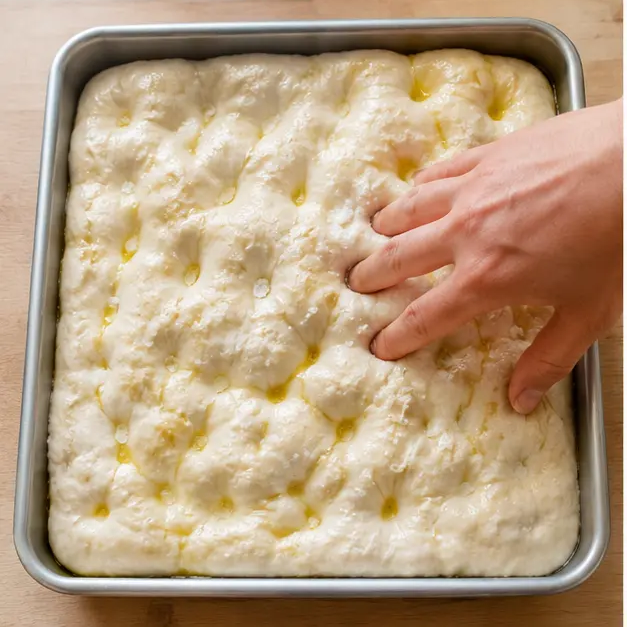
Stage 4: Dimple and bake. Heat the oven to 425F. Lightly oil your hands, then press your fingertips firmly into the dough. Deep dimples, all the way down. Stretch the dough gently toward the edges of the pan as you go. Sprinkle generously with flaky sea salt.
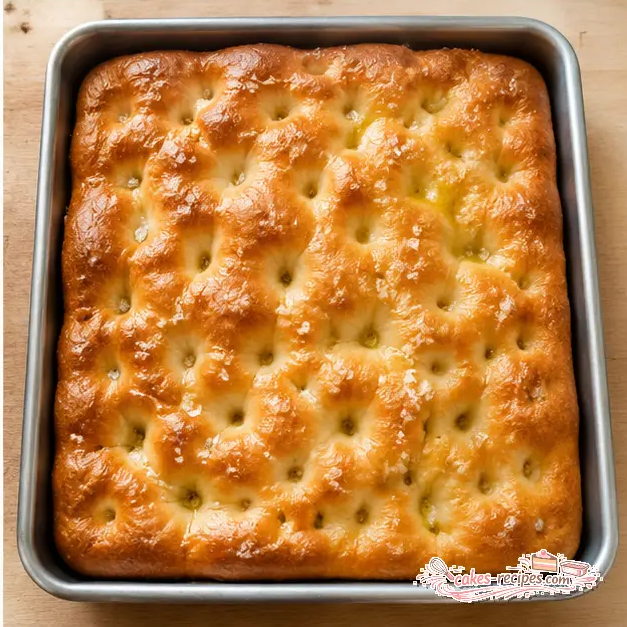
Bake for 25 minutes, until deep golden all over. Transfer to a wire rack and cool for at least 20 minutes before slicing. I know, the smell is torture. But the crumb needs that rest to set properly.
Your dimples don’t have to be even. Nobody’s are. And honestly, the craggy ones taste better.
Sourdough Focaccia Tips
Here’s what I’ve learned from making this sourdough focaccia over and over, generally speaking:
- Bread flour matters. Use bread flour with at least 12 percent protein. All-purpose works if you reduce the water slightly, but you’ll trade away some chew and structure.
- Don’t skimp on olive oil. It gives the focaccia its crispy bottom and golden edges. This is not the moment for a stingy drizzle.
- Watch your kitchen temperature. Summer heat is your secret weapon, your starter will party in this kitchen. Cold winter kitchens slow things down. That’s why the recipe gives you a range, not a deadline.
- Use a metal pan if you have one. A 9 by 13-inch metal pan conducts heat better and gives you those caramelized crispy corners. Glass works too, just butter it first.
- Let it cool before slicing. The structure sets as it rests. Slicing too early makes it gummy.
Sourdough Focaccia Variations
The base recipe is beautiful on its own, but focaccia toppings are where you get to play. A scatter of fresh rosemary is a classic. So are thinly sliced olives, cherry tomatoes, or a few heirloom tomato slices pressed into the dough before baking. Heirloom tomato focaccia is practically a summer ritual in my kitchen, especially when the farmers market tomatoes finally come in.
This sourdough focaccia welcomes a light hand with toppings. A few options that work well:
- Fresh herbs: Rosemary pressed into the dough after dimpling.
- Vegetables: Thin tomato slices, olives, or shallots. Press them in gently before baking.
- Whole grain swap: Replace up to 20 percent of the bread flour with freshly milled whole wheat for a nuttier flavor.
- All-purpose flour: Works in a pinch, just pull the water back to the smaller amount.
Fair point: too many toppings can weigh down the dough. Keep it to one or two, and you’ll get that airy structure every single time.
Sample Sourdough Focaccia Baking Schedules
This dough runs on your schedule, not the other way around. Here are two timelines that work, plus one trick for pausing the whole process. In my experience, though others might differ, the overnight route is the easiest.
Overnight schedule (my favorite):
- 8 PM: Feed your starter.
- 10 PM: Mix the dough and do the stretch-and-folds.
- Morning, 8 AM: Dough has doubled. Transfer to the oiled pan.
- Afternoon, 1 to 2 PM: Dimple and bake. Fresh bread for lunch.
Same-day schedule:
- 8 AM: Mix the dough with a freshly fed starter.
- 8:30 AM: One set of stretch-and-folds.
- 2 PM: Transfer to the pan.
- 6 PM: Dimple and bake. Bread for dinner.
Cold ferment pause: Need more flexibility? After the first rise, deflate the dough and refrigerate it for 8 to 12 hours. Then pan it and expect a longer second rise. That’s exactly right if you want the tangier flavor that develops during cold fermentation.
How To Store & Freeze Sourdough Focaccia
Sourdough focaccia is best the day it’s baked, but leftovers keep fine for about 2 days in an airtight container. To bring back that crackly crust, pop slices in a 350F oven for 5 minutes. The crispy edges come right back.
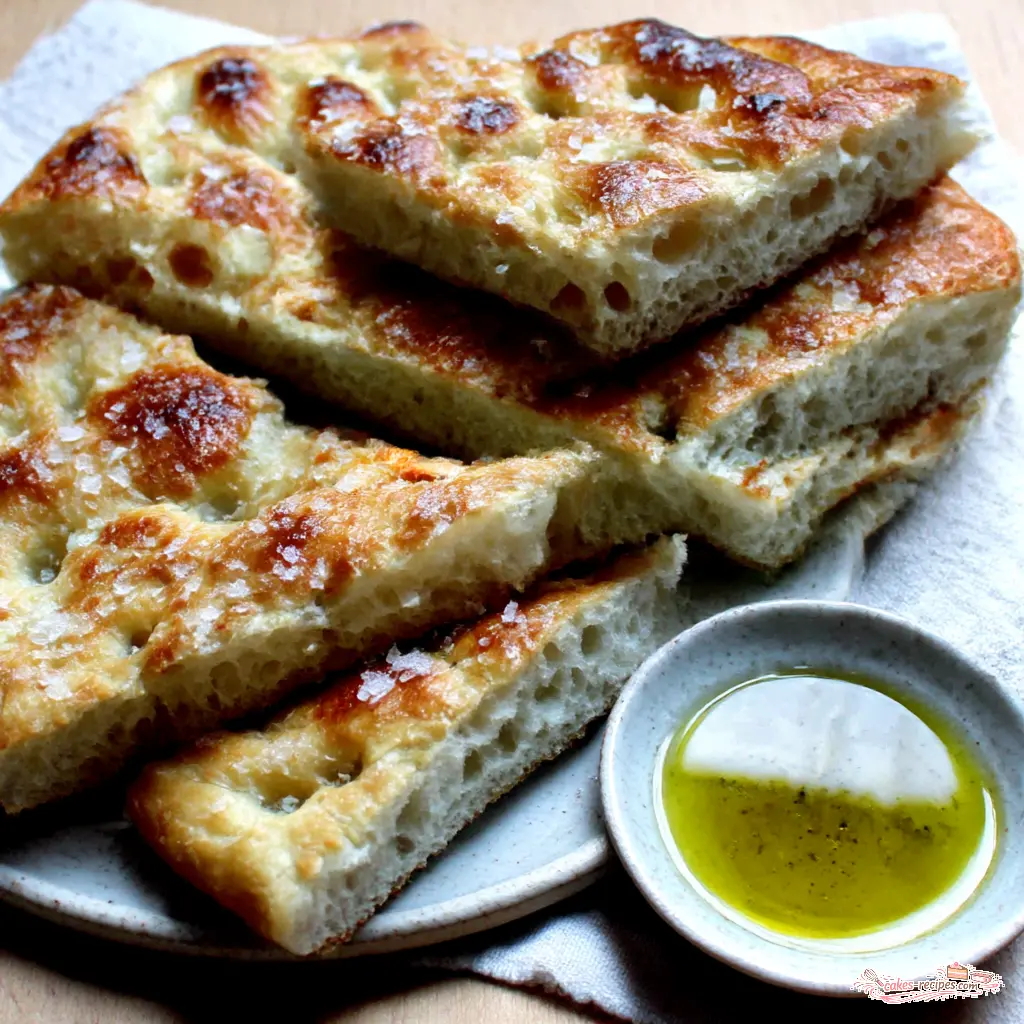
For longer storage, freeze the focaccia whole or in slices for up to 2 months. Wrap it well, freeze it flat, and thaw at room temperature. Reheat in the oven, not the microwave. The microwave turns that golden brown crust into a sad, soggy mess.
Serve this Italian flatbread warm with soups and salads, split it for sandwiches, or just set it on the table with a dish of olive oil and watch it disappear. That tracks with every focaccia I’ve ever brought anywhere.
When you pull this out of the oven, and you will, you’ll understand why sourdough focaccia is the people-pleaser of the bread world. The crackle. The tang. The golden, craggy top. It’s the no-knead sourdough bread that makes you feel like a real baker, even on your first try. This works for me, but I’d love to see your version too. Come find me on Pinterest and share your bake. Happy bread-making, and save this one for your next slow weekend.
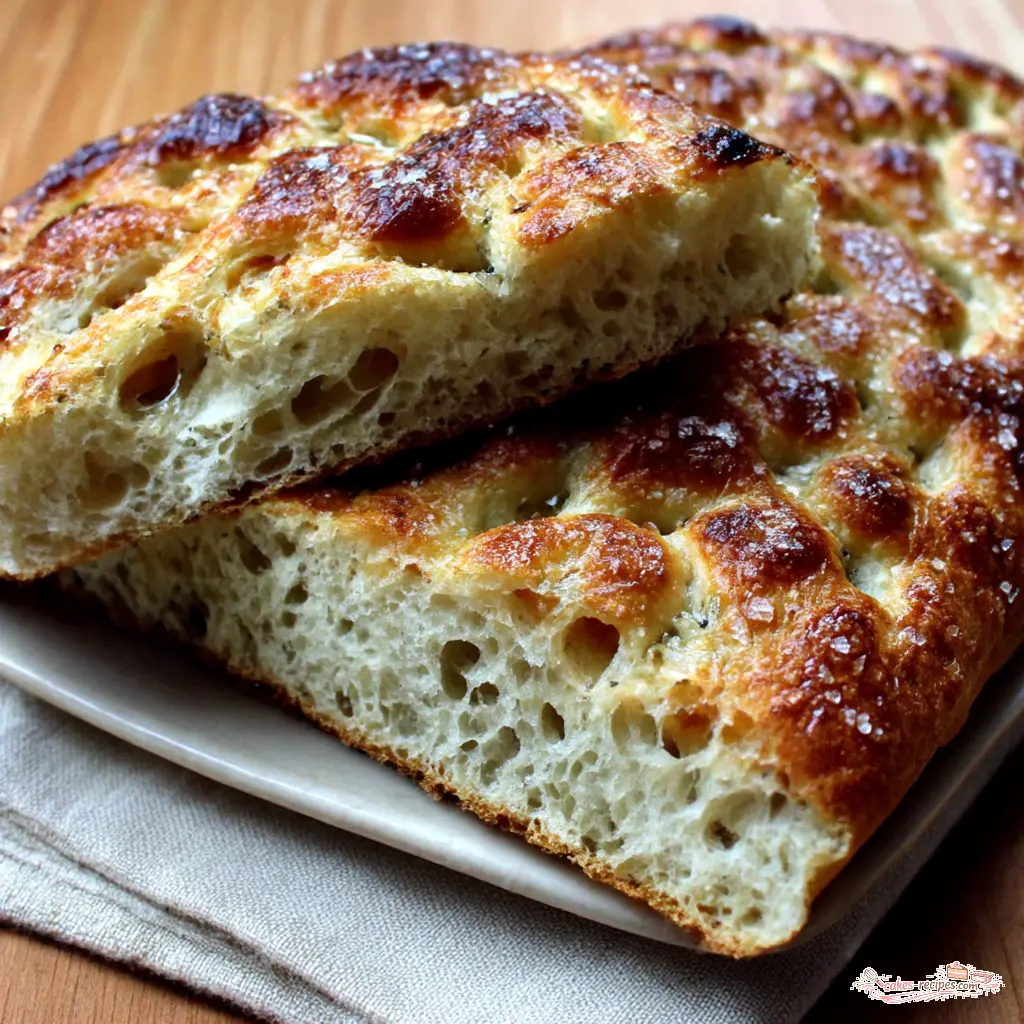
Slow-Rise Sourdough Focaccia with Crisp Olive Oil Crust
Ingredients
Method
- In a large mixing bowl, stir together the starter, kosher salt, and water with a spatula until combined. It does not need to be smooth. Add the bread flour and stir until no dry flour remains.
- About 30 minutes after mixing, perform one set of stretch-and-folds: grab the dough from one side, pull it up and over to the center, rotate the bowl a quarter turn, and repeat 8 to 10 times.
- Drizzle a little olive oil over the dough, rub the surface to coat, and cover the bowl with a tea towel or bowl cover. Let it rise at room temperature, around 70F, for 4 to 18 hours, until the dough has nearly doubled in volume. In a warm summer kitchen this may take 4 to 6 hours; in winter it can take 12 to 18 hours. Rely on visual cues rather than the clock, and avoid letting it rise in an oven with the light on because it will be too warm.
- When the dough has doubled, pour 2 tablespoons of the olive oil into a 9 by 13-inch baking pan and tilt to coat the bottom. If using a glass pan, butter it first to avoid sticking.
- Drizzle the dough with the remaining 1 tablespoon olive oil. With lightly oiled hands, gently deflate the dough and release it from the sides of the bowl. Transfer it to the center of the prepared pan, then fold it envelope-style from top to bottom and side to side to form a rough rectangle. Flip the dough so the seam is facing down.
- Rub the top of the dough with a little more olive oil and leave it uncovered for 4 to 6 hours, until puffy and almost doubled in size.
- Heat the oven to 425F. Lightly oil your hands, then press your fingertips firmly into the dough to create deep dimples and stretch it toward the edges of the pan. Sprinkle generously with flaky sea salt. Bake for 25 minutes, or until deep golden all over. Transfer the focaccia to a wire rack and cool for at least 20 minutes before slicing.
Nutrition
Notes
Tried this recipe?
Let us know how it was!Frequently Asked Questions
Source: Learn More About This Dish
Can I use sourdough dough to make focaccia?
Yes, absolutely. Sourdough focaccia is just a high hydration dough made with active starter instead of commercial yeast. The same dough you’d shape into a loaf works beautifully as focaccia, since it requires no shaping or scoring. This recipe keeps it simple with a relaxed rise.
Is sourdough focaccia the same as regular focaccia?
Both are Italian flatbreads with the same dimpled, olive-oil-soaked character. The difference is the leavening. Regular focaccia uses commercial yeast for a mild flavor and quicker rise. Sourdough focaccia uses wild yeast, which adds a tangy depth and chewier texture. Worth trying both to see what you prefer.
Is focaccia just overproofed sourdough?
Kind of, but that’s a feature, not a bug. Focaccia is intentionally proofed until it’s very puffy, the point where a shaped loaf might collapse. The high hydration and generous olive oil let the dough hold onto those airy bubbles anyway. You’re celebrating what other breads try to avoid.
Which is healthier, focaccia or sourdough?
Sourdough fermentation breaks down phytic acid, which makes minerals like zinc and iron easier for your body to absorb. It also produces a lower glycemic response in many people. Sourdough focaccia gives you both: the tangy benefits of fermented dough and the olive oil richness of focaccia. Each serving comes in around 205 calories.