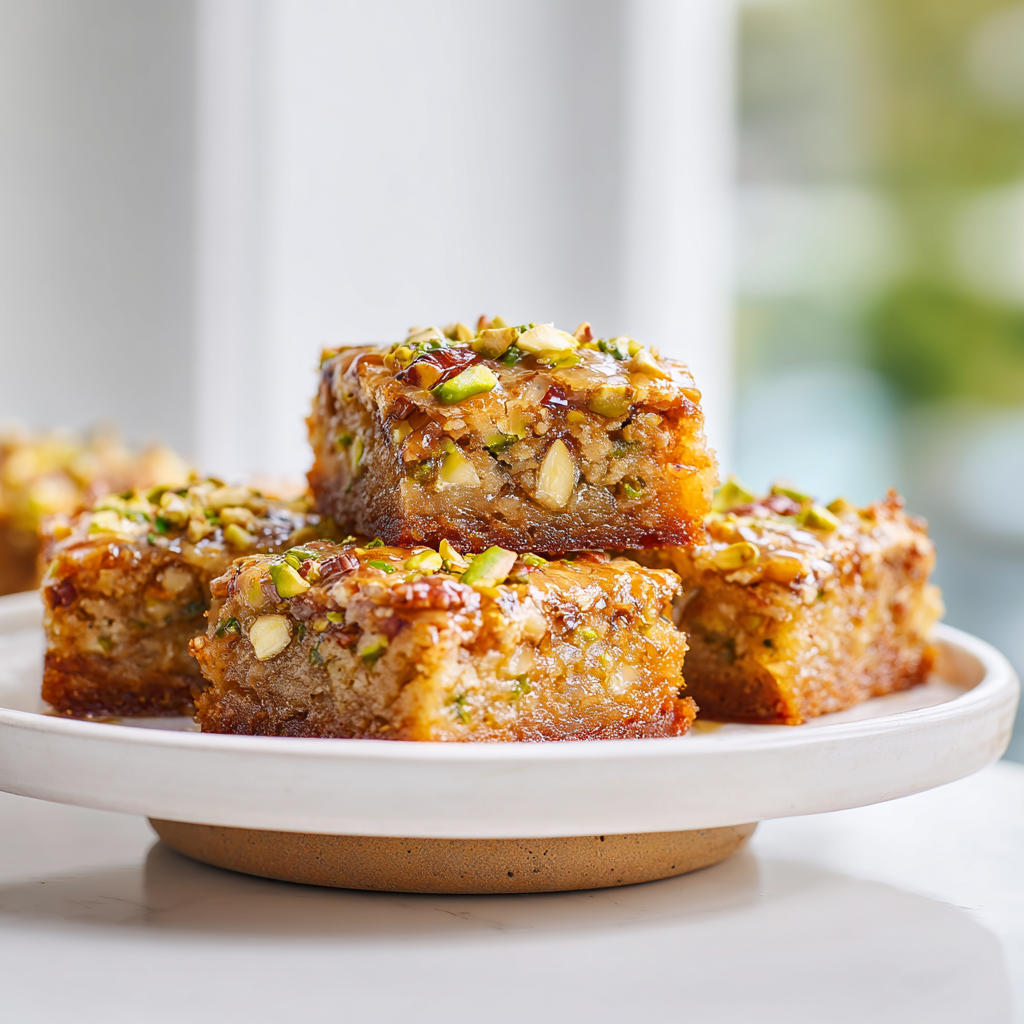

Why You’ll Love This Lavender Lemon Sourdough Bread
Here’s the moment I bake for. Warm loaf on the cutting board, a serrated knife in my hand. I press down through the soft crumb, and this floral lemon fragrance curls up with the steam, lavender and zest tangled together. It smells like an August garden in one single slice.
This lavender lemon sourdough bread has become my go-to summer loaf. It’s a quick bread, not an overnight project, so there’s no bulk fermentation and no banneton to wrestle. You’re just mixing a tender, citrusy batter with unfed sourdough discard and letting the baking powder do the heavy lifting.
On a hot 90-degree day, that’s a relief. No Dutch oven to preheat, no waiting around for a sourdough starter to double. The texture is soft and moist, almost pound cake-adjacent, and the glaze adds that glossy, purple-tinted finish. Most importantly, it doesn’t taste like soap. More on that in a minute.
Baking with Lavender
First things first: buy culinary lavender. The stuff from the craft store, the sachets near the candles, that’s not for eating. Culinary lavender is food grade and grown without the treatments used on ornamental plants. You’ll find it in the spice aisle at Whole Foods or Trader Joe’s, or from a trusted online source.
I learned this the hard way. My first test loaf of this floral bread recipe used almost double the lavender, because I wanted a stronger color. The result was gorgeous, golden with purple flecks throughout. But the first bite was like eating a candle. A very expensive one. The floral notes overwhelmed everything and left that bitter, almost soapy residue on my tongue.
The fix is simple: use exactly 3 tablespoons of culinary lavender, and rub it into the sugar with the lemon zest. That’s the technique that makes this lavender lemon sourdough bread work. The sugar crystals abrade the buds and release the essential oils slowly, so you get that complex floral note instead of a perfume bomb. Meyer lemons, by the way, are the perfect partner here. They’re sweeter and less acidic than regular lemons, so they let the lavender feel bright instead of sharp.
Key Ingredients & Substitutions
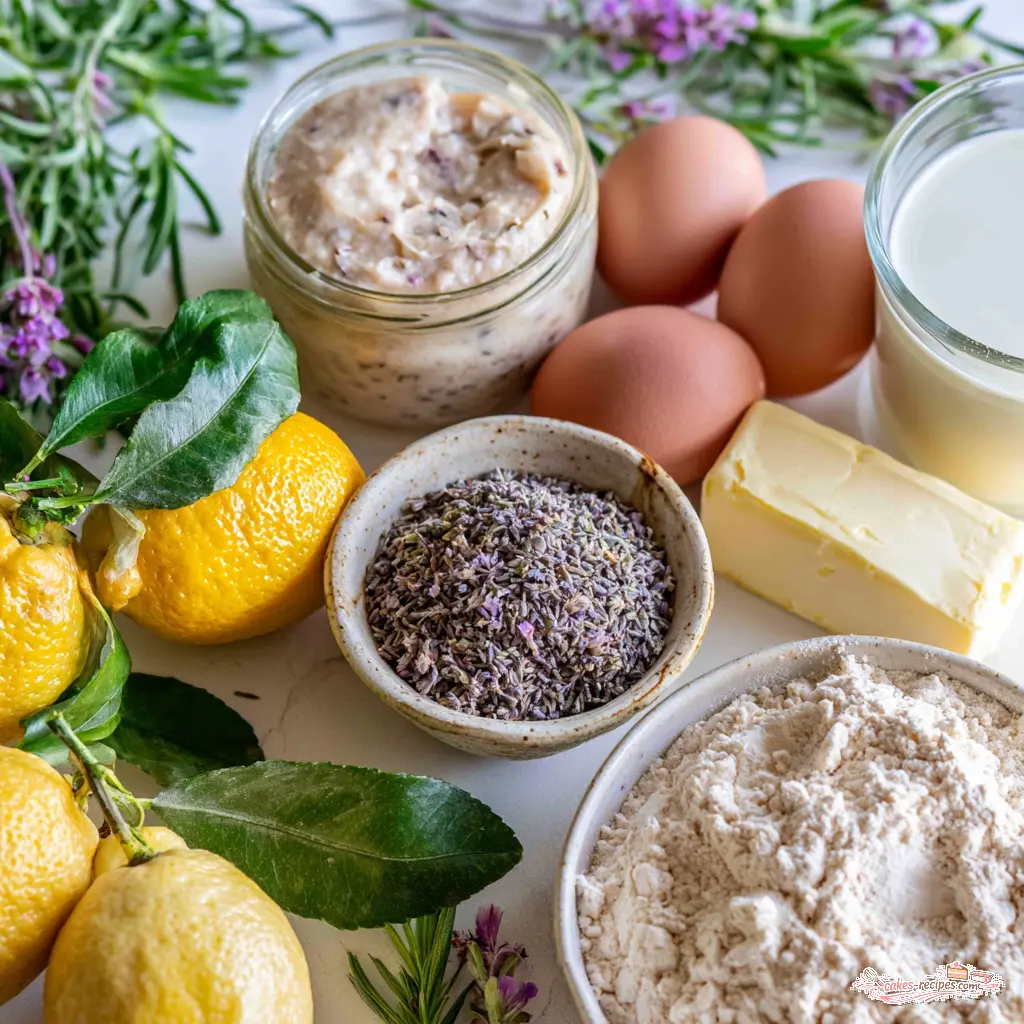
Let me walk you through what makes this loaf work. You’ll need granulated sugar, finely grated Meyer lemon zest, culinary lavender, salted butter, eggs, fresh lemon juice, unfed sourdough discard, all-purpose flour, baking powder, baking soda, and whole milk. The glaze uses powdered sugar, milk, lavender extract, and a drop of purple food coloring if you want that soft pastel hue.
A few substitutions actually work well here. If you don’t have sourdough discard on hand, swap in an equal amount of plain yogurt, and reduce the milk to 2 tablespoons. The loaf won’t have quite the same tang, but it’ll still be moist and tender. And if you can only find regular lemons, just add an extra tablespoon of sugar to the glaze. Meyer lemons are more common in California, especially at places like Ralphs or the Santa Monica Farmers Market, but they’re not worth a special trip. Regular lemons will do just fine.
For the lavender, there’s no true substitute. Dried rose petals can work in a pinch, but they’re more delicate. Honestly, I’d rather you leave the lavender out entirely than use a cheap imitation.
Baking with Sourdough Discard
This recipe uses unfed discard, not an active starter. That’s an important distinction. A bubbling, just-fed starter has different hydration and activity, and it changes the flavor profile. Unfed discard, at 100% hydration, is what gives this loaf its subtle tang and exceptionally tender crumb. It’s also the perfect way to use up the jar in the back of your fridge.
The discard does something special here. It adds a mild fermented flavor that tempers the sweetness, and the natural acidity helps the baking soda and baking powder do their job. The batter starts out thick and fluffy after creaming, then loosens as you add the eggs and milk. When you fold in the dry ingredients, work gently. Overmixing develops gluten, and that makes a quick bread tough and dense.
For anyone used to a traditional artisan sourdough bread with its stretch and fold technique, overnight cold proof in a banneton proofing basket, and scoring with a bread lame, this is a lovely change of pace. No sourdough timeline to manage, no steam baking bread setup. Just a simple batter and a 9×5-inch loaf pan. Totally fixable, even on a busy weekday.
Tips for the Best Lavender Lemon Loaf
This recipe rewards a little care. Here are the four stages where I’ve learned to slow down.
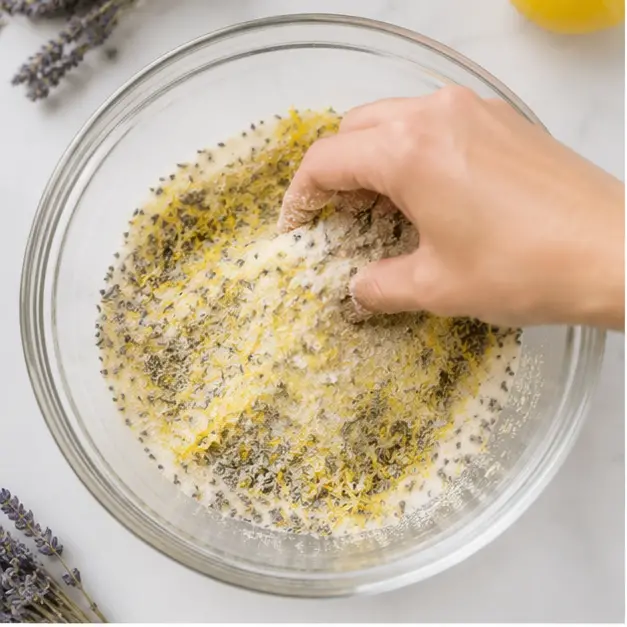
Rubbing the zest and lavender into the sugar is the first big step. Use your fingertips and press firmly until the sugar turns pale yellow and smells immensely fragrant. This isn’t just for flavor distribution. It releases the oils so neither the lavender nor the zest sinks or clumps. Worth the extra 2 minutes.
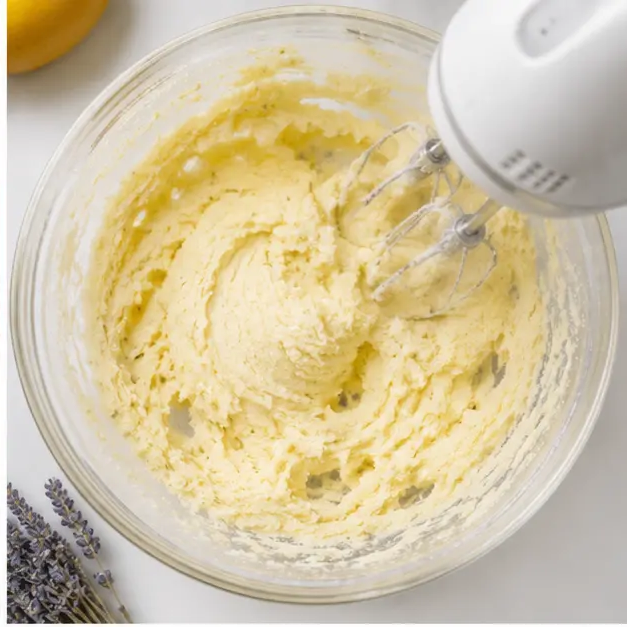
Next, cream the butter into that sugar mixture. Beat on medium-high until light and fluffy, about 2 to 3 minutes. The mixture should look pale, almost like whipped frosting. This is your aeration stage, and it sets the structure for the whole bake. That’s exactly right, you want plenty of air in there.
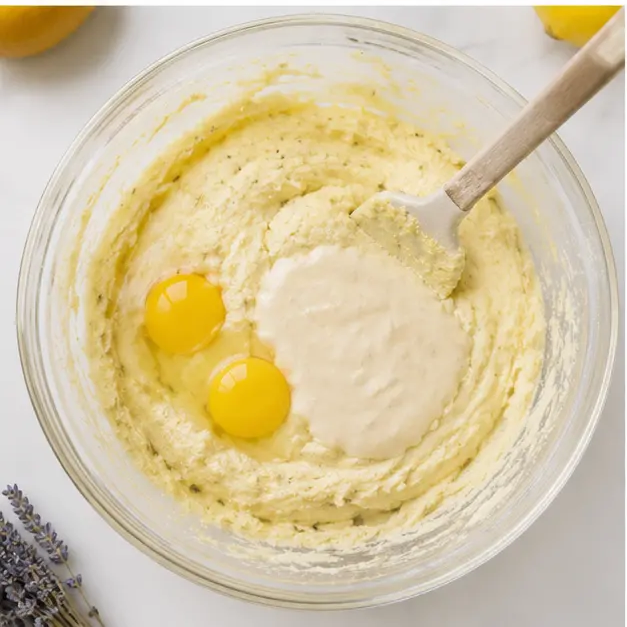
Then come the eggs, one at a time, and the lemon juice. The batter will look slightly curdled for a moment, but that’s fine. Scrape the bowl well and continue. Add the dry ingredients in two additions, alternating with the discard and milk. The batter should be thick, smooth, and just combined. A few small streaks of flour are okay.
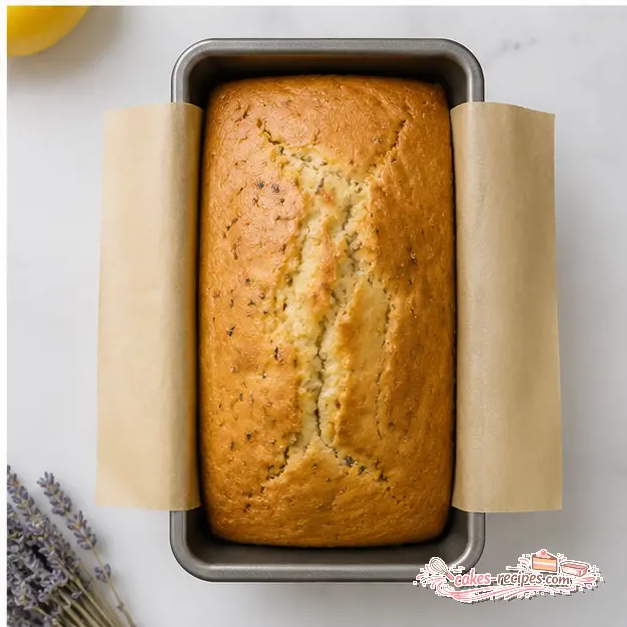
Finally, bake at 350°F for 50 to 60 minutes. Check with a skewer in the center. If the top browns too quickly, tent it loosely with foil. Let it cool in the pan for 15 minutes, then lift it out with the parchment overhang and transfer to a wire rack. Cool completely before glazing, or the glaze will melt right into the crumb.
A few more things that make a difference in getting that open, tender texture:
- ❌ Mistake: Using non-culinary lavender or measuring with a heavy hand. ✅ Solution: Stick to 3 tablespoons of food-grade culinary lavender. That’s the sweet spot.
- ❌ Mistake: Overmixing the batter until it forms long gluten strands. ✅ Solution: Mix until the flour just disappears. That’s what gives you a tender crumb, not a rubbery one.
- ❌ Mistake: Glazing a warm loaf. ✅ Solution: Patience. Cool it fully on the rack first, then drizzle.
- ❌ Mistake: Slicing while it’s still warm. ✅ Solution: Chill the loaf for 20 minutes before cutting with a serrated knife. Cleaner cuts, less crumbling.
Delicious Variations
The base recipe is solid, but it’s also a canvas. In my testing I’ve found these additions work well without throwing off the hydration level. Just treat them as optional add-ins, not part of the core formula.
- Orange zest instead of lemon, plus a few drops of orange extract in the glaze if you have it.
- A cup of blueberries folded in gently before baking. The hot oven bursts them slightly, and they pair beautifully with the lavender.
- Poppy seeds for that classic lemon poppy seed energy, just a couple of tablespoons added with the dry ingredients.
- Skip the purple food coloring entirely. The natural glaze is still pale, floral, and elegant.
- Bake the batter as muffins instead of a loaf. Reduce the bake time to 20 to 25 minutes and check early.
How to Store, Freeze & Serve
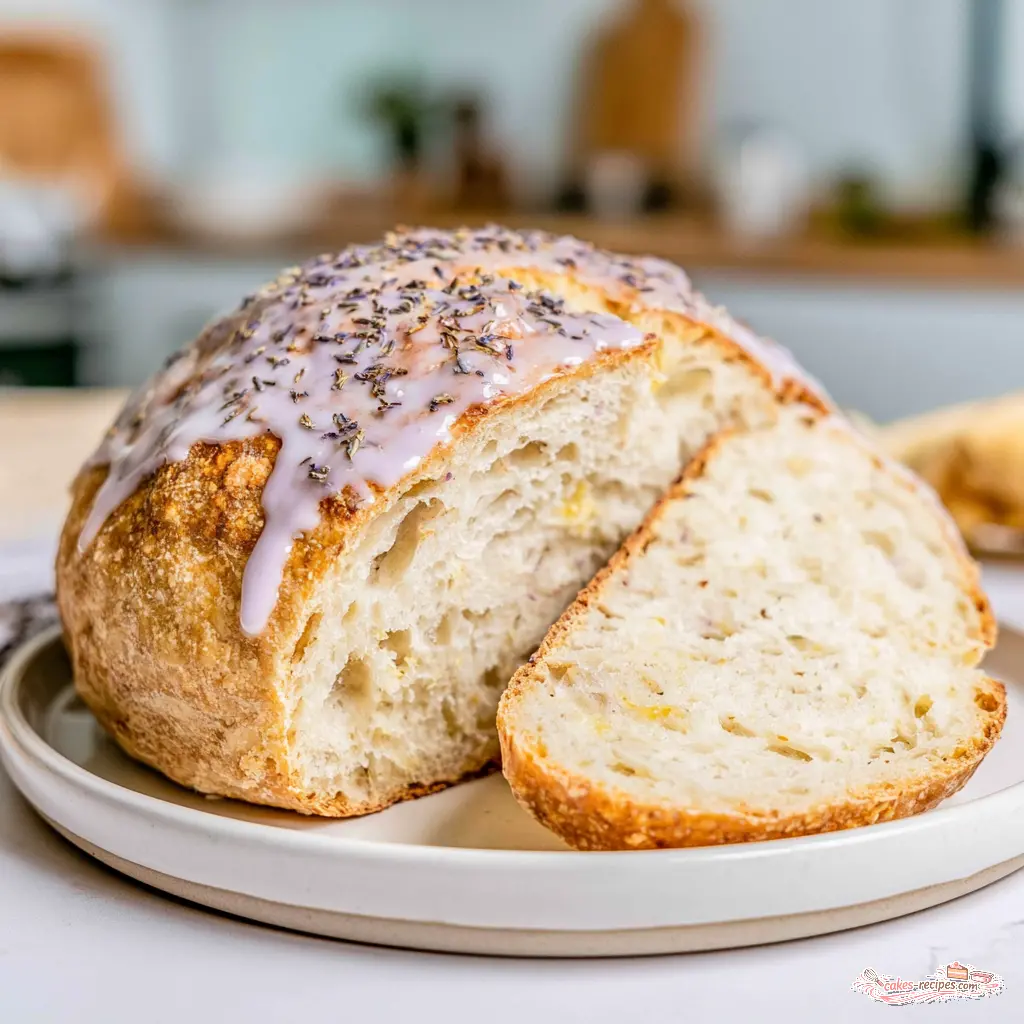
This loaf is best in the first two days. Store it wrapped in plastic wrap at room temperature for up to 3 days. Don’t refrigerate it. The fridge accelerates staling, and you’ll lose that lovely soft crumb.
If you want to get ahead, bake the loaf, cool it completely, and freeze it without the glaze for up to 2 months. When you’re ready to serve, thaw it at room temperature, then whisk up the glaze and drizzle. That way the lemon-lavender fragrance feels fresh.
Serve it sliced, with a pat of salted butter. It’s a beautiful brunch centerpiece and it tastes even better the next morning. Actually, I won’t tell anyone if you eat it for breakfast. That’s the whole energy of this lavender lemon sourdough loaf.
Final Thoughts
When you pull your lavender lemon sourdough bread from the oven, let it cool, then slice into that tender crumb. The steam will smell like a summer garden, bright lemon and calm lavender. It’s a beautiful, repeatable bake, and the kind of loaf people ask about.
If you try this recipe, I’d love to see it. I’m always pinning new baking ideas and you can join me on Pinterest to share yours. Bring your questions too, I’m happy to walk you through any sticking points.

Lavender Lemon Sourdough Loaf
Ingredients
Method
- Preheat the oven to 350°F (180°C). Grease a 9x5-inch loaf pan and line it with parchment paper, letting the edges overhang for easy removal.
- In a medium bowl, whisk the flour, baking powder, and baking soda together. Set aside.
- In a large bowl, combine the granulated sugar, lemon zest, and lavender. Rub the zest and lavender into the sugar with your fingertips until fragrant and the sugar is pale yellow.
- Add the softened butter to the sugar mixture and cream with an electric mixer on medium-high until light and fluffy, about 2 to 3 minutes.
- Beat in the eggs one at a time, scraping the sides of the bowl after each addition. Mix in the lemon juice until fully combined.
- Mix half of the flour mixture into the batter until just combined. Add the sourdough discard and milk, mixing until smooth. Fold in the remaining flour mixture until no streaks of flour remain.
- Scrape the batter into the prepared loaf pan and smooth the top.
- Bake for 50 to 60 minutes, until the top is golden brown and a skewer inserted in the center comes out clean. If the top browns too quickly, tent loosely with foil.
- Let the loaf cool in the pan for 15 minutes, then lift it out using the parchment overhang and transfer to a wire rack. Let cool completely before glazing.
- For the glaze, whisk the powdered sugar, 3 tablespoons of milk, and lavender extract in a bowl until smooth. Add the purple food coloring and adjust with extra milk or powdered sugar to reach a drizzling consistency.
- Drizzle the glaze over the cooled loaf, let it set for a few minutes, then slice and enjoy.
Nutrition
Notes
Tried this recipe?
Let us know how it was!Frequently Asked Questions
Source: Learn More About This Dish
Can I use all-purpose flour?
Absolutely. All-purpose flour is exactly what this recipe calls for, so you don’t need bread flour or specialty flour. I keep it simple and use whatever all-purpose flour I have in the pantry. That’s one of the reasons this lavender lemon sourdough bread is so easy to throw together on a weekend morning.
Is this recipe vegan?
No, it’s not vegan. The recipe uses salted butter, three large eggs, and whole milk, so there’s quite a bit of dairy. I haven’t tested a fully plant-based version of this exact lavender lemon sourdough loaf yet, but the lemon and lavender pairing works beautifully in many vegan baked goods.
Can I add other herbs and inclusions to lavender sourdough bread?
Yes, you can experiment, but keep the base recipe intact. I’ve seen bakers add poppy seeds or swap the lemon for orange zest with great results. Blueberries also work well folded in gently before baking. Just keep in mind that extra ingredients can affect the rise, so don’t overdo it.
Does lavender bread taste like soap?
It can, if you use too much lavender. That’s the number one mistake I see with lavender lemon sourdough bread. The fix is to use exactly 3 tablespoons of culinary lavender and rub it into the sugar first. That releases the oils gradually and prevents that overpowering soapy flavor.
Can I substitute lavender with other edible flowers?
Many edible flowers work here, but dried rose petals are your best bet. Use them the same way you would lavender: rub them into the sugar with the lemon zest. Keep in mind that rose is more delicate, so you may want to start with a smaller amount and taste as you go.
What does lavender sourdough taste like?
It tastes like brightness, honestly. The lemon zest carries the flavor, and the lavender gives a gentle floral background that lingers after each bite. The sourdough discard adds a subtle tang, and the glaze brings sweetness and a soft, dessert-like finish.
Can I leave out the lavender?
Sure, if lavender isn’t your thing. The loaf will still be delicious, with the lemon flavor taking the lead. I’d recommend keeping the lemon zest and juice, and if you want extra flavor, just add a bit more zest. The texture won’t change at all.
Can I use regular all-purpose flour?
Yes, this recipe calls for regular all-purpose flour. No need to reach for bread flour or cake flour. I’ve tested it with standard all-purpose from the grocery store and it comes out soft and tender every time. That’s what we want to see with this lavender lemon loaf.
Why is my sourdough loaf dense?
For this quick bread, density usually comes from overmixing the batter, which develops too much gluten and makes the crumb tight. Also, be sure your baking powder and baking soda are fresh, and don’t skip the room temperature ingredients. Use a light hand when folding.
How do I know when bulk fermentation is finished?
This recipe skips bulk fermentation entirely. It’s leavened with baking powder and baking soda, so there’s no rise to wait for before baking. You mix the batter, scrape it into the pan, and bake right away. The fermented flavor comes from the discard, not from a long rise.
Can I skip the overnight proof?
Yes. There’s no overnight proof needed for this lavender lemon sourdough bread. That’s the beauty of using sourdough discard with baking powder. It’s a same-day bake from mixing to oven in about 15 minutes. If you’re used to a longer sourdough timeline, this is a wonderful break.
Does lavender make the bread taste like soap?
It only tastes soapy if you use more than the recipe calls for. Three tablespoons of culinary lavender is the sweet spot. I learned this the hard way when I used nearly double that and the loaf legitimately tasted like a candle. Stick to the amount in the recipe card.
What is the best way to keep a bundt cake from sticking?
The same rule applies to a loaf pan: grease it thoroughly and line it with parchment. I prefer the butter and flour method every time, knocking out the excess flour. For this recipe, the parchment overhang does the heavy lifting, so make sure it’s snug in the pan.
Is it better to take bundt cakes out of the pan hot or cold?
For a loaf like this, let it cool in the pan for 15 minutes. That gives the crumb time to set. Then lift it out with the parchment overhang and let it finish cooling on a wire rack. If you wait until it’s completely cold in the pan, it can become soggy on the bottom.
I don’t have any sourdough discard, can I still make this recipe?
Definitely. You can substitute an equal amount of plain yogurt, which is about 120 grams or half a cup, and reduce the milk by 2 tablespoons. The loaf will be slightly different, but it’ll still be moist and tender. That’s the most user-friendly swap I’ve found.