
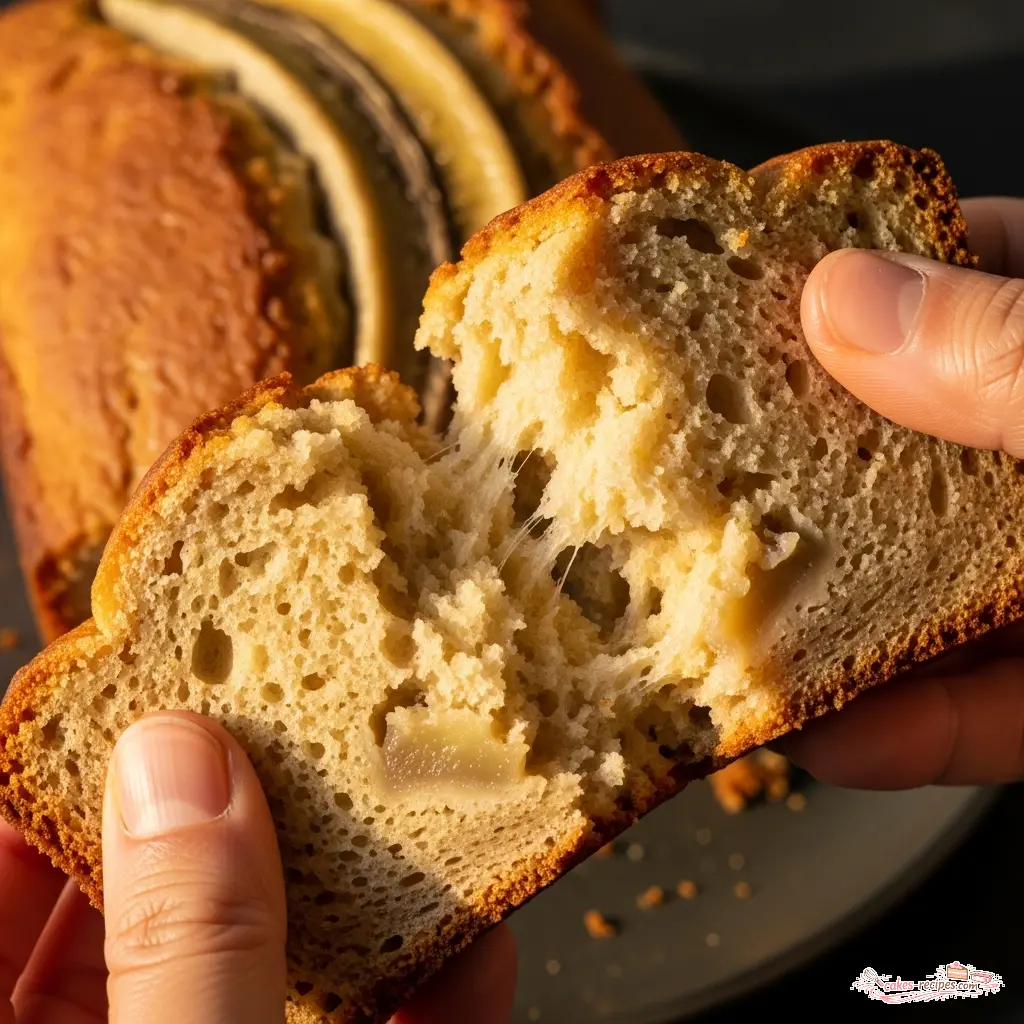
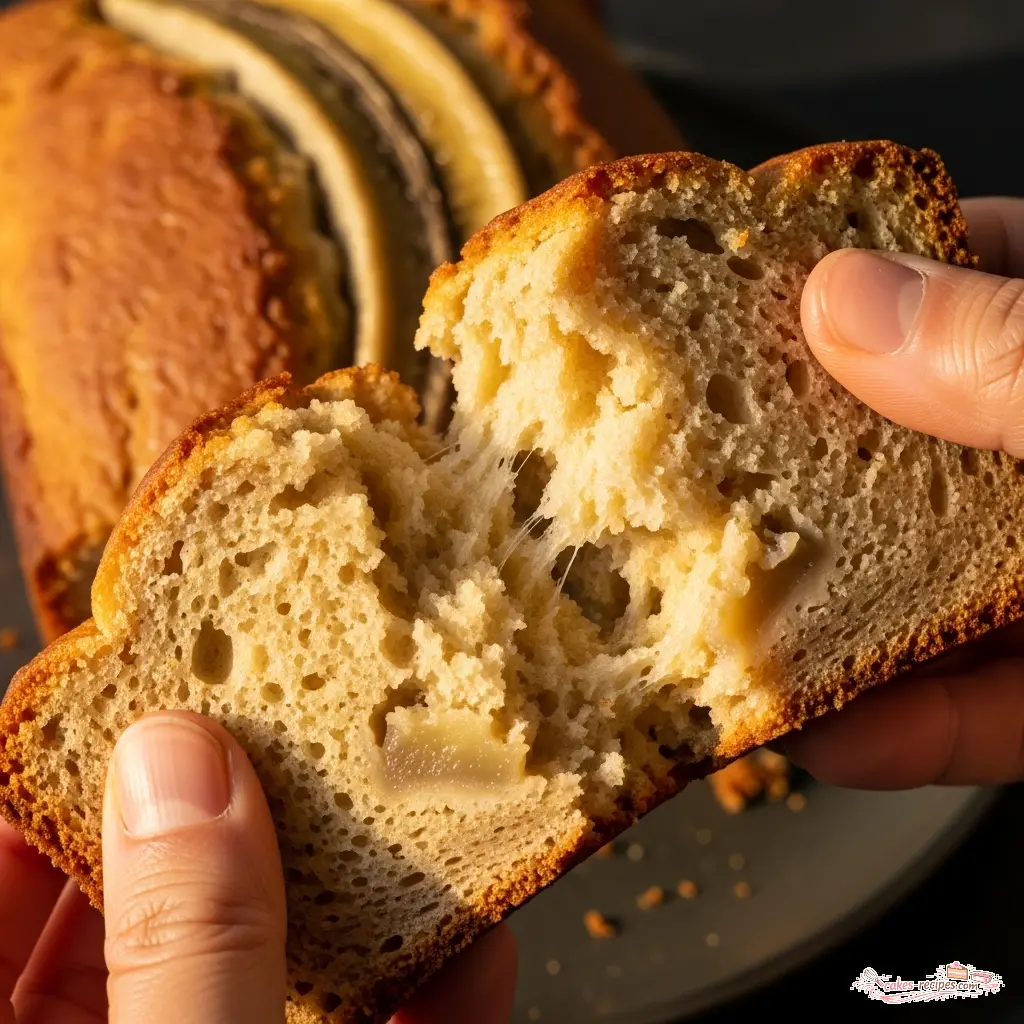
["Banana Bread Without Butter or Oil"]
Ingredients
Method
- Preheat the oven to 325°F (163°C).
- Mash the bananas thoroughly using a fork.
- Beat the eggs lightly.
- Combine the bananas, vegetable oil, eggs, and sugar in a large mixing bowl and stir until completely blended.
- Incorporate the remaining ingredients and stir with a large spoon until the batter is fully mixed, avoiding an electric mixer to prevent a gummy texture.
- Optionally, fold in one cup of preferred add-ins, such as chocolate chips or chopped walnuts, once the batter is mixed.
- Pour the batter into a nonstick bread pan and smooth the top surface.
- Bake at 325°F (163°C) for 65 to 70 minutes.
- Remove the pan from the oven and let the bread cool inside the pan for 10 minutes to allow the baking process to finish.
- Transfer the bread to a wire rack to cool completely for 1 to 2 hours, using a silicone spatula to loosen the sides from the pan if necessary.
- Review the tips section on BreadDad.com for additional guidance and troubleshooting advice.
Nutrition
Notes
Tried this recipe?
Let us know how it was!The Secret to Moist Banana Bread (Hint: It’s Not Butter)
Let me tell you, I have a counter full of spotty, brown bananas staring at me right now. It happens every other week. I buy a bunch with the best intentions of healthy snacking, life gets busy, and suddenly they look like they belong in the compost bin. But here in my Asheville kitchen, we don’t see waste. We see potential.
For years, I thought making banana bread butter free was a compromise. I assumed that without that stick of butter, I’d end up with something dry, rubbery, or just plain sad. I was wrong. Honestly, I was so wrong.
My aunt Caroline, who ran a bakery in Vermont back in the 90s, used to tell me, “Rachel, butter adds flavor, but oil adds texture.” She was right. When you swap out the butter for oil or other healthy fats, you actually get a loaf that stays moist for days longer than the traditional version. It’s not just a healthy swap; it’s a texture upgrade. You get that plush, velvety crumb that bounces back when you press it, without the heaviness that butter sometimes brings.
So if you’re looking for a banana bread butter free recipe because you’re out of butter, watching your dairy intake, or just want a lighter breakfast bread, you are in the right place. Trust me on this. We’re going to turn those “ugly” bananas into gold.

The Science: Why Oil Actually Beats Butter
It sounds counterintuitive, I know. We’re trained to think butter is king in baking. But here is the thing about banana bread butter free baking: it comes down to the state of the fat at room temperature.
Butter is solid at room temperature. That means when your beautiful loaf cools down on the counter, the fat solidifies, which can make the crumb feel tighter and drier. Oil, on the other hand, remains liquid at room temperature. This is why cakes made with oil (like carrot cake or this banana bread) stay incredibly soft and tender even days after baking.
Plus, oil is 100% fat, whereas butter is about 80% fat and 20% water. That pure fat coats the flour proteins more effectively, preventing them from linking up and forming tough gluten networks. The result? A tender, melt-in-your-mouth texture that makes you forget all about the butter. Selecting the right [banana bread baking dish] is also crucial for ensuring the heat reaches the center of your loaf without over-browning the edges.
You can use almost any neutral oil here. Vegetable oil, canola oil, or even a light olive oil works beautifully. If you want to get fancy, melted coconut oil adds a lovely tropical note that pairs perfectly with the banana.
The Banana Ripeness Scale
This is where most people go wrong. I’ve seen it happen too many times. You grab yellow bananas with just a few spots and think, “Good enough.”
It’s not good enough. Not for this.
For the best banana bread butter free, you need bananas that look like they’ve seen better days. I’m talking about bananas that are more black than yellow. Here is my personal ripeness guide:
- Yellow with green tips: Do not bake. Starchy, bland, hard. Put them back in the fruit bowl.
- Solid Yellow: Still too firm. They lack the sugar content we need for moisture.
- Yellow with brown spots (Cheetah spots): Okay for eating, but still just “okay” for baking. You’ll need to add more sugar.
- Mostly Brown/Black: This is the sweet spot. Literally. The starches have converted to sugars, the fruit is practically liquid inside the peel, and the aroma is intense. This is what gives you that deep, caramelized banana flavor.
Pro-Tip: If your bananas aren’t ripe enough, don’t panic. I’ve been there. Place them on a baking sheet (skins on) and bake at 300°F for 15 to 20 minutes until they turn black and soft. It’s a lifesaver when the craving hits but the fruit isn’t ready. This high sugar content is also why [adding bananas to muffin mix] is a popular way to upgrade store-bought boxes.
Step-by-Step: The “Microwave Method” for Intense Flavor
I learned this trick a few years ago, and it completely changed my baking game. It is a simple step, but it makes a huge difference in flavor intensity and moisture.
Before you mix your wet ingredients, peel your bananas and place them in a microwave-safe bowl. Microwave them for about 45 to 60 seconds. They will release a clear liquid. Do not drain this! That liquid is pure banana gold.
Mash the bananas right into that hot liquid. This process breaks down the fruit’s cell walls even further, releasing more fructose and aroma. When you mix this warm banana soup into your batter, it distributes the flavor more evenly than cold, chunky bananas ever could. It’s a small extra step, but honestly? It’s worth it.
The “Rubber Loaf” Trap: How to Avoid Overmixing
If there is one hill I will die on, it’s this: put down the electric mixer. Seriously, put it away.
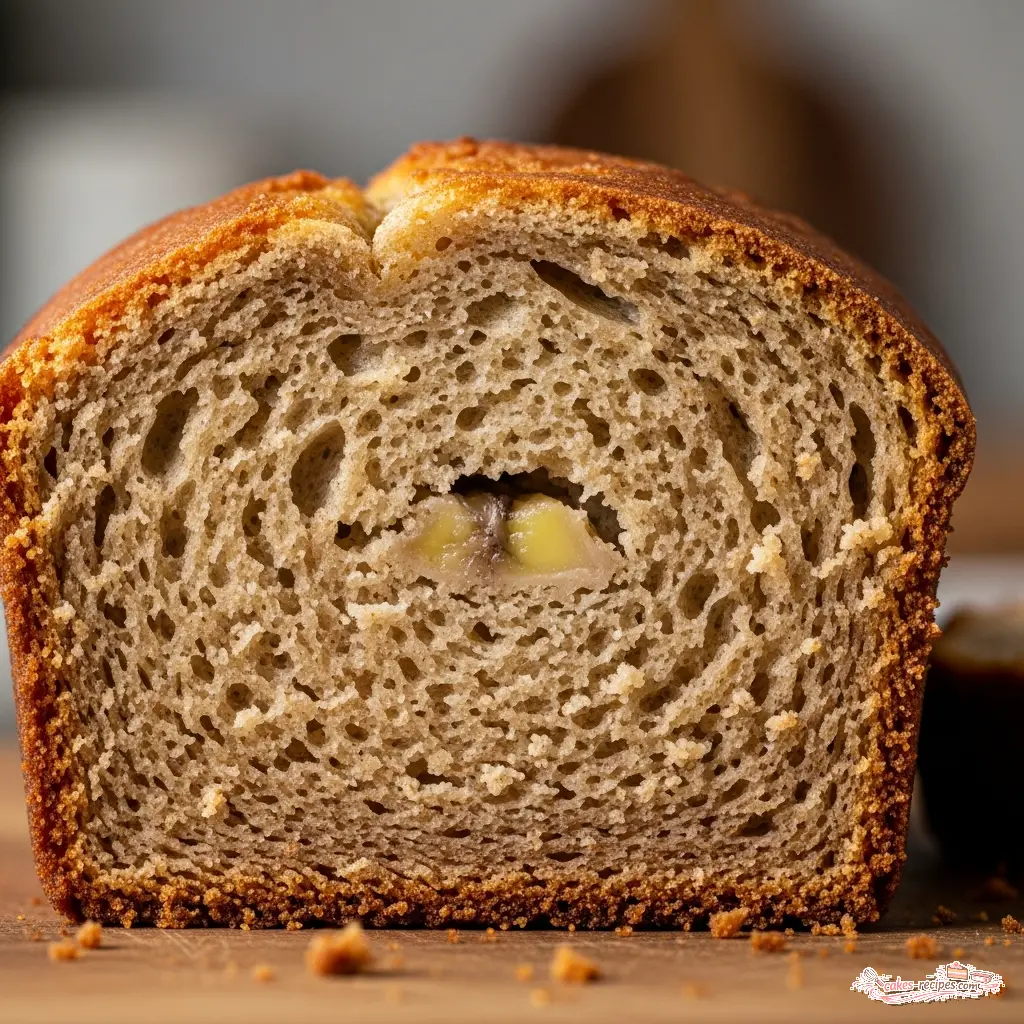
The number one reason banana bread butter free turns out gummy or rubbery is overmixing. When you mix flour with liquid, gluten starts to form. Gluten is great for chewy pizza crust, but terrible for tender quick breads. We want tender, not chewy.
I always mix my dry ingredients in one bowl and my wet ingredients in another. Then, I pour the wet into the dry and switch to a silicone spatula or a wooden spoon. I gently fold the ingredients together just until the flour streaks disappear. If there are a few tiny lumps of flour left, that is actually fine. They will bake out.
Think of it like this: you’re not beating the batter into submission; you’re just introducing the ingredients to each other. Be gentle.
Oil Comparison Matrix: Flavor vs. Health
Since we aren’t using butter, your choice of oil matters. Here is what I’ve found works best after testing dozens of loaves:
Choosing Your Fat
Vegetable/Canola Oil: The standard choice. Neutral flavor, very moist crumb, affordable. Perfect if you want pure banana flavor.
Coconut Oil (Melted): My personal favorite. It adds a subtle sweetness and tropical aroma that pairs beautifully with banana. Use refined coconut oil if you don’t want the coconut taste.
Avocado Oil: A great heart-healthy option. It’s neutral in flavor and handles heat well. Excellent for a heart healthy version.
Olive Oil: Use with caution. A light or “pure” olive oil is fine, but extra virgin can be too grassy and peppery for a sweet bread.
Applesauce: For an oil free banana bread, replace half or all the oil with unsweetened applesauce. It will be denser and slightly more cake-like, but very lower in calories.
Storage Secrets: The Paper Towel Method
You’ve baked the perfect loaf. It’s golden brown, smells like heaven, and tastes amazing. Now, how do you keep it that way?
Moisture is our friend for texture, but our enemy for storage. If you seal a warm loaf in a plastic bag or container, the condensation will make the crust soggy and sticky within hours. It’s heartbreaking.
Here is my trick: Let the bread cool completely on a wire cooling rack. I mean completely cold. Then, line an airtight container with a paper towel. Place the loaf inside, and put another paper towel on top before snapping the lid shut. The paper towel absorbs excess humidity without drying out the bread. It keeps that crust perfect for 3 to 4 days at room temperature.
Common Mistakes & Troubleshooting
Even with a simple recipe, things can go sideways. Here are the most common issues I see and how to fix them.
Mistake: The bread is gummy at the bottom.
Solution: This usually means the bread is underbaked or the bananas were too large. Use a kitchen scale if you can to measure your mashed banana (about 1.5 cups is ideal). If it’s browning too fast on top but raw in the middle, tent it with foil for the last 15 minutes.
Mistake: The middle sank.
Solution: You likely opened the oven door too early to peek. I know, it’s tempting! But that rush of cold air can cause the rising structure to collapse. Keep the door closed until at least the 45-minute mark.
Mistake: It’s dry.
Solution: You might have packed the flour into the measuring cup. Always spoon the flour into the cup and level it off, or better yet, weigh it. Too much flour sucks up all the moisture.
Frequently Asked Questions
Time to Bake
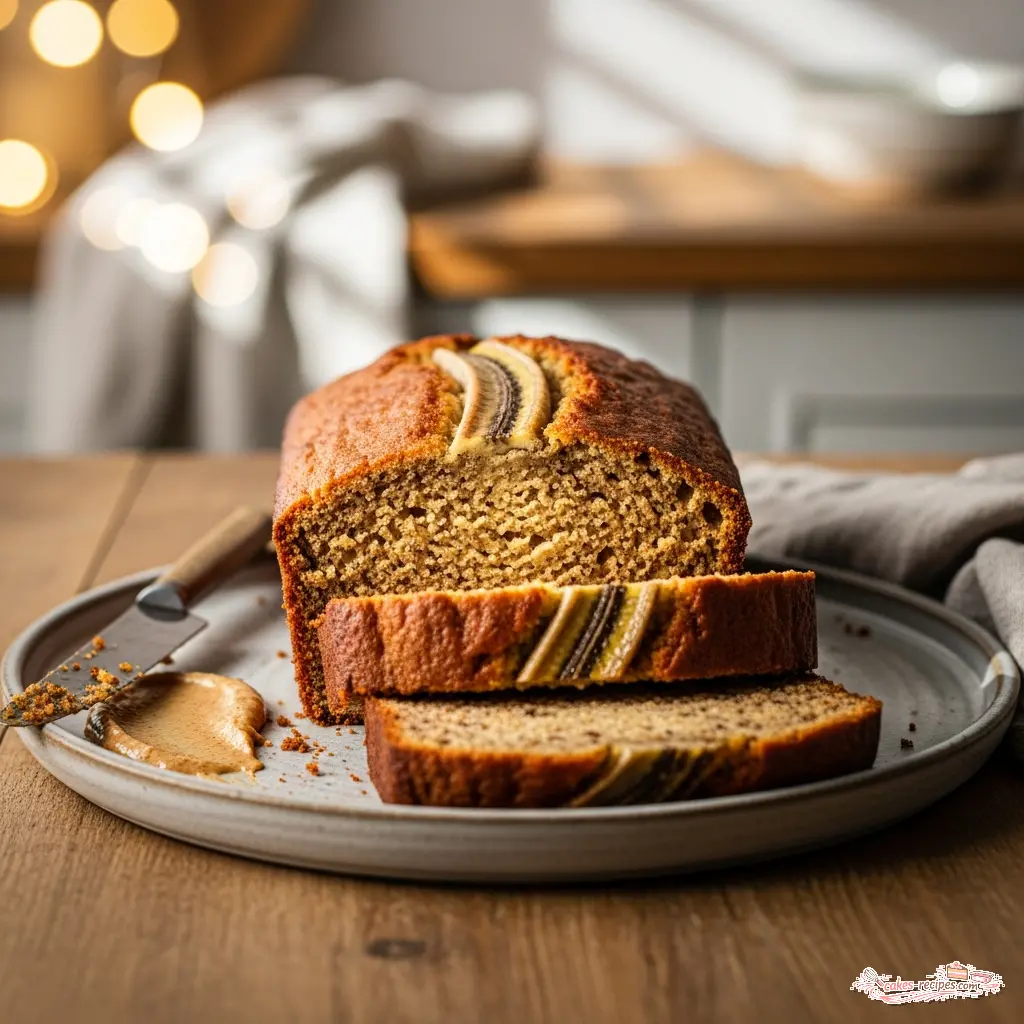
There is something incredibly comforting about the smell of banana bread baking on a cold afternoon. It fills the whole house with this warm, sweet scent of cinnamon and caramelized fruit. It reminds me of those Saturdays in Aunt Caroline’s bakery, watching people’s faces light up when they took that first bite.
Making this banana bread butter free isn’t just about saving calories or using up old fruit. It’s about creating something delicious from simple ingredients. It’s about realizing that sometimes, the alternative is actually better than the original. When you pull that golden brown loaf out of the oven, let it cool (if you have the patience), and slice into it, you’ll see exactly what I mean.
So grab those spotty bananas, preheat your oven, and happy baking!
Reference: Original Source



5 Responses
The texture is definitely plush like you said, but I found it a bit too sweet for my taste. I might try reducing the sugar to 3/4 cup next time.
I ran out of butter just like you mentioned in the post and found this recipe. It’s actually better than my usual butter-based version!
This was so easy to whip up! I added a handful of chocolate chips and it turned out perfectly moist.
My bananas are only slightly spotted, not fully brown. Do I need to wait a few more days for the best flavor, or will they work now?
I’d recommend waiting another day or two if possible, as those extra brown spots are essential for achieving the deep sweetness and perfect moisture balance I aim for in my recipes. If you’re in a hurry, you can always ripen them quickly in a low oven until the skins darken!